

complexes, epigenetic modifications and activity of new drugs in living cells.
In addition to chromatin immunoprecipitation (ChIP), which has always been one
of the most widely used techniques, several methods have been designed to better
and more rapidly investigate proteomic complexes, such as cellular thermal shift
assay (CETSA) and Förster resonance energy transfer (FRET)/bioluminescence
resonance energy transfer (BRET).
1.2.1 ChIP Assay
Immunoprecipitation and ChIP assays are the two main techniques for studying
epigenetic modifications and their quantization (ChIP-PCR). The two approaches
have also been combined with next-generation sequencing (NGS) to generate profiles
of genetic modifications [20] (ChIP-seq), as will be amply described in Sect. 2.1.
Over the years, proteomics studies have evolved, coupling conventional ChIP technology that involves cross-linking with formaldehyde, sonication and subsequent
quantitative analysis using real-time PCR with mass spectrometry (MS). The combination of these two techniques led to the development of new protocols such as
ChIP-MS [21], chromatin proteomics (ChroP) or rapid immunoprecipitation mass
spectrometry of endogenous protein (RIME) [22], which allow a faster analysis of all
proteins. Standard ChIP assay has several disadvantages, including the possible
alteration of chromatin-protein interactions during the experiment, the large amounts
of starting material necessary to obtain good results and the long time required to
complete the procedure (3 days). A new microfluidic technique was developed to
decrease reaction volumes and reduce experiment times [23]. This new microfluidic
device integrates sonication and immunoprecipitation, using 1,500–2,000 cells to
point (compared to 10
6–7 in conventional ChIP). Specifically, the cell/DNA
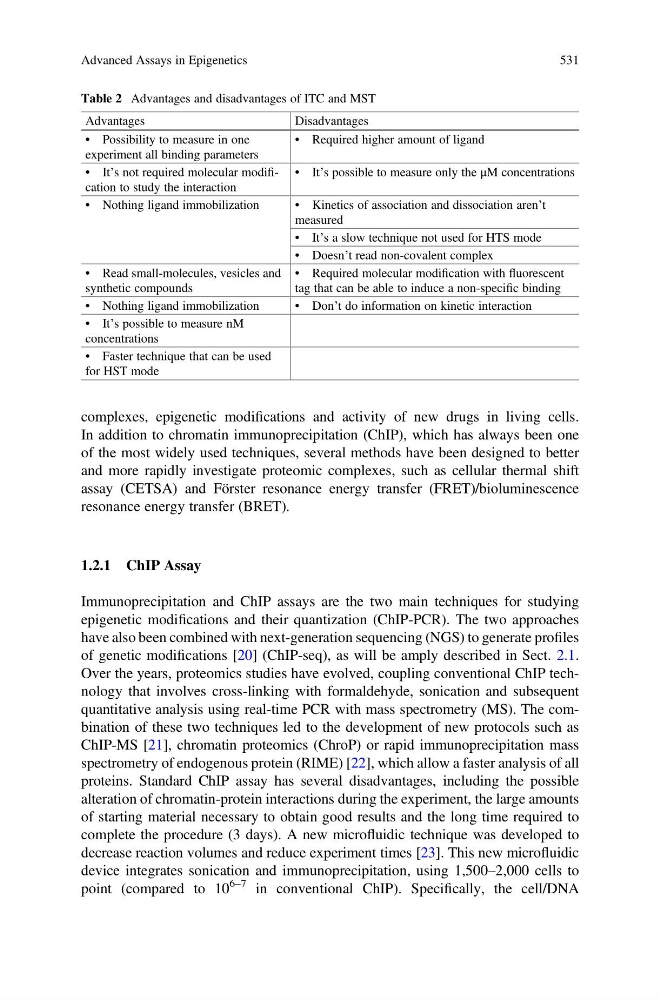
Table 2 Advantages and disadvantages of ITC and MST
Advantages
Disadvantages
• Possibility to measure in one
experiment all binding parameters
• Required higher amount of ligand
• It’s not required molecular modification to study the interaction
• It’s possible to measure only the μM concentrations
• Nothing ligand immobilization
• Kinetics of association and dissociation aren’t
measured
• It’s a slow technique not used for HTS mode
• Doesn’t read non-covalent complex
• Read small-molecules, vesicles and
synthetic compounds
• Required molecular modification with fluorescent
tag that can be able to induce a non-specific binding
• Nothing ligand immobilization
• Don’t do information on kinetic interaction
• It’s possible to measure nM
concentrations
• Faster technique that can be used
for HST mode
Advanced Assays in Epigenetics
531
In addition to chromatin immunoprecipitation (ChIP), which has always been one
of the most widely used techniques, several methods have been designed to better
and more rapidly investigate proteomic complexes, such as cellular thermal shift
assay (CETSA) and Förster resonance energy transfer (FRET)/bioluminescence
resonance energy transfer (BRET).
1.2.1 ChIP Assay
Immunoprecipitation and ChIP assays are the two main techniques for studying
epigenetic modifications and their quantization (ChIP-PCR). The two approaches
have also been combined with next-generation sequencing (NGS) to generate profiles
of genetic modifications [20] (ChIP-seq), as will be amply described in Sect. 2.1.
Over the years, proteomics studies have evolved, coupling conventional ChIP technology that involves cross-linking with formaldehyde, sonication and subsequent
quantitative analysis using real-time PCR with mass spectrometry (MS). The combination of these two techniques led to the development of new protocols such as
ChIP-MS [21], chromatin proteomics (ChroP) or rapid immunoprecipitation mass
spectrometry of endogenous protein (RIME) [22], which allow a faster analysis of all
proteins. Standard ChIP assay has several disadvantages, including the possible
alteration of chromatin-protein interactions during the experiment, the large amounts
of starting material necessary to obtain good results and the long time required to
complete the procedure (3 days). A new microfluidic technique was developed to
decrease reaction volumes and reduce experiment times [23]. This new microfluidic
device integrates sonication and immunoprecipitation, using 1,500–2,000 cells to
point (compared to 10
6–7 in conventional ChIP). Specifically, the cell/DNA
Table 2 Advantages and disadvantages of ITC and MST
Advantages
Disadvantages
• Possibility to measure in one
experiment all binding parameters
• Required higher amount of ligand
• It’s not required molecular modification to study the interaction
• It’s possible to measure only the μM concentrations
• Nothing ligand immobilization
• Kinetics of association and dissociation aren’t
measured
• It’s a slow technique not used for HTS mode
• Doesn’t read non-covalent complex
• Read small-molecules, vesicles and
synthetic compounds
• Required molecular modification with fluorescent
tag that can be able to induce a non-specific binding
• Nothing ligand immobilization
• Don’t do information on kinetic interaction
• It’s possible to measure nM
concentrations
• Faster technique that can be used
for HST mode
Advanced Assays in Epigenetics
531