

8 Summary
Four decades have passed since the first report of an enzyme that catalyzes the
deacetylation of acetyllysine protein residues. Within that time, tremendous progress
has been made in understanding the biological functions of HDACs and the potential
applications of HDAC inhibitors. Many such compounds have been discovered
through a combination of phenotypic screening and enzyme-based assays. While
the classical pharmacophore for HDAC inhibition consisting of a zinc-binding
group, linker, and cap largely holds true, it is by no means obligatory. There are
now inhibitors where zinc coordination is replaced by electrostatic attractions or
completely removed, while there are others that lack a cap. Structure-based design
has played an important role and aided the development of selective inhibitors by
taking advantage of differences in enzyme architecture between isoforms. Potent
inhibitors are now available with a high degree of isoform selectivity (Table 8), and
these will play a critical role in target validation and optimization of the target
product profile for a given indication.
Compliance with Ethical Standards
Conflict of Interest: Author declares that he has no conflict of interest.
Ethical approval: Not applicable.
N
H
OH
O
MeO
58
smHDAC8 IC 50 120 nM
hHDAC8 IC 50 510 nM
H
N
N
N
H
O
NH
NH
HN
O
O
S
N
57
PfHDAC1 IC 50 500 nM
hHDAC1 IC 50 >25,000 nM
H
N
F 2
C C
F 2
F 2
C C
F 2
F 2
C C
F 2
N
H
O
O
OH
59
PA0321 IC 50 700 nM
PA1409 IC 50 >1000 nM
PA3774 IC 50 22 nM
hHDAC1 IC 50 >10000 nM
hHDAC6 IC 50 >10000 nM
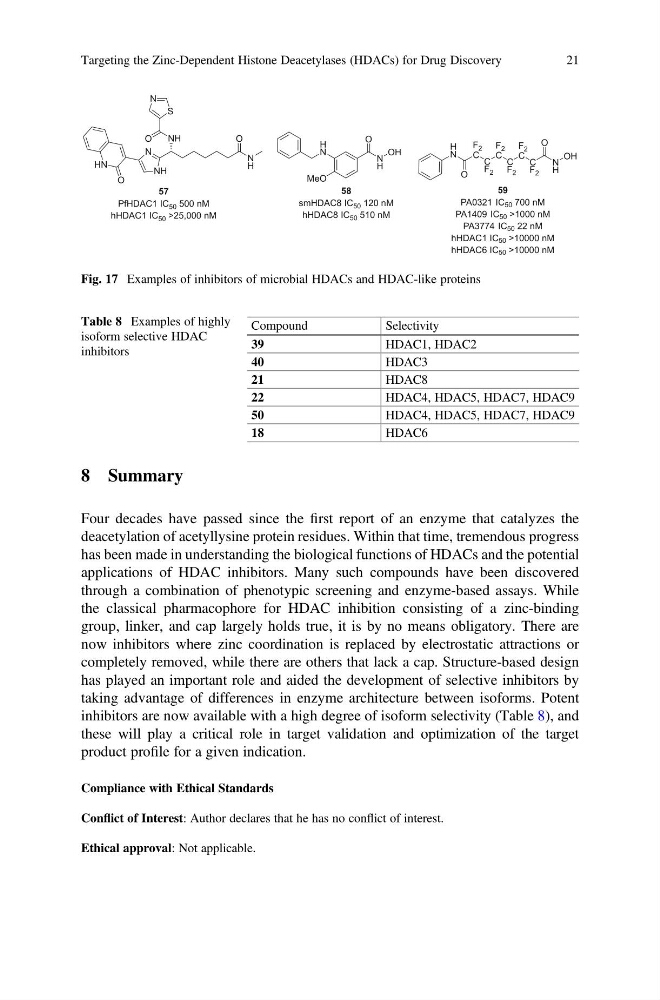
Fig. 17 Examples of inhibitors of microbial HDACs and HDAC-like proteins
Table 8 Examples of highly
isoform selective HDAC
inhibitors
Compound
Selectivity
39
HDAC1, HDAC2
40
HDAC3
21
HDAC8
22
HDAC4, HDAC5, HDAC7, HDAC9
50
HDAC4, HDAC5, HDAC7, HDAC9
18
HDAC6
Targeting the Zinc-Dependent Histone Deacetylases (HDACs) for Drug Discovery
21
Four decades have passed since the first report of an enzyme that catalyzes the
deacetylation of acetyllysine protein residues. Within that time, tremendous progress
has been made in understanding the biological functions of HDACs and the potential
applications of HDAC inhibitors. Many such compounds have been discovered
through a combination of phenotypic screening and enzyme-based assays. While
the classical pharmacophore for HDAC inhibition consisting of a zinc-binding
group, linker, and cap largely holds true, it is by no means obligatory. There are
now inhibitors where zinc coordination is replaced by electrostatic attractions or
completely removed, while there are others that lack a cap. Structure-based design
has played an important role and aided the development of selective inhibitors by
taking advantage of differences in enzyme architecture between isoforms. Potent
inhibitors are now available with a high degree of isoform selectivity (Table 8), and
these will play a critical role in target validation and optimization of the target
product profile for a given indication.
Compliance with Ethical Standards
Conflict of Interest: Author declares that he has no conflict of interest.
Ethical approval: Not applicable.
N
H
OH
O
MeO
58
smHDAC8 IC 50 120 nM
hHDAC8 IC 50 510 nM
H
N
N
N
H
O
NH
NH
HN
O
O
S
N
57
PfHDAC1 IC 50 500 nM
hHDAC1 IC 50 >25,000 nM
H
N
F 2
C C
F 2
F 2
C C
F 2
F 2
C C
F 2
N
H
O
O
OH
59
PA0321 IC 50 700 nM
PA1409 IC 50 >1000 nM
PA3774 IC 50 22 nM
hHDAC1 IC 50 >10000 nM
hHDAC6 IC 50 >10000 nM
Fig. 17 Examples of inhibitors of microbial HDACs and HDAC-like proteins
Table 8 Examples of highly
isoform selective HDAC
inhibitors
Compound
Selectivity
39
HDAC1, HDAC2
40
HDAC3
21
HDAC8
22
HDAC4, HDAC5, HDAC7, HDAC9
50
HDAC4, HDAC5, HDAC7, HDAC9
18
HDAC6
Targeting the Zinc-Dependent Histone Deacetylases (HDACs) for Drug Discovery
21