

Compounds that inhibit the enzymes responsible for DNA methylation and oxidation will help address these questions.
2 DNMT Enzymes
DNA methylation was first described by Holliday and Pugh [15] and Riggs [16],
who hypothesised its role in gene regulation during development. Since then it was
shown that DNA methylation can induce gene silencing when it occurs on promoters
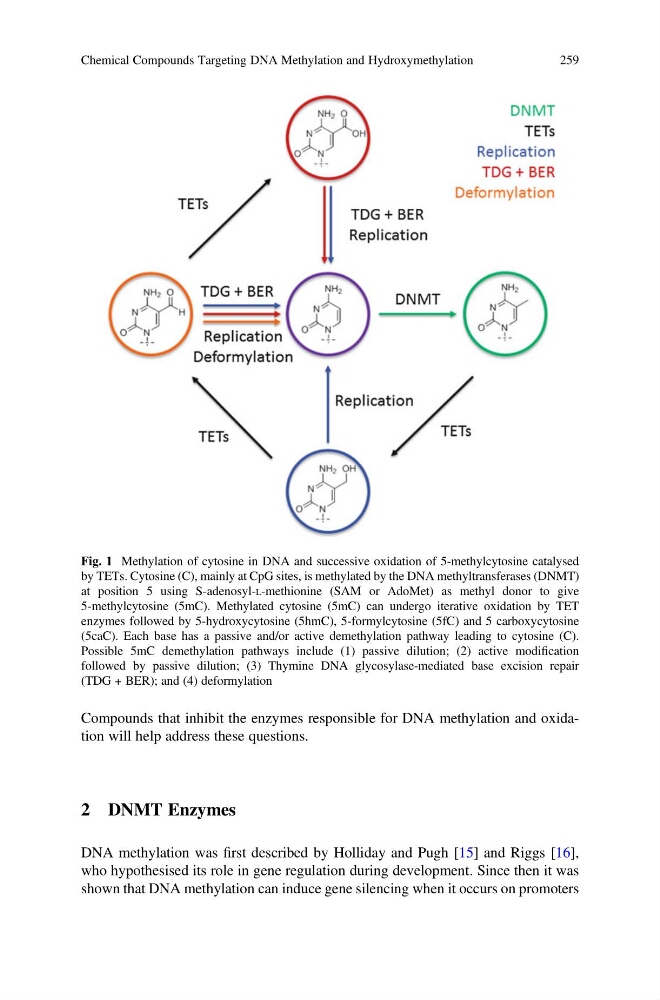
Fig. 1 Methylation of cytosine in DNA and successive oxidation of 5-methylcytosine catalysed
by TETs. Cytosine (C), mainly at CpG sites, is methylated by the DNA methyltransferases (DNMT)
at position 5 using S-adenosyl-L-methionine (SAM or AdoMet) as methyl donor to give
5-methylcytosine (5mC). Methylated cytosine (5mC) can undergo iterative oxidation by TET
enzymes followed by 5-hydroxycytosine (5hmC), 5-formylcytosine (5fC) and 5 carboxycytosine
(5caC). Each base has a passive and/or active demethylation pathway leading to cytosine (C).
Possible 5mC demethylation pathways include (1) passive dilution; (2) active modification
followed by passive dilution; (3) Thymine DNA glycosylase-mediated base excision repair
(TDG + BER); and (4) deformylation
Chemical Compounds Targeting DNA Methylation and Hydroxymethylation
259
2 DNMT Enzymes
DNA methylation was first described by Holliday and Pugh [15] and Riggs [16],
who hypothesised its role in gene regulation during development. Since then it was
shown that DNA methylation can induce gene silencing when it occurs on promoters
Fig. 1 Methylation of cytosine in DNA and successive oxidation of 5-methylcytosine catalysed
by TETs. Cytosine (C), mainly at CpG sites, is methylated by the DNA methyltransferases (DNMT)
at position 5 using S-adenosyl-L-methionine (SAM or AdoMet) as methyl donor to give
5-methylcytosine (5mC). Methylated cytosine (5mC) can undergo iterative oxidation by TET
enzymes followed by 5-hydroxycytosine (5hmC), 5-formylcytosine (5fC) and 5 carboxycytosine
(5caC). Each base has a passive and/or active demethylation pathway leading to cytosine (C).
Possible 5mC demethylation pathways include (1) passive dilution; (2) active modification
followed by passive dilution; (3) Thymine DNA glycosylase-mediated base excision repair
(TDG + BER); and (4) deformylation
Chemical Compounds Targeting DNA Methylation and Hydroxymethylation
259