

1.2 JmjC-KDM Biology
There is now strong evidence that changes in the expression levels of some lysine
demethylases can lead to the onset and progression of certain cancers. This occurs
either through activating expression of oncogenes, repressing expression of tumour
suppressors, disrupting chromosomal stability, altering DNA mismatch repair or
interacting with hormonal receptors that control cellular proliferation [11–
13]. Overexpression of KDM4s has been linked to various cancers such as lung,
breast, oesophageal and prostate cancers and lymphoma [14–18]. KDM5 proteins
are also associated with several cancers such as acute myeloid leukaemia [19],
hepatocellular carcinoma [20] and lung [21], gastric [22], melanoma [23], breast
[24], ovarian [25] and testicular cancer [26] and are essential for the survival of
multiple drug-tolerant cancer cells [27, 28]. KDM3 is involved in controlling
chemoresistance and tumorigenic growth in human colorectal cancer stem cells
through activating Wnt target gene transcription [29].
KDMs also have important roles in development such as KDM5B which blocks
differentiation of embryonic and haematopoietic stem cells [30] and KDM5C which
has a role in neuronal development [31]. KDM2A (FBXL11) inhibits osteo/
dentinogenic differentiation in mesenchymal stem cells [32] and also regulates cell
proliferation in human stem cells from apical papilla [33]. It also has a role in the
Fe II
H 2 O
H 2 O
His
O
OH
His
O
Asp/Glu
Fe II
O
O
His
O
His
O
Asp/Glu
O
R
OH
H 2 C
N
H
Fe II
O
O
His
O
His
O
Asp/Glu
O
R'
R
OH
R
Fe III
O
O
His
O
O
His
O
Asp/Glu
O
R'
O
H 2 C
N
H
R
R
Fe IV
His
O
O
His
O
Asp/Glu
O
O
R'
H 2 C
N
H
R
R
Fe II
His
O
His
O
Asp/Glu
O
O
R'
H 2 C
N
O H
H +
R
R = CH 3 or H
R' =
HO
O
CO 2
Succinate
HCOH
2OG
Substrate
O 2
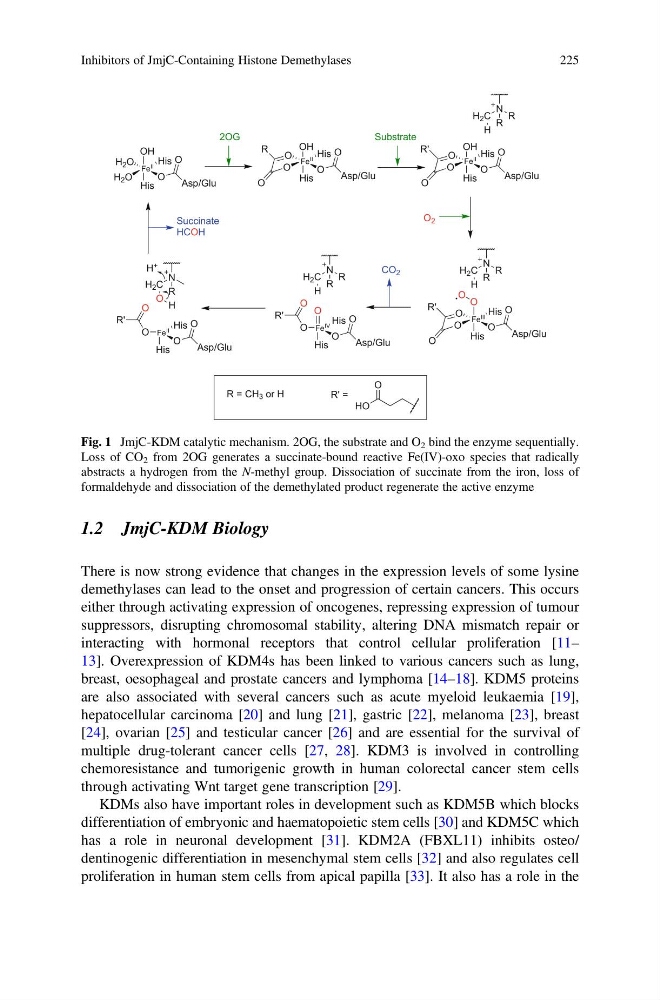
Fig. 1 JmjC-KDM catalytic mechanism. 2OG, the substrate and O 2 bind the enzyme sequentially.
Loss of CO 2 from 2OG generates a succinate-bound reactive Fe(IV)-oxo species that radically
abstracts a hydrogen from the N-methyl group. Dissociation of succinate from the iron, loss of
formaldehyde and dissociation of the demethylated product regenerate the active enzyme
Inhibitors of JmjC-Containing Histone Demethylases
225
There is now strong evidence that changes in the expression levels of some lysine
demethylases can lead to the onset and progression of certain cancers. This occurs
either through activating expression of oncogenes, repressing expression of tumour
suppressors, disrupting chromosomal stability, altering DNA mismatch repair or
interacting with hormonal receptors that control cellular proliferation [11–
13]. Overexpression of KDM4s has been linked to various cancers such as lung,
breast, oesophageal and prostate cancers and lymphoma [14–18]. KDM5 proteins
are also associated with several cancers such as acute myeloid leukaemia [19],
hepatocellular carcinoma [20] and lung [21], gastric [22], melanoma [23], breast
[24], ovarian [25] and testicular cancer [26] and are essential for the survival of
multiple drug-tolerant cancer cells [27, 28]. KDM3 is involved in controlling
chemoresistance and tumorigenic growth in human colorectal cancer stem cells
through activating Wnt target gene transcription [29].
KDMs also have important roles in development such as KDM5B which blocks
differentiation of embryonic and haematopoietic stem cells [30] and KDM5C which
has a role in neuronal development [31]. KDM2A (FBXL11) inhibits osteo/
dentinogenic differentiation in mesenchymal stem cells [32] and also regulates cell
proliferation in human stem cells from apical papilla [33]. It also has a role in the
Fe II
H 2 O
H 2 O
His
O
OH
His
O
Asp/Glu
Fe II
O
O
His
O
His
O
Asp/Glu
O
R
OH
H 2 C
N
H
Fe II
O
O
His
O
His
O
Asp/Glu
O
R'
R
OH
R
Fe III
O
O
His
O
O
His
O
Asp/Glu
O
R'
O
H 2 C
N
H
R
R
Fe IV
His
O
O
His
O
Asp/Glu
O
O
R'
H 2 C
N
H
R
R
Fe II
His
O
His
O
Asp/Glu
O
O
R'
H 2 C
N
O H
H +
R
R = CH 3 or H
R' =
HO
O
CO 2
Succinate
HCOH
2OG
Substrate
O 2
Fig. 1 JmjC-KDM catalytic mechanism. 2OG, the substrate and O 2 bind the enzyme sequentially.
Loss of CO 2 from 2OG generates a succinate-bound reactive Fe(IV)-oxo species that radically
abstracts a hydrogen from the N-methyl group. Dissociation of succinate from the iron, loss of
formaldehyde and dissociation of the demethylated product regenerate the active enzyme
Inhibitors of JmjC-Containing Histone Demethylases
225