

576
In practice, the U.S. Supreme Court assigns a “special master” to collect evidence
from the parties and issue a decision; the U.S. Supreme Court then reviews the finding. As of 2019, there are six U.S. Supreme Court cases pending over water issues
between states, including two in the eastern USA and four in the western USA. The
Florida vs. Georgia case is discussed above.
Beyond the USA, each country has its own court system to decide cases. Whether
or how these touch FEW Nexus questions is an area of potential research. Beyond
the judicial system, international agreements are another way that potential conflicts
in the FEW system can be addressed.
20.3.8 International Agreements: Goals, Treaties,
and Conventions
International agreements can be a way to address potential, evolving or existing
conflicts between countries. There are a number of international agreements that
affect or address various aspects of food, energy and particularly water (see generally Chap. 6 on international governance). International agreements include goals,
treaties, and conventions. Each of these is explained below with examples to help
illustrate their role.
International goals such as the Sustainable Development Goals (SDGs) can be
adopted as a resolution by the United Nations (UN). The UN adopted the SDGs
after a 3-year consultation process involving 83 national surveys and engagement of
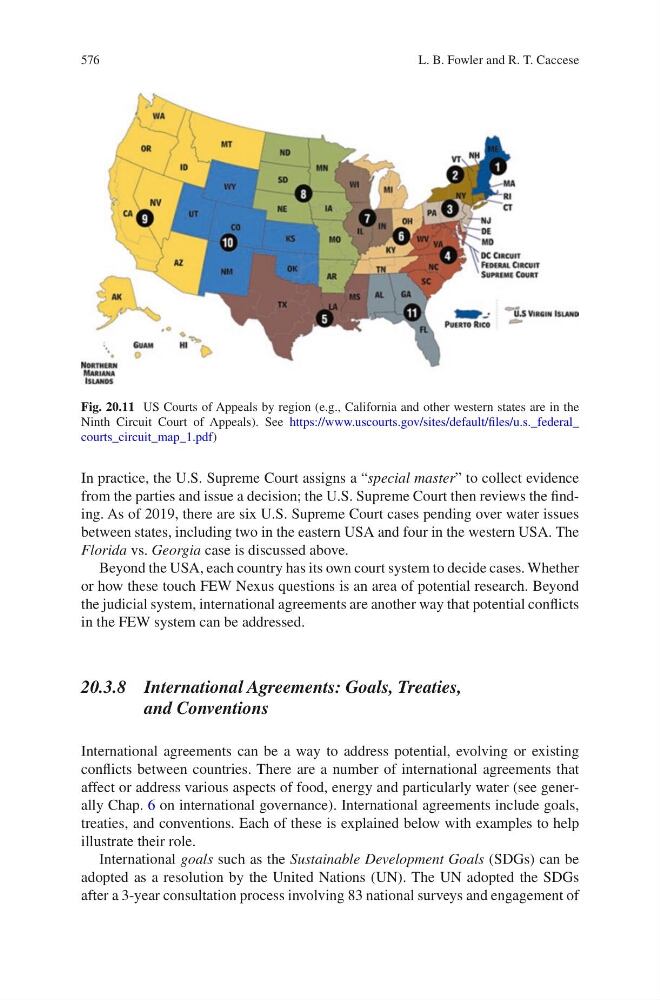
Fig. 20.11 US Courts of Appeals by region (e.g., California and other western states are in the
Ninth Circuit Court of Appeals). See https://www.uscourts.gov/sites/default/files/u.s._federal_
courts_circuit_map_1.pdf)
L. B. Fowler and R. T. Caccese
In practice, the U.S. Supreme Court assigns a “special master” to collect evidence
from the parties and issue a decision; the U.S. Supreme Court then reviews the finding. As of 2019, there are six U.S. Supreme Court cases pending over water issues
between states, including two in the eastern USA and four in the western USA. The
Florida vs. Georgia case is discussed above.
Beyond the USA, each country has its own court system to decide cases. Whether
or how these touch FEW Nexus questions is an area of potential research. Beyond
the judicial system, international agreements are another way that potential conflicts
in the FEW system can be addressed.
20.3.8 International Agreements: Goals, Treaties,
and Conventions
International agreements can be a way to address potential, evolving or existing
conflicts between countries. There are a number of international agreements that
affect or address various aspects of food, energy and particularly water (see generally Chap. 6 on international governance). International agreements include goals,
treaties, and conventions. Each of these is explained below with examples to help
illustrate their role.
International goals such as the Sustainable Development Goals (SDGs) can be
adopted as a resolution by the United Nations (UN). The UN adopted the SDGs
after a 3-year consultation process involving 83 national surveys and engagement of
Fig. 20.11 US Courts of Appeals by region (e.g., California and other western states are in the
Ninth Circuit Court of Appeals). See https://www.uscourts.gov/sites/default/files/u.s._federal_
courts_circuit_map_1.pdf)
L. B. Fowler and R. T. Caccese