

567
holders to use voluntary mechanisms to restore groundwater to appropriate levels
and recharge rates. What makes LEMAs different than most laws is the amount of
collaboration between parties to achieve results. Concerned water users submit a
proposal to a groundwater management district (GMD) board, which then works
with the State Water Resources Department to develop an official management plan.
Once agreed upon, the plan goes to the Legislature and Governor to finally become
law. A need for such a plan must exist with reasonable geographic boundaries and
public interest needs (Owen 2016).
Negotiated local agreements have led to good success: as of November 2016,
pumping reduction is ahead of schedule for a number of areas (Golden 2016). Much
like in Elinor Ostrom’s work on governing the commons, people in these areas came
together to create LEMAs to shepherd their own resources (Owen 2016). The success is based on communities working together to reduce water use through efficiency; self-enforcement has proven more successful than enforcement by a state
agency. Such efforts at conservation ensure continued production of food and help
reduce energy consumption.
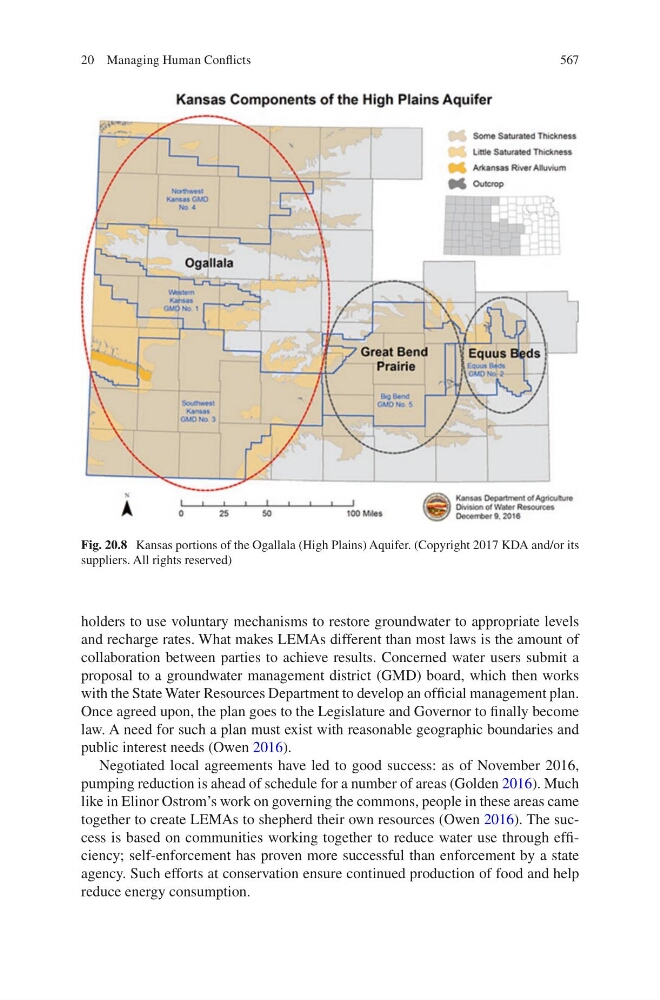
Fig. 20.8 Kansas portions of the Ogallala (High Plains) Aquifer. (Copyright 2017 KDA and/or its
suppliers. All rights reserved)
20 Managing Human Conflicts
holders to use voluntary mechanisms to restore groundwater to appropriate levels
and recharge rates. What makes LEMAs different than most laws is the amount of
collaboration between parties to achieve results. Concerned water users submit a
proposal to a groundwater management district (GMD) board, which then works
with the State Water Resources Department to develop an official management plan.
Once agreed upon, the plan goes to the Legislature and Governor to finally become
law. A need for such a plan must exist with reasonable geographic boundaries and
public interest needs (Owen 2016).
Negotiated local agreements have led to good success: as of November 2016,
pumping reduction is ahead of schedule for a number of areas (Golden 2016). Much
like in Elinor Ostrom’s work on governing the commons, people in these areas came
together to create LEMAs to shepherd their own resources (Owen 2016). The success is based on communities working together to reduce water use through efficiency; self-enforcement has proven more successful than enforcement by a state
agency. Such efforts at conservation ensure continued production of food and help
reduce energy consumption.
Fig. 20.8 Kansas portions of the Ogallala (High Plains) Aquifer. (Copyright 2017 KDA and/or its
suppliers. All rights reserved)
20 Managing Human Conflicts