

450
16.7 Summary
The research on Food, Energy and Water systems is highly dependent on computational tools and services. To understand the role of computations in FEW Nexus
research, this chapter provided basic background information on computer science.
Key Points
• Computer science is not only software development. It involves experimental
algorithms, computational science, and experimental computer science. However,
it also has some pure engineering roots, such as design, development, software
engineering as well as computer engineering.
• Algorithms have different computational costs associated. This cost governs how
to solve the problems. Solutions can either be a heuristic, an approximation or an
exact for a problem. In addition, FEW datasets are large and sophisticated.
Therefore, the tools and algorithms should be selected depending on the data size.
• It is important to select a programming language that has good scalability and
easy learning pace. The availability of ready-to-use packages is also an important
factor since different communities evolved around each of these. Two particularly important languages that can be leveraged by the FEW Nexus researchers
are Python and R. These languages have large online resources that can be leveraged to find answers for most common problems.
• The increasing amount of data creates a bottleneck for traditional computational
tools. These data are often referred to as Big Data, represented by 3Vs, i.e., Volume,
Velocity, and Variety. To overcome the associated issues with big data, computer
science researchers developed distributed architectures. Similarly, cloud-based,
GPU based and parallelized computational tools are available for users.
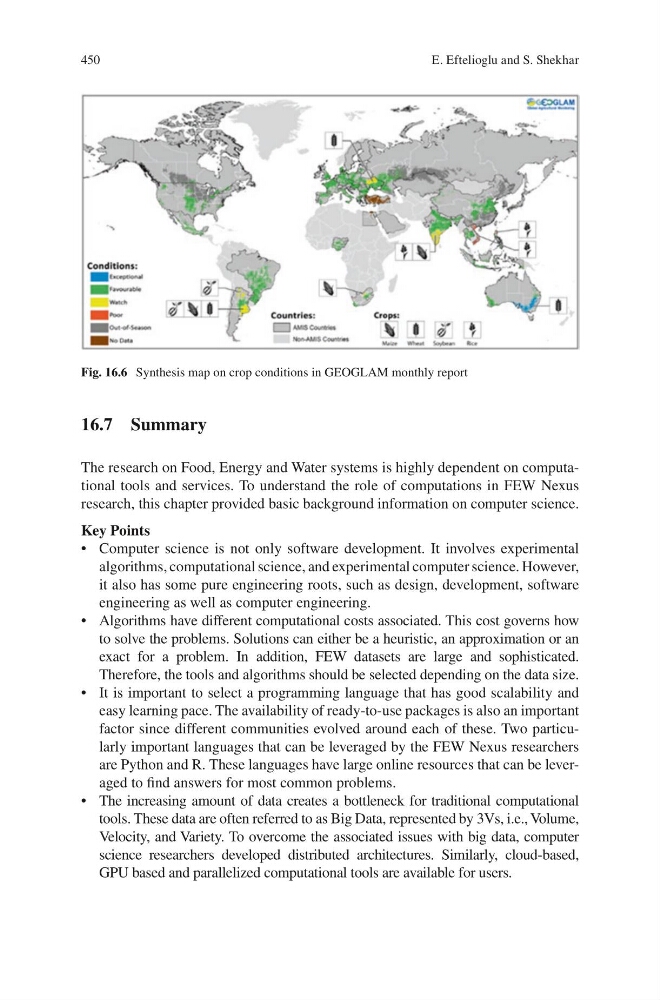
Fig. 16.6 Synthesis map on crop conditions in GEOGLAM monthly report
E. Eftelioglu and S. Shekhar
16.7 Summary
The research on Food, Energy and Water systems is highly dependent on computational tools and services. To understand the role of computations in FEW Nexus
research, this chapter provided basic background information on computer science.
Key Points
• Computer science is not only software development. It involves experimental
algorithms, computational science, and experimental computer science. However,
it also has some pure engineering roots, such as design, development, software
engineering as well as computer engineering.
• Algorithms have different computational costs associated. This cost governs how
to solve the problems. Solutions can either be a heuristic, an approximation or an
exact for a problem. In addition, FEW datasets are large and sophisticated.
Therefore, the tools and algorithms should be selected depending on the data size.
• It is important to select a programming language that has good scalability and
easy learning pace. The availability of ready-to-use packages is also an important
factor since different communities evolved around each of these. Two particularly important languages that can be leveraged by the FEW Nexus researchers
are Python and R. These languages have large online resources that can be leveraged to find answers for most common problems.
• The increasing amount of data creates a bottleneck for traditional computational
tools. These data are often referred to as Big Data, represented by 3Vs, i.e., Volume,
Velocity, and Variety. To overcome the associated issues with big data, computer
science researchers developed distributed architectures. Similarly, cloud-based,
GPU based and parallelized computational tools are available for users.
Fig. 16.6 Synthesis map on crop conditions in GEOGLAM monthly report
E. Eftelioglu and S. Shekhar