

406
BioCro is a model for perennial biomass feedstocks, including Miscanthus,
switchgrass, and willow. It captures both biochemical and biophysical mechanisms
of carbon assimilation, plant growth, and water movement through the soil and into
the atmosphere. It is capable of predicting the impacts of interannual variability in
drought, temperature, and their timing.
The BioCro model provides a common structure for all bioenergy crops, simulating
the mechanisms by which plants respond to rising [CO 2 ] and climate change, including
water and carbon fluxes, and so avoiding any confounding of species comparison.
15.2.2 Energy-Centric Approaches to FEW System Modeling
Conventional energy planning is primarily concerned with siting and cost requirements for energy generation in the context of transmitting the produced energy to
population centers. Except for hydropower-dominated systems, the availability of
T2M (K)
−2.7 −1.8 −0.9 0.0 0.9 1.8 2.7
−2.7 −1.8 −0.9 0.0 0.9 1.8 2.7
JJA, 1980s
PR (mm/day)
JJA, 1980s
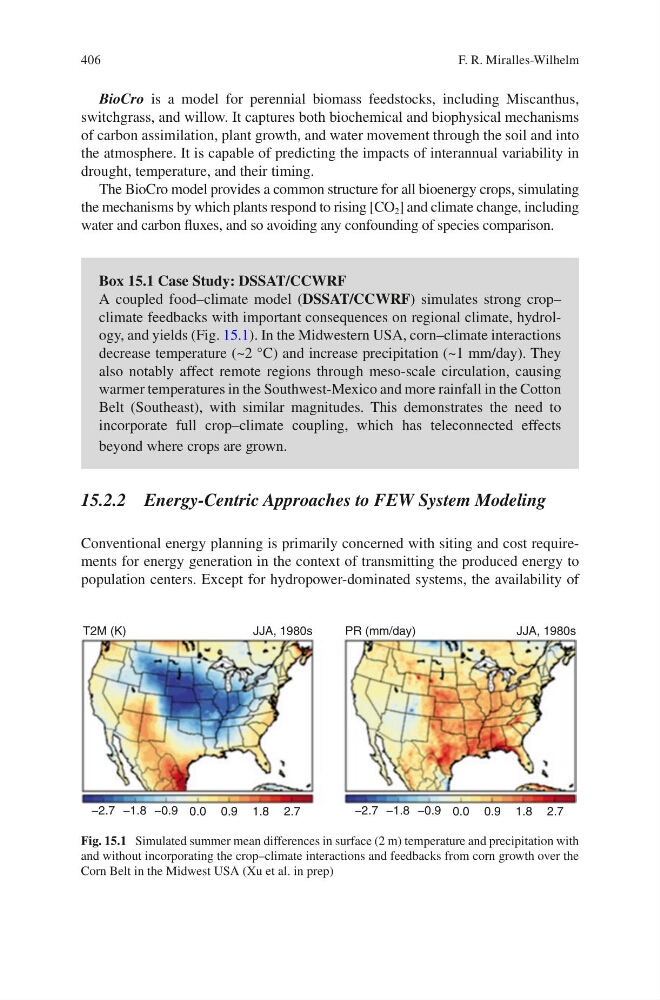
Fig. 15.1 Simulated summer mean differences in surface (2 m) temperature and precipitation with
and without incorporating the crop–climate interactions and feedbacks from corn growth over the
Corn Belt in the Midwest USA (Xu et al. in prep)
Box 15.1 Case Study: DSSAT/CCWRF
A coupled food–climate model (DSSAT/CCWRF) simulates strong crop–
climate feedbacks with important consequences on regional climate, hydrology, and yields (Fig. 15.1). In the Midwestern USA, corn–climate interactions
decrease temperature (~2 °C) and increase precipitation (~1 mm/day). They
also notably affect remote regions through meso-scale circulation, causing
warmer temperatures in the Southwest-Mexico and more rainfall in the Cotton
Belt (Southeast), with similar magnitudes. This demonstrates the need to
incorporate full crop–climate coupling, which has teleconnected effects
beyond where crops are grown.
F. R. Miralles-Wilhelm
BioCro is a model for perennial biomass feedstocks, including Miscanthus,
switchgrass, and willow. It captures both biochemical and biophysical mechanisms
of carbon assimilation, plant growth, and water movement through the soil and into
the atmosphere. It is capable of predicting the impacts of interannual variability in
drought, temperature, and their timing.
The BioCro model provides a common structure for all bioenergy crops, simulating
the mechanisms by which plants respond to rising [CO 2 ] and climate change, including
water and carbon fluxes, and so avoiding any confounding of species comparison.
15.2.2 Energy-Centric Approaches to FEW System Modeling
Conventional energy planning is primarily concerned with siting and cost requirements for energy generation in the context of transmitting the produced energy to
population centers. Except for hydropower-dominated systems, the availability of
T2M (K)
−2.7 −1.8 −0.9 0.0 0.9 1.8 2.7
−2.7 −1.8 −0.9 0.0 0.9 1.8 2.7
JJA, 1980s
PR (mm/day)
JJA, 1980s
Fig. 15.1 Simulated summer mean differences in surface (2 m) temperature and precipitation with
and without incorporating the crop–climate interactions and feedbacks from corn growth over the
Corn Belt in the Midwest USA (Xu et al. in prep)
Box 15.1 Case Study: DSSAT/CCWRF
A coupled food–climate model (DSSAT/CCWRF) simulates strong crop–
climate feedbacks with important consequences on regional climate, hydrology, and yields (Fig. 15.1). In the Midwestern USA, corn–climate interactions
decrease temperature (~2 °C) and increase precipitation (~1 mm/day). They
also notably affect remote regions through meso-scale circulation, causing
warmer temperatures in the Southwest-Mexico and more rainfall in the Cotton
Belt (Southeast), with similar magnitudes. This demonstrates the need to
incorporate full crop–climate coupling, which has teleconnected effects
beyond where crops are grown.
F. R. Miralles-Wilhelm