

340
Chapter 14 provides a detailed treatment of the issues surrounding data availability and data management for FEWS. Data is generated both by observations
and models. This data has attributes of structure, quality, scale, and resolution.
Resolution pertains to the level of detail with which the data describes the spatial,
temporal, and process-level variations in the system, and is subtly distinct from
scale in concept.
The data management life cycle is important to master in order to ensure that
other researchers and decision-makers can access the data that you generate. Data
and privacy ethics are the major concern when collecting FEWS data and must be
carefully attended to; in many cases, it is ethics rather than other factors, that limit
the availability of micro-scale data for FEWS work. Depending on what scale your
work requires, you should be aware of some common problems with data availability at that scale; Chapter 14 reviews these problems along with the other issues
summarized above.
12.4.3 Models
An integrated approach to modeling of FEW systems that is able to address the
research questions and stakeholder needs will need not only to couple modeling
tools for food, energy, and water systems but connect to decision science, data integration, and visual analytics. The logic of such an integrated approach is depicted
in Fig. 12.4.
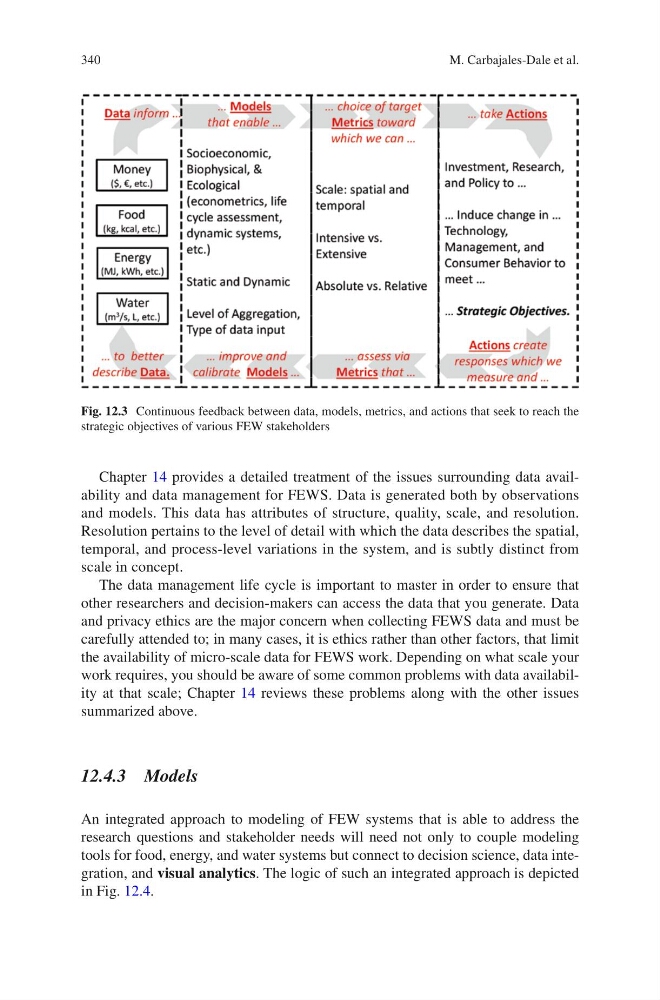
Fig. 12.3 Continuous feedback between data, models, metrics, and actions that seek to reach the
strategic objectives of various FEW stakeholders
M. Carbajales-Dale et al.
Chapter 14 provides a detailed treatment of the issues surrounding data availability and data management for FEWS. Data is generated both by observations
and models. This data has attributes of structure, quality, scale, and resolution.
Resolution pertains to the level of detail with which the data describes the spatial,
temporal, and process-level variations in the system, and is subtly distinct from
scale in concept.
The data management life cycle is important to master in order to ensure that
other researchers and decision-makers can access the data that you generate. Data
and privacy ethics are the major concern when collecting FEWS data and must be
carefully attended to; in many cases, it is ethics rather than other factors, that limit
the availability of micro-scale data for FEWS work. Depending on what scale your
work requires, you should be aware of some common problems with data availability at that scale; Chapter 14 reviews these problems along with the other issues
summarized above.
12.4.3 Models
An integrated approach to modeling of FEW systems that is able to address the
research questions and stakeholder needs will need not only to couple modeling
tools for food, energy, and water systems but connect to decision science, data integration, and visual analytics. The logic of such an integrated approach is depicted
in Fig. 12.4.
Fig. 12.3 Continuous feedback between data, models, metrics, and actions that seek to reach the
strategic objectives of various FEW stakeholders
M. Carbajales-Dale et al.