

339
12.4.1 Metrics
We value what we measure, and we measure what we value. Metrics represent both
data from measuring the physical world and data representing the values of stakeholders within society. Thus, metrics can be represented with units that are a mix of
both concepts, such as the quantity of water consumed (physical unit) relative to the
gross domestic product (an emergent, values laden economic accounting metric).
We use metrics to inform stakeholders on how to interpret and use models as
well as to verify that models accurately reflect and use data measured from the
physical world. Thus, there is tremendous utility in well-defined and consistent
metrics that all (or most) stakeholders agree to use for decision-making and modeling (Fig. 12.3).
12.4.2 Data
Data are collected to answer questions and must be collected specifically to address
the research questions. However, there are also questions we can ask about data.
What is the quality and structure of the data? Are the data accessible? At what scale
and resolution are the data available?
After one carefully identifies the scale at which a FEWS question or problem
must be studied and managed, one quickly discovers that complete systemic data is
not fully available at that scale. This is arguably the most severe practical barrier to
the study of FEWS.
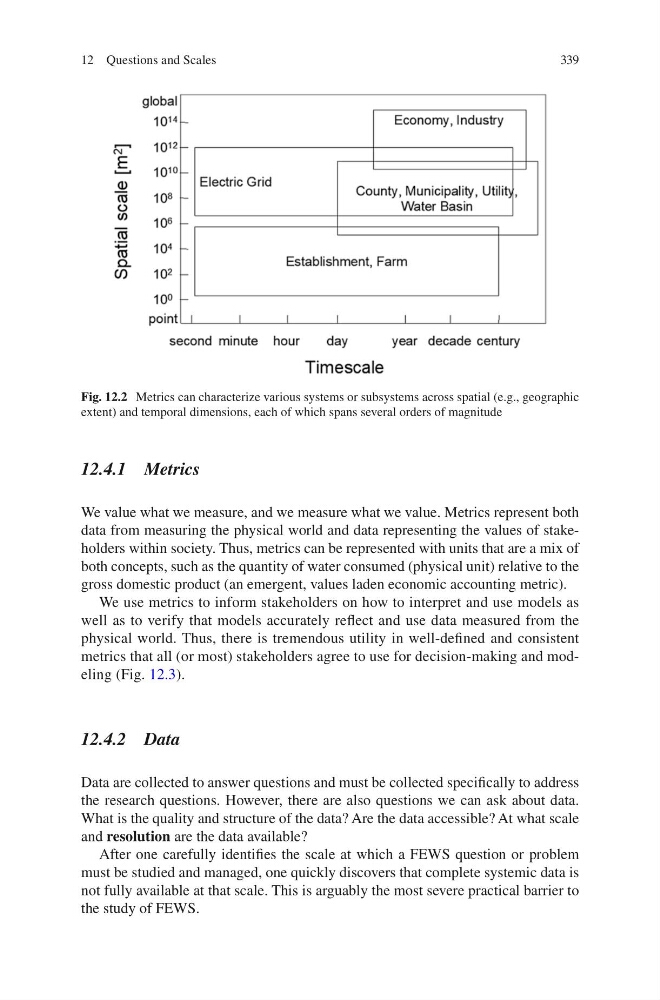
Fig. 12.2 Metrics can characterize various systems or subsystems across spatial (e.g., geographic
extent) and temporal dimensions, each of which spans several orders of magnitude
12 Questions and Scales
12.4.1 Metrics
We value what we measure, and we measure what we value. Metrics represent both
data from measuring the physical world and data representing the values of stakeholders within society. Thus, metrics can be represented with units that are a mix of
both concepts, such as the quantity of water consumed (physical unit) relative to the
gross domestic product (an emergent, values laden economic accounting metric).
We use metrics to inform stakeholders on how to interpret and use models as
well as to verify that models accurately reflect and use data measured from the
physical world. Thus, there is tremendous utility in well-defined and consistent
metrics that all (or most) stakeholders agree to use for decision-making and modeling (Fig. 12.3).
12.4.2 Data
Data are collected to answer questions and must be collected specifically to address
the research questions. However, there are also questions we can ask about data.
What is the quality and structure of the data? Are the data accessible? At what scale
and resolution are the data available?
After one carefully identifies the scale at which a FEWS question or problem
must be studied and managed, one quickly discovers that complete systemic data is
not fully available at that scale. This is arguably the most severe practical barrier to
the study of FEWS.
Fig. 12.2 Metrics can characterize various systems or subsystems across spatial (e.g., geographic
extent) and temporal dimensions, each of which spans several orders of magnitude
12 Questions and Scales