

301
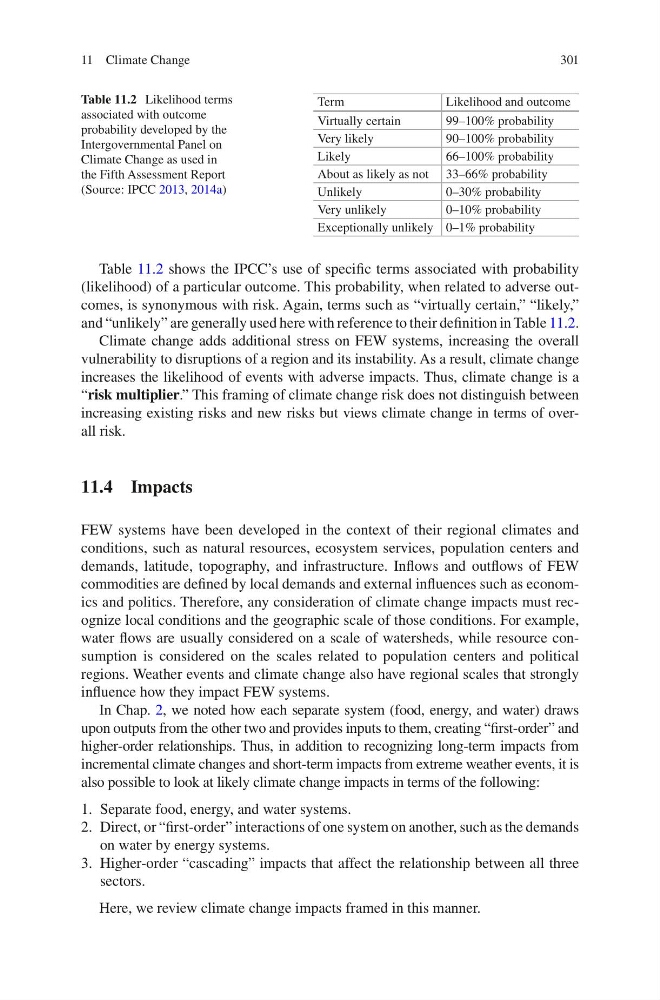
Table 11.2 shows the IPCC’s use of specific terms associated with probability
(likelihood) of a particular outcome. This probability, when related to adverse outcomes, is synonymous with risk. Again, terms such as “virtually certain,” “likely,”
and “unlikely” are generally used here with reference to their definition in Table 11.2.
Climate change adds additional stress on FEW systems, increasing the overall
vulnerability to disruptions of a region and its instability. As a result, climate change
increases the likelihood of events with adverse impacts. Thus, climate change is a
“risk multiplier.” This framing of climate change risk does not distinguish between
increasing existing risks and new risks but views climate change in terms of overall risk.
11.4 Impacts
FEW systems have been developed in the context of their regional climates and
conditions, such as natural resources, ecosystem services, population centers and
demands, latitude, topography, and infrastructure. Inflows and outflows of FEW
commodities are defined by local demands and external influences such as economics and politics. Therefore, any consideration of climate change impacts must recognize local conditions and the geographic scale of those conditions. For example,
water flows are usually considered on a scale of watersheds, while resource consumption is considered on the scales related to population centers and political
regions. Weather events and climate change also have regional scales that strongly
influence how they impact FEW systems.
In Chap. 2, we noted how each separate system (food, energy, and water) draws
upon outputs from the other two and provides inputs to them, creating “first-order” and
higher-order relationships. Thus, in addition to recognizing long-term impacts from
incremental climate changes and short-term impacts from extreme weather events, it is
also possible to look at likely climate change impacts in terms of the following:
1. Separate food, energy, and water systems.
2. Direct, or “first-order” interactions of one system on another, such as the demands
on water by energy systems.
3. Higher-order “cascading” impacts that affect the relationship between all three
sectors.
Here, we review climate change impacts framed in this manner.
Table 11.2 Likelihood terms
associated with outcome
probability developed by the
Intergovernmental Panel on
Climate Change as used in
the Fifth Assessment Report
(Source: IPCC 2013, 2014a)
Term
Likelihood and outcome
Virtually certain
99–100% probability
Very likely
90–100% probability
Likely
66–100% probability
About as likely as not 33–66% probability
Unlikely
0–30% probability
Very unlikely
0–10% probability
Exceptionally unlikely 0–1% probability
11 Climate Change
Table 11.2 shows the IPCC’s use of specific terms associated with probability
(likelihood) of a particular outcome. This probability, when related to adverse outcomes, is synonymous with risk. Again, terms such as “virtually certain,” “likely,”
and “unlikely” are generally used here with reference to their definition in Table 11.2.
Climate change adds additional stress on FEW systems, increasing the overall
vulnerability to disruptions of a region and its instability. As a result, climate change
increases the likelihood of events with adverse impacts. Thus, climate change is a
“risk multiplier.” This framing of climate change risk does not distinguish between
increasing existing risks and new risks but views climate change in terms of overall risk.
11.4 Impacts
FEW systems have been developed in the context of their regional climates and
conditions, such as natural resources, ecosystem services, population centers and
demands, latitude, topography, and infrastructure. Inflows and outflows of FEW
commodities are defined by local demands and external influences such as economics and politics. Therefore, any consideration of climate change impacts must recognize local conditions and the geographic scale of those conditions. For example,
water flows are usually considered on a scale of watersheds, while resource consumption is considered on the scales related to population centers and political
regions. Weather events and climate change also have regional scales that strongly
influence how they impact FEW systems.
In Chap. 2, we noted how each separate system (food, energy, and water) draws
upon outputs from the other two and provides inputs to them, creating “first-order” and
higher-order relationships. Thus, in addition to recognizing long-term impacts from
incremental climate changes and short-term impacts from extreme weather events, it is
also possible to look at likely climate change impacts in terms of the following:
1. Separate food, energy, and water systems.
2. Direct, or “first-order” interactions of one system on another, such as the demands
on water by energy systems.
3. Higher-order “cascading” impacts that affect the relationship between all three
sectors.
Here, we review climate change impacts framed in this manner.
Table 11.2 Likelihood terms
associated with outcome
probability developed by the
Intergovernmental Panel on
Climate Change as used in
the Fifth Assessment Report
(Source: IPCC 2013, 2014a)
Term
Likelihood and outcome
Virtually certain
99–100% probability
Very likely
90–100% probability
Likely
66–100% probability
About as likely as not 33–66% probability
Unlikely
0–30% probability
Very unlikely
0–10% probability
Exceptionally unlikely 0–1% probability
11 Climate Change