

278
mostly used for sludge preparation and cooling. There is also chemical waste from
the drilling, hydraulic fracturing and refining processes, but there is no FEWSION
code for chemical waste. Most of the waste at the consumption side is from emissions caused by the consumption of the natural gas and its by-products.
Natural gas, like oil, exists in naturally formed basins under the ground where it
has been stored for geological timescales. Natural gas reservoirs occur in many
parts of the world and in most countries, but some regions lack them entirely. The
USA is rich in natural gas, but it is concentrated in Southern California, the Rocky
Mountains, the Southern Great Plains, the Gulf of Mexico, Michigan, and
Appalachia. Unlike oil, which often requires capital-intensive and long-term drilling operations that can only be undertaken by major corporations, natural gas is
relatively easy to produce using modern hydraulic fracturing techniques and drilling, so there are currently a large number of small wells. Natural gas is produced by
drilling into these reservoirs.
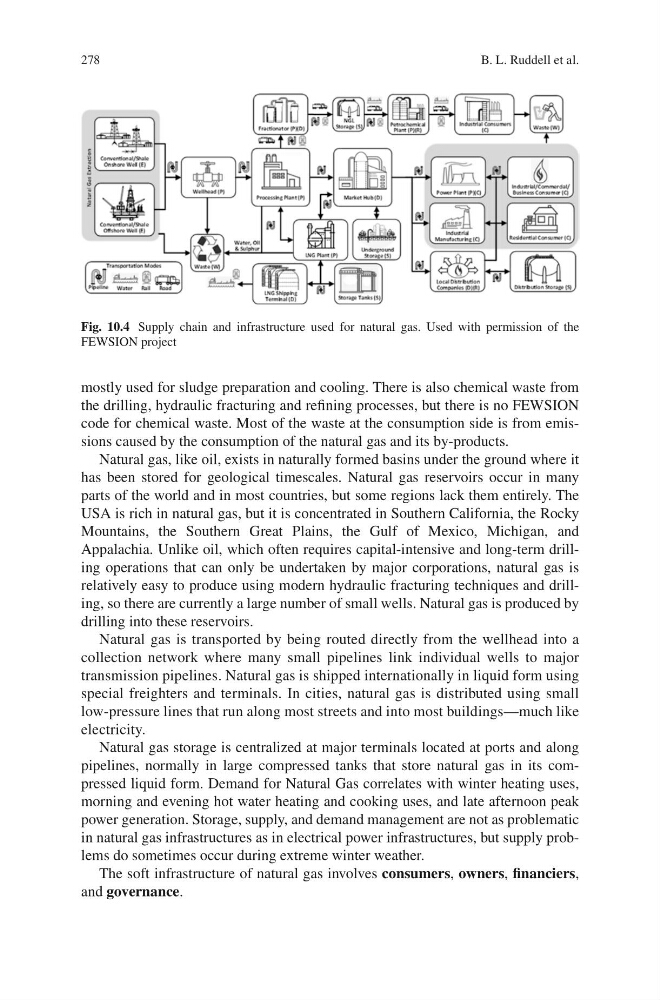
Natural gas is transported by being routed directly from the wellhead into a
collection network where many small pipelines link individual wells to major
transmission pipelines. Natural gas is shipped internationally in liquid form using
special freighters and terminals. In cities, natural gas is distributed using small
low-pressure lines that run along most streets and into most buildings—much like
electricity.
Natural gas storage is centralized at major terminals located at ports and along
pipelines, normally in large compressed tanks that store natural gas in its compressed liquid form. Demand for Natural Gas correlates with winter heating uses,
morning and evening hot water heating and cooking uses, and late afternoon peak
power generation. Storage, supply, and demand management are not as problematic
in natural gas infrastructures as in electrical power infrastructures, but supply problems do sometimes occur during extreme winter weather.
The soft infrastructure of natural gas involves consumers, owners, financiers,
and governance.
Fig. 10.4 Supply chain and infrastructure used for natural gas. Used with permission of the
FEWSION project
B. L. Ruddell et al.
mostly used for sludge preparation and cooling. There is also chemical waste from
the drilling, hydraulic fracturing and refining processes, but there is no FEWSION
code for chemical waste. Most of the waste at the consumption side is from emissions caused by the consumption of the natural gas and its by-products.
Natural gas, like oil, exists in naturally formed basins under the ground where it
has been stored for geological timescales. Natural gas reservoirs occur in many
parts of the world and in most countries, but some regions lack them entirely. The
USA is rich in natural gas, but it is concentrated in Southern California, the Rocky
Mountains, the Southern Great Plains, the Gulf of Mexico, Michigan, and
Appalachia. Unlike oil, which often requires capital-intensive and long-term drilling operations that can only be undertaken by major corporations, natural gas is
relatively easy to produce using modern hydraulic fracturing techniques and drilling, so there are currently a large number of small wells. Natural gas is produced by
drilling into these reservoirs.
Natural gas is transported by being routed directly from the wellhead into a
collection network where many small pipelines link individual wells to major
transmission pipelines. Natural gas is shipped internationally in liquid form using
special freighters and terminals. In cities, natural gas is distributed using small
low-pressure lines that run along most streets and into most buildings—much like
electricity.
Natural gas storage is centralized at major terminals located at ports and along
pipelines, normally in large compressed tanks that store natural gas in its compressed liquid form. Demand for Natural Gas correlates with winter heating uses,
morning and evening hot water heating and cooking uses, and late afternoon peak
power generation. Storage, supply, and demand management are not as problematic
in natural gas infrastructures as in electrical power infrastructures, but supply problems do sometimes occur during extreme winter weather.
The soft infrastructure of natural gas involves consumers, owners, financiers,
and governance.
Fig. 10.4 Supply chain and infrastructure used for natural gas. Used with permission of the
FEWSION project
B. L. Ruddell et al.