

118
Researchers investigating farmers’ land management decisions have found that not
all farmers have the same motivations for adopting BMPs and that policies that
endeavor to target their behavior may not be taking this heterogeneity into account.
Characteristics, such as how effective farmers believe the BMPs to be, have been
found to impact their willingness to adopt certain recommended practices; however,
these perceptions do not impact all farmers in the same way. Wilson et al. (2014)
found that the perceived effectiveness of the practices is more likely to affect the decisions of older farmers more concerned with their farm’s profitability. Similarly, work
by Zhang et al. (2016) found that farmers can be classified into different groups based
on their propensity to adopt certain BMPs and that these groups may have different
motivations for their land management decisions. For example, farmers who selfidentify as conservationists were more likely to adopt BMPs on their land than those
who identify primarily as agricultural producers. Farmers may also place differential
importance on the BMPs employed by other farmers in their area and therefore
respond differently to social pressure to engage in particular practices.
4.5.1.1 Practical Implications
Management of this complex system, where the goal is to produce food in an
economically viable manner while protecting critical ecosystem services, demonstrates that understanding human behavior is critical. The work being done in this
100%
90%
80%
70%
60%
50%
40%
30%
20%
10%
0%
Soil test informed
application rates
Storm-based
application delay
Avoid winter
application
Cover crops
Subsurface
placement
Conservation Practice
Avg Reported Adoption
Avg. Intended Adoption
% of farmers in each category of adoption
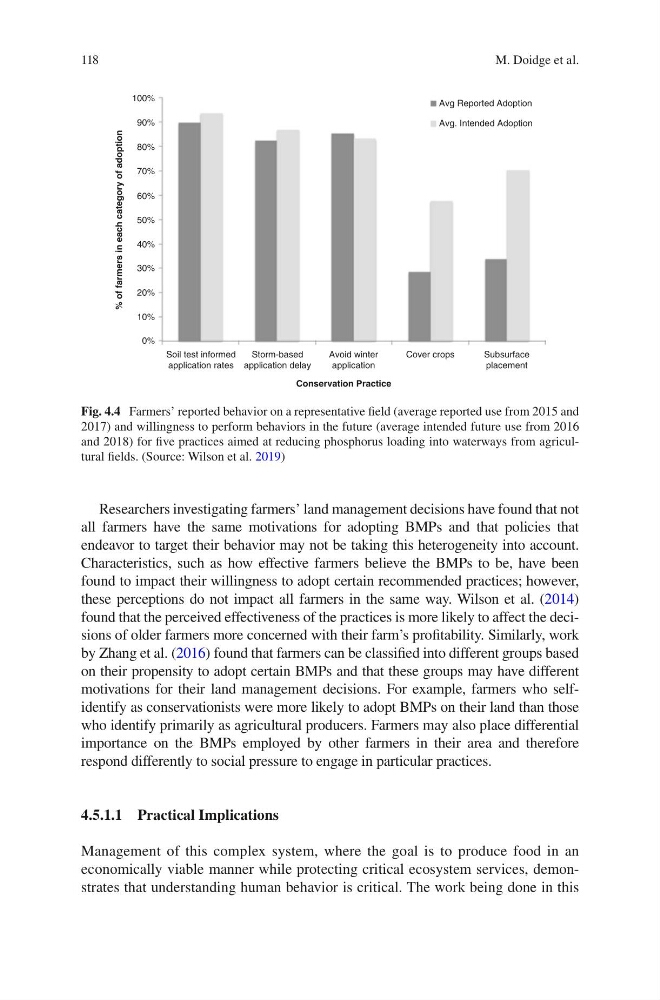
Fig. 4.4 Farmers’ reported behavior on a representative field (average reported use from 2015 and
2017) and willingness to perform behaviors in the future (average intended future use from 2016
and 2018) for five practices aimed at reducing phosphorus loading into waterways from agricultural fields. (Source: Wilson et al. 2019)
M. Doidge et al.
Researchers investigating farmers’ land management decisions have found that not
all farmers have the same motivations for adopting BMPs and that policies that
endeavor to target their behavior may not be taking this heterogeneity into account.
Characteristics, such as how effective farmers believe the BMPs to be, have been
found to impact their willingness to adopt certain recommended practices; however,
these perceptions do not impact all farmers in the same way. Wilson et al. (2014)
found that the perceived effectiveness of the practices is more likely to affect the decisions of older farmers more concerned with their farm’s profitability. Similarly, work
by Zhang et al. (2016) found that farmers can be classified into different groups based
on their propensity to adopt certain BMPs and that these groups may have different
motivations for their land management decisions. For example, farmers who selfidentify as conservationists were more likely to adopt BMPs on their land than those
who identify primarily as agricultural producers. Farmers may also place differential
importance on the BMPs employed by other farmers in their area and therefore
respond differently to social pressure to engage in particular practices.
4.5.1.1 Practical Implications
Management of this complex system, where the goal is to produce food in an
economically viable manner while protecting critical ecosystem services, demonstrates that understanding human behavior is critical. The work being done in this
100%
90%
80%
70%
60%
50%
40%
30%
20%
10%
0%
Soil test informed
application rates
Storm-based
application delay
Avoid winter
application
Cover crops
Subsurface
placement
Conservation Practice
Avg Reported Adoption
Avg. Intended Adoption
% of farmers in each category of adoption
Fig. 4.4 Farmers’ reported behavior on a representative field (average reported use from 2015 and
2017) and willingness to perform behaviors in the future (average intended future use from 2016
and 2018) for five practices aimed at reducing phosphorus loading into waterways from agricultural fields. (Source: Wilson et al. 2019)
M. Doidge et al.