

108
4.3.4 Behavioral Responses and Feedbacks
People can respond to changes in FEW systems or to new FEW policies with desirable changes in their behavior, such as reducing water consumption in response to a
water conservation policy. However, people may also alter their behavior in undesirable ways. Specifically, rebound and boomerang effects can occur (See Sect.
5.2.2), stemming from market signals or from socio-psychological processes.
Rebound effects are unintended responses to changes in the social system, such
as the introduction of new technology or policy, which results in a reduction or
reversal of the intended impact. The introduction of a new, more energy-efficient
technology may result in a decrease in household energy use and subsequent cost.
In response to these energy savings, the household may respond by using more
energy so that the energy reduction impact of the new technology is not as great as
initially projected. Similarly, the introduction of more efficient irrigation systems
has been found to result in an increase in water use (Pfeiffer & Lin 2014). Not
accounting for potential rebound effects may cause researchers to over-estimate the
impact of certain technological advances and assume environmental benefits that
may not materialize.
Boomerang effects describe the unexpected ways in which people may respond
to efforts intended to promote a particular behavioral change. Boomerang effects
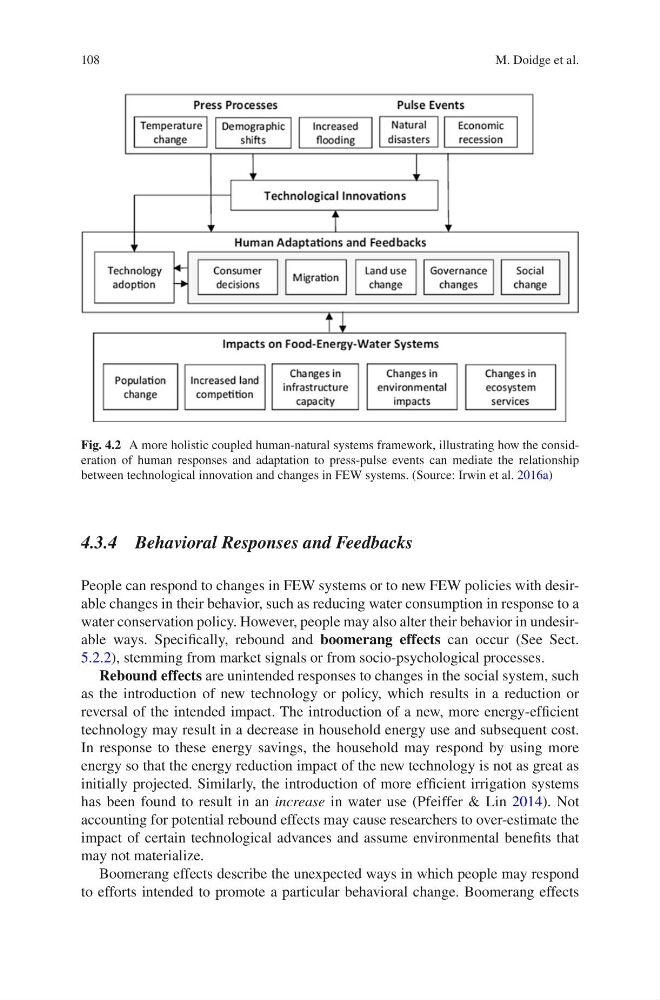
Fig. 4.2 A more holistic coupled human-natural systems framework, illustrating how the consideration of human responses and adaptation to press-pulse events can mediate the relationship
between technological innovation and changes in FEW systems. (Source: Irwin et al. 2016a)
M. Doidge et al.
4.3.4 Behavioral Responses and Feedbacks
People can respond to changes in FEW systems or to new FEW policies with desirable changes in their behavior, such as reducing water consumption in response to a
water conservation policy. However, people may also alter their behavior in undesirable ways. Specifically, rebound and boomerang effects can occur (See Sect.
5.2.2), stemming from market signals or from socio-psychological processes.
Rebound effects are unintended responses to changes in the social system, such
as the introduction of new technology or policy, which results in a reduction or
reversal of the intended impact. The introduction of a new, more energy-efficient
technology may result in a decrease in household energy use and subsequent cost.
In response to these energy savings, the household may respond by using more
energy so that the energy reduction impact of the new technology is not as great as
initially projected. Similarly, the introduction of more efficient irrigation systems
has been found to result in an increase in water use (Pfeiffer & Lin 2014). Not
accounting for potential rebound effects may cause researchers to over-estimate the
impact of certain technological advances and assume environmental benefits that
may not materialize.
Boomerang effects describe the unexpected ways in which people may respond
to efforts intended to promote a particular behavioral change. Boomerang effects
Fig. 4.2 A more holistic coupled human-natural systems framework, illustrating how the consideration of human responses and adaptation to press-pulse events can mediate the relationship
between technological innovation and changes in FEW systems. (Source: Irwin et al. 2016a)
M. Doidge et al.