

37
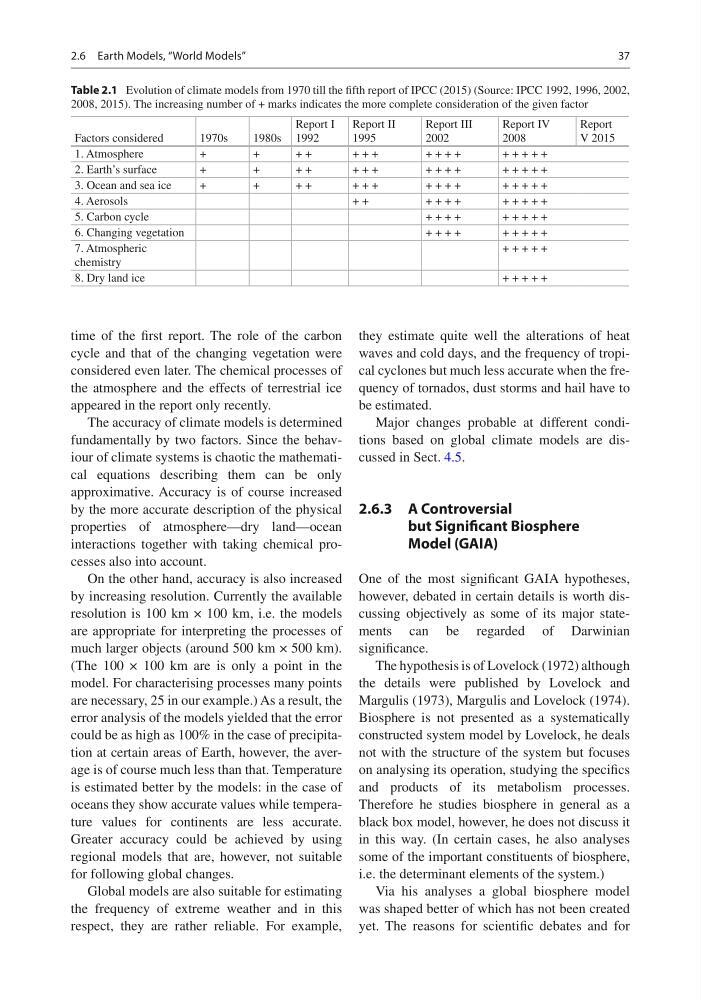
Table 2.1 Evolution of climate models from 1970 till the fifth report of IPCC (2015) (Source: IPCC 1992, 1996, 2002,
2008, 2015). The increasing number of + marks indicates the more complete consideration of the given factor
Factors considered
1970s
1980s
Report I
1992
Report II
1995
Report III
2002
Report IV
2008
Report
V 2015
1. Atmosphere
+
+
+ +
+ + +
+ + + +
+ + + + +
2. Earth’s surface
+
+
+ +
+ + +
+ + + +
+ + + + +
3. Ocean and sea ice
+
+
+ +
+ + +
+ + + +
+ + + + +
4. Aerosols
+ +
+ + + +
+ + + + +
5. Carbon cycle
+ + + +
+ + + + +
6. Changing vegetation
+ + + +
+ + + + +
7. Atmospheric
chemistry
+ + + + +
8. Dry land ice
+ + + + +
time of the first report. The role of the carbon
cycle and that of the changing vegetation were
considered even later. The chemical processes of
the atmosphere and the effects of terrestrial ice
appeared in the report only recently.
The accuracy of climate models is determined
fundamentally by two factors. Since the behaviour of climate systems is chaotic the mathematical equations describing them can be only
approximative. Accuracy is of course increased
by the more accurate description of the physical
properties of atmosphere—dry land—ocean
interactions together with taking chemical processes also into account.
On the other hand, accuracy is also increased
by increasing resolution. Currently the available
resolution is 100 km × 100 km, i.e. the models
are appropriate for interpreting the processes of
much larger objects (around 500 km × 500 km).
(The 100 × 100 km are is only a point in the
model. For characterising processes many points
are necessary, 25 in our example.) As a result, the
error analysis of the models yielded that the error
could be as high as 100% in the case of precipitation at certain areas of Earth, however, the average is of course much less than that. Temperature
is estimated better by the models: in the case of
oceans they show accurate values while temperature values for continents are less accurate.
Greater accuracy could be achieved by using
regional models that are, however, not suitable
for following global changes.
Global models are also suitable for estimating
the frequency of extreme weather and in this
respect, they are rather reliable. For example,
they estimate quite well the alterations of heat
waves and cold days, and the frequency of tropical cyclones but much less accurate when the frequency of tornados, dust storms and hail have to
be estimated.
Major changes probable at different conditions based on global climate models are discussed in Sect. 4.5.
2.6.3 A Controversial
but Significant Biosphere
Model (GAIA)
One of the most significant GAIA hypotheses,
however, debated in certain details is worth discussing objectively as some of its major statements can be regarded of Darwinian
significance.
The hypothesis is of Lovelock (1972) although
the details were published by Lovelock and
Margulis (1973), Margulis and Lovelock (1974).
Biosphere is not presented as a systematically
constructed system model by Lovelock, he deals
not with the structure of the system but focuses
on analysing its operation, studying the specifics
and products of its metabolism processes.
Therefore he studies biosphere in general as a
black box model, however, he does not discuss it
in this way. (In certain cases, he also analyses
some of the important constituents of biosphere,
i.e. the determinant elements of the system.)
Via his analyses a global biosphere model
was shaped better of which has not been created
yet. The reasons for scientific debates and for
2.6 Earth Models, “World Models”
Table 2.1 Evolution of climate models from 1970 till the fifth report of IPCC (2015) (Source: IPCC 1992, 1996, 2002,
2008, 2015). The increasing number of + marks indicates the more complete consideration of the given factor
Factors considered
1970s
1980s
Report I
1992
Report II
1995
Report III
2002
Report IV
2008
Report
V 2015
1. Atmosphere
+
+
+ +
+ + +
+ + + +
+ + + + +
2. Earth’s surface
+
+
+ +
+ + +
+ + + +
+ + + + +
3. Ocean and sea ice
+
+
+ +
+ + +
+ + + +
+ + + + +
4. Aerosols
+ +
+ + + +
+ + + + +
5. Carbon cycle
+ + + +
+ + + + +
6. Changing vegetation
+ + + +
+ + + + +
7. Atmospheric
chemistry
+ + + + +
8. Dry land ice
+ + + + +
time of the first report. The role of the carbon
cycle and that of the changing vegetation were
considered even later. The chemical processes of
the atmosphere and the effects of terrestrial ice
appeared in the report only recently.
The accuracy of climate models is determined
fundamentally by two factors. Since the behaviour of climate systems is chaotic the mathematical equations describing them can be only
approximative. Accuracy is of course increased
by the more accurate description of the physical
properties of atmosphere—dry land—ocean
interactions together with taking chemical processes also into account.
On the other hand, accuracy is also increased
by increasing resolution. Currently the available
resolution is 100 km × 100 km, i.e. the models
are appropriate for interpreting the processes of
much larger objects (around 500 km × 500 km).
(The 100 × 100 km are is only a point in the
model. For characterising processes many points
are necessary, 25 in our example.) As a result, the
error analysis of the models yielded that the error
could be as high as 100% in the case of precipitation at certain areas of Earth, however, the average is of course much less than that. Temperature
is estimated better by the models: in the case of
oceans they show accurate values while temperature values for continents are less accurate.
Greater accuracy could be achieved by using
regional models that are, however, not suitable
for following global changes.
Global models are also suitable for estimating
the frequency of extreme weather and in this
respect, they are rather reliable. For example,
they estimate quite well the alterations of heat
waves and cold days, and the frequency of tropical cyclones but much less accurate when the frequency of tornados, dust storms and hail have to
be estimated.
Major changes probable at different conditions based on global climate models are discussed in Sect. 4.5.
2.6.3 A Controversial
but Significant Biosphere
Model (GAIA)
One of the most significant GAIA hypotheses,
however, debated in certain details is worth discussing objectively as some of its major statements can be regarded of Darwinian
significance.
The hypothesis is of Lovelock (1972) although
the details were published by Lovelock and
Margulis (1973), Margulis and Lovelock (1974).
Biosphere is not presented as a systematically
constructed system model by Lovelock, he deals
not with the structure of the system but focuses
on analysing its operation, studying the specifics
and products of its metabolism processes.
Therefore he studies biosphere in general as a
black box model, however, he does not discuss it
in this way. (In certain cases, he also analyses
some of the important constituents of biosphere,
i.e. the determinant elements of the system.)
Via his analyses a global biosphere model
was shaped better of which has not been created
yet. The reasons for scientific debates and for
2.6 Earth Models, “World Models”