

223
certain politicians for their own political goals
increasing in this way the antipathy of people in
the receiving country towards migrants. Other
politicians hope that migrants will support them
and their aims. Considering global social and
environmental processes increasing migration
seems to be highly likely and this could contribute to increasing tension in many countries. All
the above question the connecting role of
migration.
The role of religious networks (churches) in
global interconnectivity is also ambiguous. There
are strong boundaries even within certain religions. For example, opposition between Shia and
Sunni within Islam is much more bloodstained
than boundaries towards people with other
religion.
On the whole, the authors of the present book
agree to Rawlinson (2018) who predicts that
global social and economic processes will navigate towards both integration and fragmentation
in the coming decade.
5.6
“Multi-Layered” Global
Society and Sustainable
Development
On the basis of the above, we consider the structure of global society being “multi-layered”. This
structure is illustrated by superposing world
maps prepared according to various aspects. In
this subchapter the most important layers are discussed with brief notes regarding their role in
sustainable development.
1. Layers divided according to areas
(a) Political division: countries, provinces,
settlements; federal states, country
groups. This is the controlling layer.
(b) Ethnic division: this can be in conformity
with
political
boundaries
rarely.
(Homogeneous nation-states.) More often,
however, there are several ethnic communities inside country borders, frequently
scattered, sometimes in separate blocks.
(c) Religious division: although major religions can be determined spatially as well,
maps including congregations and small
religions—due to their extreme mosaic
character—could hardly be constructed.
Churches operate in a network structure.
It is also frequent that there is a close
correlation between ethnic and religious
divisions.
(d) Tribal division is characterised by power
over small areas. Generally, occurs in less
developed countries: small tribal communities form a society with extreme mosaic
structure.
2. Layers with network structure not or only
slightly tied to areas. Within those populated
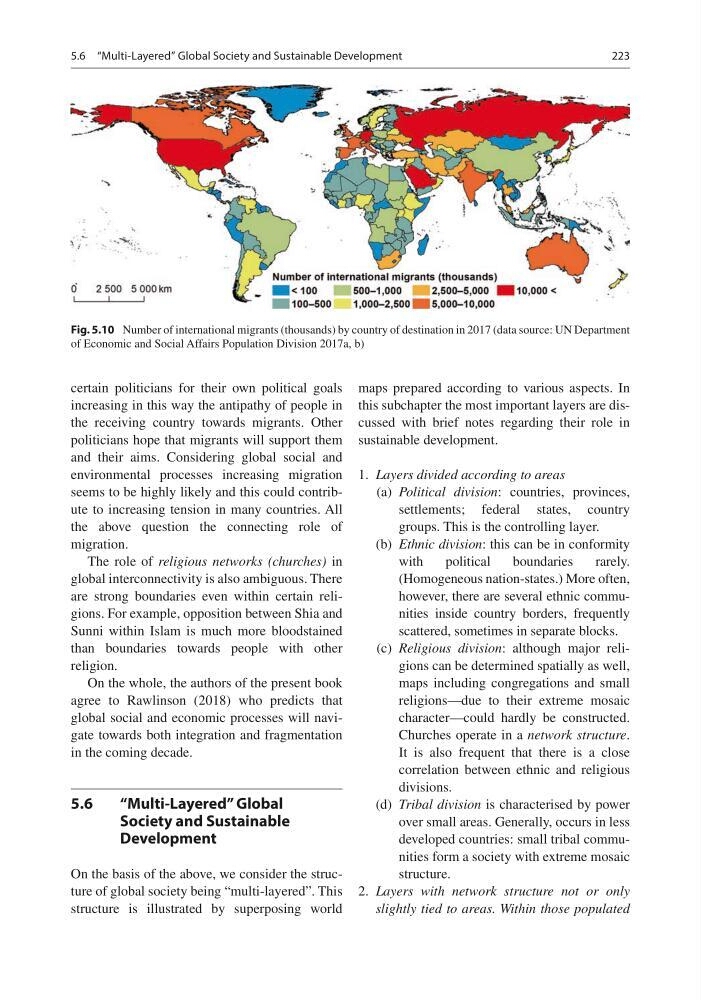
Fig. 5.10 Number of international migrants (thousands) by country of destination in 2017 (data source: UN Department
of Economic and Social Affairs Population Division 2017a, b)
5.6 “Multi-Layered” Global Society and Sustainable Development
certain politicians for their own political goals
increasing in this way the antipathy of people in
the receiving country towards migrants. Other
politicians hope that migrants will support them
and their aims. Considering global social and
environmental processes increasing migration
seems to be highly likely and this could contribute to increasing tension in many countries. All
the above question the connecting role of
migration.
The role of religious networks (churches) in
global interconnectivity is also ambiguous. There
are strong boundaries even within certain religions. For example, opposition between Shia and
Sunni within Islam is much more bloodstained
than boundaries towards people with other
religion.
On the whole, the authors of the present book
agree to Rawlinson (2018) who predicts that
global social and economic processes will navigate towards both integration and fragmentation
in the coming decade.
5.6
“Multi-Layered” Global
Society and Sustainable
Development
On the basis of the above, we consider the structure of global society being “multi-layered”. This
structure is illustrated by superposing world
maps prepared according to various aspects. In
this subchapter the most important layers are discussed with brief notes regarding their role in
sustainable development.
1. Layers divided according to areas
(a) Political division: countries, provinces,
settlements; federal states, country
groups. This is the controlling layer.
(b) Ethnic division: this can be in conformity
with
political
boundaries
rarely.
(Homogeneous nation-states.) More often,
however, there are several ethnic communities inside country borders, frequently
scattered, sometimes in separate blocks.
(c) Religious division: although major religions can be determined spatially as well,
maps including congregations and small
religions—due to their extreme mosaic
character—could hardly be constructed.
Churches operate in a network structure.
It is also frequent that there is a close
correlation between ethnic and religious
divisions.
(d) Tribal division is characterised by power
over small areas. Generally, occurs in less
developed countries: small tribal communities form a society with extreme mosaic
structure.
2. Layers with network structure not or only
slightly tied to areas. Within those populated
Fig. 5.10 Number of international migrants (thousands) by country of destination in 2017 (data source: UN Department
of Economic and Social Affairs Population Division 2017a, b)
5.6 “Multi-Layered” Global Society and Sustainable Development