

217
5.5
The New or Digital
Globalisation
In this subchapter the most important current
processes of global society and its geographical
structure are discussed. New processes of globalisation became dominant in the twenty-first
century causing a functional change in the society. One of the most dominant processes in the
change is extremely increasing global data flow:
global data flow increased 45 times of its value
between 2005 and 2014 while the traditional
forms of international trade (goods and money)
increased only moderately or even decreased at
times. The GDP increase from data flows has a
larger impact than goods trade (McKinsey Global
Institute 2016). A keyword for globalisation
today is connectivity in which the Internet has a
leading role. This is why today’s globalisation is
called digital globalisation as used by scientists
of McKinsey Global Institute, however, the term
new globalisation is also pertinent as other processes, apart from digitalisation, also occur and
intensify as discussed below.
Interconnectivity is traced, on the one hand, in
the volume and speed of information flow never
experienced before and on the other hand, in
infrastructural equipment built with enormous
technical performance (Khanna 2016).
Bridges, tunnels, (fast) railways connecting
countries are built at an increasing rate. The
Marmara tunnel in Turkey enables the transport
of high volume goods between Europe and Asia.
Similarly, the Gotthard Road Tunnel (2016)
intensified connection between Italy and
Switzerland. Japan apart from connecting its own
major islands (Seikan Tunnel) plans to connect to
Sakhalin and South Korea as well via tunnels.
Bridge(s) are planned between the Arabic peninsula and Africa while a bridge was built between
Denmark and Sweden as well. A tunnel was built
between France and Great Britain while the construction of a submarine tunnel is planned
between Gibraltar and Tangier (Morocco) as
well. In South America the shores of the Atlantic
Ocean and that of the Pacific Ocean are planned
to be connected by the Trans-Amazonian
Highway from Sao Paulo to Peru. The initiation
of the Chinese government called One Belt, One
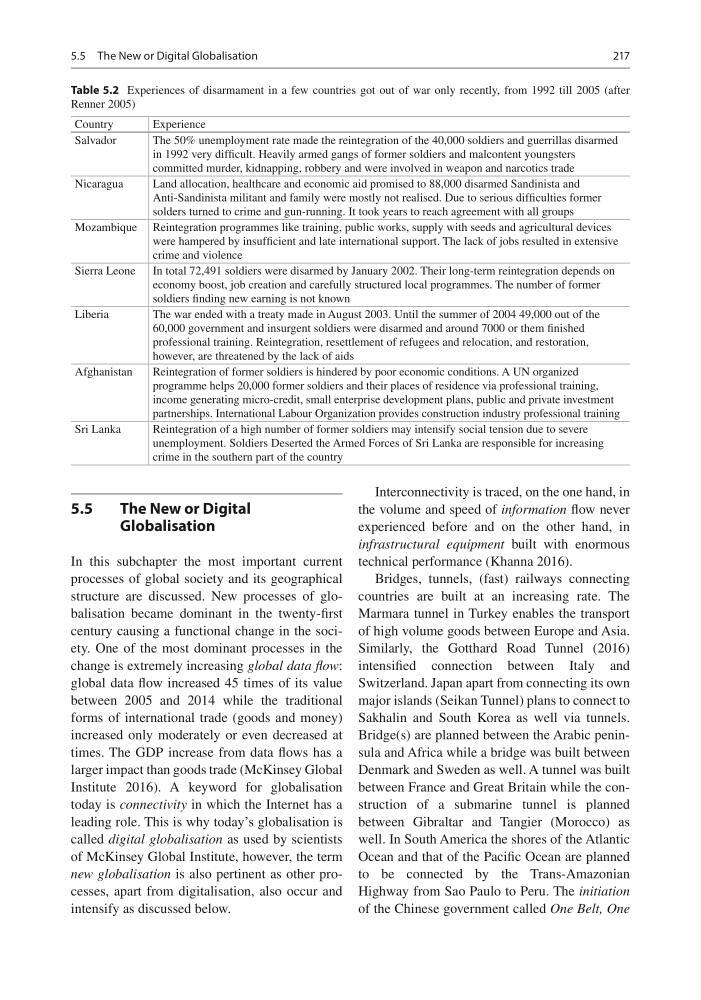
Table 5.2 Experiences of disarmament in a few countries got out of war only recently, from 1992 till 2005 (after
Renner 2005)
Country
Experience
Salvador
The 50% unemployment rate made the reintegration of the 40,000 soldiers and guerrillas disarmed
in 1992 very difficult. Heavily armed gangs of former soldiers and malcontent youngsters
committed murder, kidnapping, robbery and were involved in weapon and narcotics trade
Nicaragua
Land allocation, healthcare and economic aid promised to 88,000 disarmed Sandinista and
Anti-Sandinista militant and family were mostly not realised. Due to serious difficulties former
solders turned to crime and gun-running. It took years to reach agreement with all groups
Mozambique Reintegration programmes like training, public works, supply with seeds and agricultural devices
were hampered by insufficient and late international support. The lack of jobs resulted in extensive
crime and violence
Sierra Leone In total 72,491 soldiers were disarmed by January 2002. Their long-term reintegration depends on
economy boost, job creation and carefully structured local programmes. The number of former
soldiers finding new earning is not known
Liberia
The war ended with a treaty made in August 2003. Until the summer of 2004 49,000 out of the
60,000 government and insurgent soldiers were disarmed and around 7000 or them finished
professional training. Reintegration, resettlement of refugees and relocation, and restoration,
however, are threatened by the lack of aids
Afghanistan
Reintegration of former soldiers is hindered by poor economic conditions. A UN organized
programme helps 20,000 former soldiers and their places of residence via professional training,
income generating micro-credit, small enterprise development plans, public and private investment
partnerships. International Labour Organization provides construction industry professional training
Sri Lanka
Reintegration of a high number of former soldiers may intensify social tension due to severe
unemployment. Soldiers Deserted the Armed Forces of Sri Lanka are responsible for increasing
crime in the southern part of the country
5.5 The New or Digital Globalisation
5.5
The New or Digital
Globalisation
In this subchapter the most important current
processes of global society and its geographical
structure are discussed. New processes of globalisation became dominant in the twenty-first
century causing a functional change in the society. One of the most dominant processes in the
change is extremely increasing global data flow:
global data flow increased 45 times of its value
between 2005 and 2014 while the traditional
forms of international trade (goods and money)
increased only moderately or even decreased at
times. The GDP increase from data flows has a
larger impact than goods trade (McKinsey Global
Institute 2016). A keyword for globalisation
today is connectivity in which the Internet has a
leading role. This is why today’s globalisation is
called digital globalisation as used by scientists
of McKinsey Global Institute, however, the term
new globalisation is also pertinent as other processes, apart from digitalisation, also occur and
intensify as discussed below.
Interconnectivity is traced, on the one hand, in
the volume and speed of information flow never
experienced before and on the other hand, in
infrastructural equipment built with enormous
technical performance (Khanna 2016).
Bridges, tunnels, (fast) railways connecting
countries are built at an increasing rate. The
Marmara tunnel in Turkey enables the transport
of high volume goods between Europe and Asia.
Similarly, the Gotthard Road Tunnel (2016)
intensified connection between Italy and
Switzerland. Japan apart from connecting its own
major islands (Seikan Tunnel) plans to connect to
Sakhalin and South Korea as well via tunnels.
Bridge(s) are planned between the Arabic peninsula and Africa while a bridge was built between
Denmark and Sweden as well. A tunnel was built
between France and Great Britain while the construction of a submarine tunnel is planned
between Gibraltar and Tangier (Morocco) as
well. In South America the shores of the Atlantic
Ocean and that of the Pacific Ocean are planned
to be connected by the Trans-Amazonian
Highway from Sao Paulo to Peru. The initiation
of the Chinese government called One Belt, One
Table 5.2 Experiences of disarmament in a few countries got out of war only recently, from 1992 till 2005 (after
Renner 2005)
Country
Experience
Salvador
The 50% unemployment rate made the reintegration of the 40,000 soldiers and guerrillas disarmed
in 1992 very difficult. Heavily armed gangs of former soldiers and malcontent youngsters
committed murder, kidnapping, robbery and were involved in weapon and narcotics trade
Nicaragua
Land allocation, healthcare and economic aid promised to 88,000 disarmed Sandinista and
Anti-Sandinista militant and family were mostly not realised. Due to serious difficulties former
solders turned to crime and gun-running. It took years to reach agreement with all groups
Mozambique Reintegration programmes like training, public works, supply with seeds and agricultural devices
were hampered by insufficient and late international support. The lack of jobs resulted in extensive
crime and violence
Sierra Leone In total 72,491 soldiers were disarmed by January 2002. Their long-term reintegration depends on
economy boost, job creation and carefully structured local programmes. The number of former
soldiers finding new earning is not known
Liberia
The war ended with a treaty made in August 2003. Until the summer of 2004 49,000 out of the
60,000 government and insurgent soldiers were disarmed and around 7000 or them finished
professional training. Reintegration, resettlement of refugees and relocation, and restoration,
however, are threatened by the lack of aids
Afghanistan
Reintegration of former soldiers is hindered by poor economic conditions. A UN organized
programme helps 20,000 former soldiers and their places of residence via professional training,
income generating micro-credit, small enterprise development plans, public and private investment
partnerships. International Labour Organization provides construction industry professional training
Sri Lanka
Reintegration of a high number of former soldiers may intensify social tension due to severe
unemployment. Soldiers Deserted the Armed Forces of Sri Lanka are responsible for increasing
crime in the southern part of the country
5.5 The New or Digital Globalisation