

204
The operation of the globalised world is
defined fundamentally by economic processes
but cultural-civilisation conditions also have an
important role. Accordingly, experts analyse first
the specifics of the global economy (Dicken
1998; Bernek 2002; Went 2000; Handy 2015;
Khanna 2016) then the social consequences are
focused.
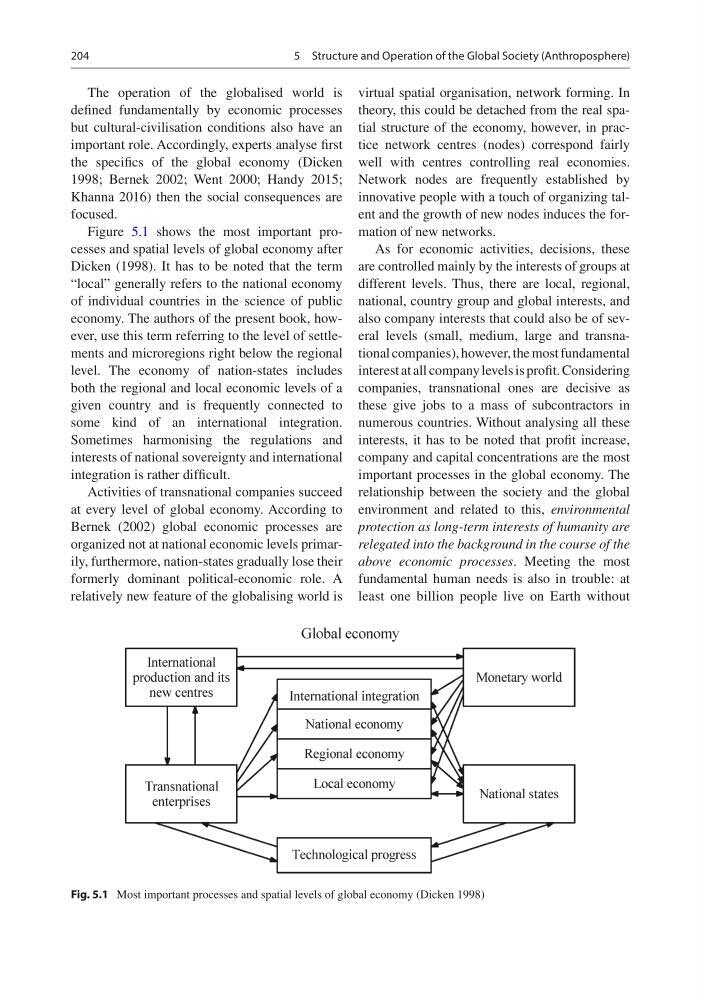
Figure 5.1 shows the most important processes and spatial levels of global economy after
Dicken (1998). It has to be noted that the term
“local” generally refers to the national economy
of individual countries in the science of public
economy. The authors of the present book, however, use this term referring to the level of settlements and microregions right below the regional
level. The economy of nation-states includes
both the regional and local economic levels of a
given country and is frequently connected to
some kind of an international integration.
Sometimes harmonising the regulations and
interests of national sovereignty and international
integration is rather difficult.
Activities of transnational companies succeed
at every level of global economy. According to
Bernek (2002) global economic processes are
organized not at national economic levels primarily, furthermore, nation-states gradually lose their
formerly dominant political-economic role. A
relatively new feature of the globalising world is
virtual spatial organisation, network forming. In
theory, this could be detached from the real spatial structure of the economy, however, in practice network centres (nodes) correspond fairly
well with centres controlling real economies.
Network nodes are frequently established by
innovative people with a touch of organizing talent and the growth of new nodes induces the formation of new networks.
As for economic activities, decisions, these
are controlled mainly by the interests of groups at
different levels. Thus, there are local, regional,
national, country group and global interests, and
also company interests that could also be of several levels (small, medium, large and transnational companies), however, the most fundamental
interest at all company levels is profit. Considering
companies, transnational ones are decisive as
these give jobs to a mass of subcontractors in
numerous countries. Without analysing all these
interests, it has to be noted that profit increase,
company and capital concentrations are the most
important processes in the global economy. The
relationship between the society and the global
environment and related to this, environmental
protection as long-term interests of humanity are
relegated into the background in the course of the
above economic processes. Meeting the most
fundamental human needs is also in trouble: at
least one billion people live on Earth without
Fig. 5.1 Most important processes and spatial levels of global economy (Dicken 1998)
5 Structure and Operation of the Global Society (Anthroposphere)
The operation of the globalised world is
defined fundamentally by economic processes
but cultural-civilisation conditions also have an
important role. Accordingly, experts analyse first
the specifics of the global economy (Dicken
1998; Bernek 2002; Went 2000; Handy 2015;
Khanna 2016) then the social consequences are
focused.
Figure 5.1 shows the most important processes and spatial levels of global economy after
Dicken (1998). It has to be noted that the term
“local” generally refers to the national economy
of individual countries in the science of public
economy. The authors of the present book, however, use this term referring to the level of settlements and microregions right below the regional
level. The economy of nation-states includes
both the regional and local economic levels of a
given country and is frequently connected to
some kind of an international integration.
Sometimes harmonising the regulations and
interests of national sovereignty and international
integration is rather difficult.
Activities of transnational companies succeed
at every level of global economy. According to
Bernek (2002) global economic processes are
organized not at national economic levels primarily, furthermore, nation-states gradually lose their
formerly dominant political-economic role. A
relatively new feature of the globalising world is
virtual spatial organisation, network forming. In
theory, this could be detached from the real spatial structure of the economy, however, in practice network centres (nodes) correspond fairly
well with centres controlling real economies.
Network nodes are frequently established by
innovative people with a touch of organizing talent and the growth of new nodes induces the formation of new networks.
As for economic activities, decisions, these
are controlled mainly by the interests of groups at
different levels. Thus, there are local, regional,
national, country group and global interests, and
also company interests that could also be of several levels (small, medium, large and transnational companies), however, the most fundamental
interest at all company levels is profit. Considering
companies, transnational ones are decisive as
these give jobs to a mass of subcontractors in
numerous countries. Without analysing all these
interests, it has to be noted that profit increase,
company and capital concentrations are the most
important processes in the global economy. The
relationship between the society and the global
environment and related to this, environmental
protection as long-term interests of humanity are
relegated into the background in the course of the
above economic processes. Meeting the most
fundamental human needs is also in trouble: at
least one billion people live on Earth without
Fig. 5.1 Most important processes and spatial levels of global economy (Dicken 1998)
5 Structure and Operation of the Global Society (Anthroposphere)