

175
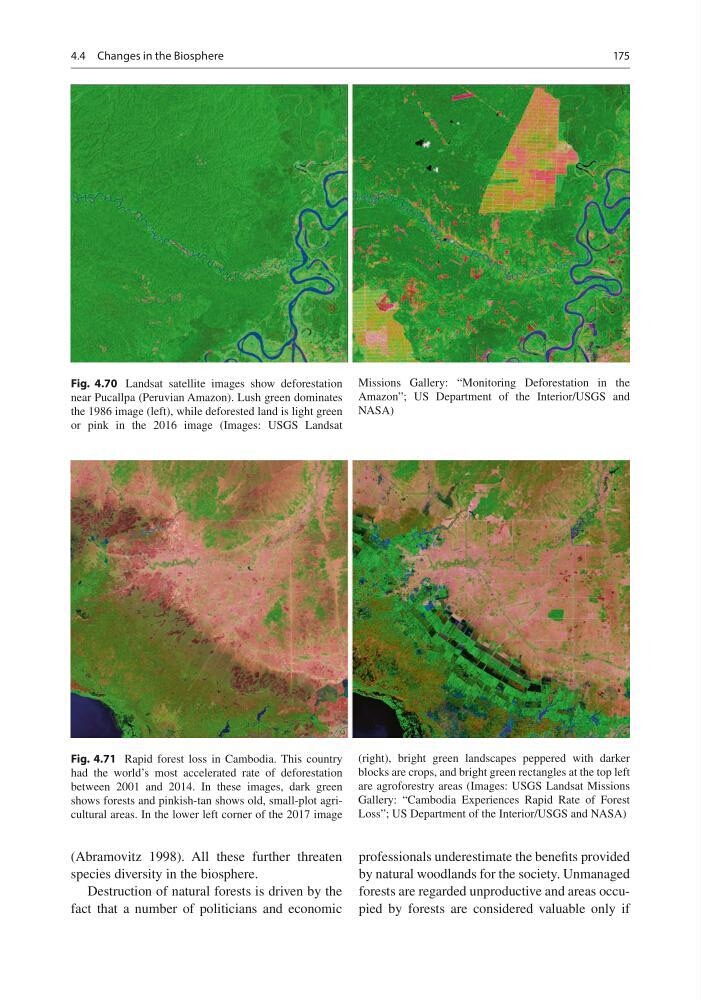
Fig. 4.70 Landsat satellite images show deforestation
near Pucallpa (Peruvian Amazon). Lush green dominates
the 1986 image (left), while deforested land is light green
or pink in the 2016 image (Images: USGS Landsat
Missions Gallery: “Monitoring Deforestation in the
Amazon”; US Department of the Interior/USGS and
NASA)
Fig. 4.71 Rapid forest loss in Cambodia. This country
had the world’s most accelerated rate of deforestation
between 2001 and 2014. In these images, dark green
shows forests and pinkish-tan shows old, small-plot agricultural areas. In the lower left corner of the 2017 image
(right), bright green landscapes peppered with darker
blocks are crops, and bright green rectangles at the top left
are agroforestry areas (Images: USGS Landsat Missions
Gallery: “Cambodia Experiences Rapid Rate of Forest
Loss”; US Department of the Interior/USGS and NASA)
(Abramovitz 1998). All these further threaten
species diversity in the biosphere.
Destruction of natural forests is driven by the
fact that a number of politicians and economic
professionals underestimate the benefits provided
by natural woodlands for the society. Unmanaged
forests are regarded unproductive and areas occupied by forests are considered valuable only if
4.4 Changes in the Biosphere
Fig. 4.70 Landsat satellite images show deforestation
near Pucallpa (Peruvian Amazon). Lush green dominates
the 1986 image (left), while deforested land is light green
or pink in the 2016 image (Images: USGS Landsat
Missions Gallery: “Monitoring Deforestation in the
Amazon”; US Department of the Interior/USGS and
NASA)
Fig. 4.71 Rapid forest loss in Cambodia. This country
had the world’s most accelerated rate of deforestation
between 2001 and 2014. In these images, dark green
shows forests and pinkish-tan shows old, small-plot agricultural areas. In the lower left corner of the 2017 image
(right), bright green landscapes peppered with darker
blocks are crops, and bright green rectangles at the top left
are agroforestry areas (Images: USGS Landsat Missions
Gallery: “Cambodia Experiences Rapid Rate of Forest
Loss”; US Department of the Interior/USGS and NASA)
(Abramovitz 1998). All these further threaten
species diversity in the biosphere.
Destruction of natural forests is driven by the
fact that a number of politicians and economic
professionals underestimate the benefits provided
by natural woodlands for the society. Unmanaged
forests are regarded unproductive and areas occupied by forests are considered valuable only if
4.4 Changes in the Biosphere