

174
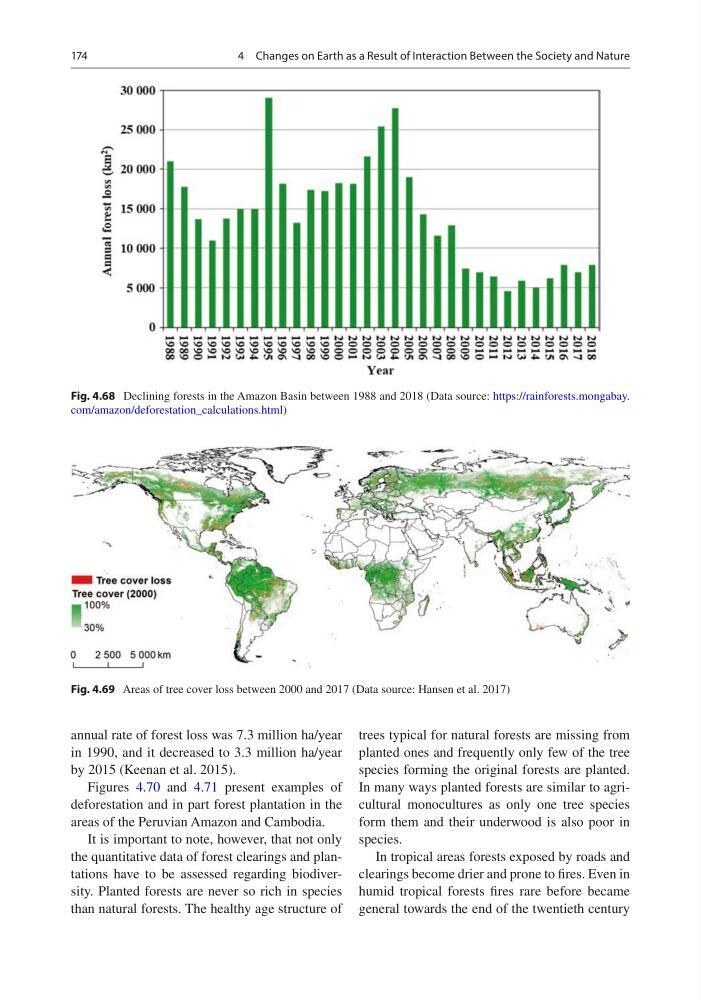
Fig. 4.68 Declining forests in the Amazon Basin between 1988 and 2018 (Data source: https://rainforests.mongabay.
com/amazon/deforestation_calculations.html)
Fig. 4.69 Areas of tree cover loss between 2000 and 2017 (Data source: Hansen et al. 2017)
annual rate of forest loss was 7.3 million ha/year
in 1990, and it decreased to 3.3 million ha/year
by 2015 (Keenan et al. 2015).
Figures 4.70 and 4.71 present examples of
deforestation and in part forest plantation in the
areas of the Peruvian Amazon and Cambodia.
It is important to note, however, that not only
the quantitative data of forest clearings and plantations have to be assessed regarding biodiversity. Planted forests are never so rich in species
than natural forests. The healthy age structure of
trees typical for natural forests are missing from
planted ones and frequently only few of the tree
species forming the original forests are planted.
In many ways planted forests are similar to agricultural monocultures as only one tree species
form them and their underwood is also poor in
species.
In tropical areas forests exposed by roads and
clearings become drier and prone to fires. Even in
humid tropical forests fires rare before became
general towards the end of the twentieth century
4 Changes on Earth as a Result of Interaction Between the Society and Nature
Fig. 4.68 Declining forests in the Amazon Basin between 1988 and 2018 (Data source: https://rainforests.mongabay.
com/amazon/deforestation_calculations.html)
Fig. 4.69 Areas of tree cover loss between 2000 and 2017 (Data source: Hansen et al. 2017)
annual rate of forest loss was 7.3 million ha/year
in 1990, and it decreased to 3.3 million ha/year
by 2015 (Keenan et al. 2015).
Figures 4.70 and 4.71 present examples of
deforestation and in part forest plantation in the
areas of the Peruvian Amazon and Cambodia.
It is important to note, however, that not only
the quantitative data of forest clearings and plantations have to be assessed regarding biodiversity. Planted forests are never so rich in species
than natural forests. The healthy age structure of
trees typical for natural forests are missing from
planted ones and frequently only few of the tree
species forming the original forests are planted.
In many ways planted forests are similar to agricultural monocultures as only one tree species
form them and their underwood is also poor in
species.
In tropical areas forests exposed by roads and
clearings become drier and prone to fires. Even in
humid tropical forests fires rare before became
general towards the end of the twentieth century
4 Changes on Earth as a Result of Interaction Between the Society and Nature