

161
The global cycle of carbon can be divided into
two major cycles, continental and oceanic. On
continents vegetation, soil and human activities
(burning fossil fuel, land use) have major roles in
carbon transfer while in oceans the roles of
marine biota living in near surface layers of the
water and the gas solving capacity of water are
dominant.
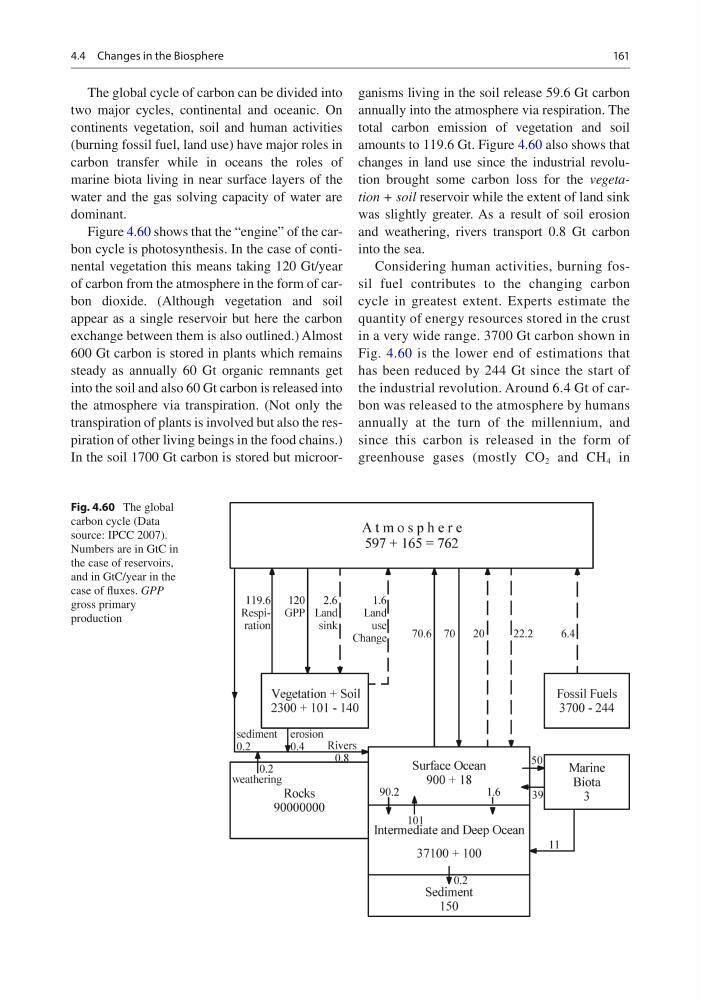
Figure 4.60 shows that the “engine” of the carbon cycle is photosynthesis. In the case of continental vegetation this means taking 120 Gt/year
of carbon from the atmosphere in the form of carbon dioxide. (Although vegetation and soil
appear as a single reservoir but here the carbon
exchange between them is also outlined.) Almost
600 Gt carbon is stored in plants which remains
steady as annually 60 Gt organic remnants get
into the soil and also 60 Gt carbon is released into
the atmosphere via transpiration. (Not only the
transpiration of plants is involved but also the respiration of other living beings in the food chains.)
In the soil 1700 Gt carbon is stored but microorganisms living in the soil release 59.6 Gt carbon
annually into the atmosphere via respiration. The
total carbon emission of vegetation and soil
amounts to 119.6 Gt. Figure 4.60 also shows that
changes in land use since the industrial revolution brought some carbon loss for the vegetation + soil reservoir while the extent of land sink
was slightly greater. As a result of soil erosion
and weathering, rivers transport 0.8 Gt carbon
into the sea.
Considering human activities, burning fossil fuel contributes to the changing carbon
cycle in greatest extent. Experts estimate the
quantity of energy resources stored in the crust
in a very wide range. 3700 Gt carbon shown in
Fig. 4.60 is the lower end of estimations that
has been reduced by 244 Gt since the start of
the industrial revolution. Around 6.4 Gt of carbon was released to the atmosphere by humans
annually at the turn of the millennium, and
since this carbon is released in the form of
greenhouse gases (mostly CO 2 and CH 4 in
Fig. 4.60 The global
carbon cycle (Data
source: IPCC 2007).
Numbers are in GtC in
the case of reservoirs,
and in GtC/year in the
case of fluxes. GPP
gross primary
production
4.4 Changes in the Biosphere
The global cycle of carbon can be divided into
two major cycles, continental and oceanic. On
continents vegetation, soil and human activities
(burning fossil fuel, land use) have major roles in
carbon transfer while in oceans the roles of
marine biota living in near surface layers of the
water and the gas solving capacity of water are
dominant.
Figure 4.60 shows that the “engine” of the carbon cycle is photosynthesis. In the case of continental vegetation this means taking 120 Gt/year
of carbon from the atmosphere in the form of carbon dioxide. (Although vegetation and soil
appear as a single reservoir but here the carbon
exchange between them is also outlined.) Almost
600 Gt carbon is stored in plants which remains
steady as annually 60 Gt organic remnants get
into the soil and also 60 Gt carbon is released into
the atmosphere via transpiration. (Not only the
transpiration of plants is involved but also the respiration of other living beings in the food chains.)
In the soil 1700 Gt carbon is stored but microorganisms living in the soil release 59.6 Gt carbon
annually into the atmosphere via respiration. The
total carbon emission of vegetation and soil
amounts to 119.6 Gt. Figure 4.60 also shows that
changes in land use since the industrial revolution brought some carbon loss for the vegetation + soil reservoir while the extent of land sink
was slightly greater. As a result of soil erosion
and weathering, rivers transport 0.8 Gt carbon
into the sea.
Considering human activities, burning fossil fuel contributes to the changing carbon
cycle in greatest extent. Experts estimate the
quantity of energy resources stored in the crust
in a very wide range. 3700 Gt carbon shown in
Fig. 4.60 is the lower end of estimations that
has been reduced by 244 Gt since the start of
the industrial revolution. Around 6.4 Gt of carbon was released to the atmosphere by humans
annually at the turn of the millennium, and
since this carbon is released in the form of
greenhouse gases (mostly CO 2 and CH 4 in
Fig. 4.60 The global
carbon cycle (Data
source: IPCC 2007).
Numbers are in GtC in
the case of reservoirs,
and in GtC/year in the
case of fluxes. GPP
gross primary
production
4.4 Changes in the Biosphere