

130
yield thus artificial material is put into the system
(fertilisers, herbicides) sometimes in greater
amount than necessary. Soil cultivation, fertilising and plant protection are carried out using
high performance machines the weight of which
cause soil compaction along the tracks contributing to the occurrence of linear erosion and the
intensification of the erosion process in sloping
areas. Apart from these, exhaust gas and soot
grains of the machines also contaminate the soil
together with oil dripping from the engine.
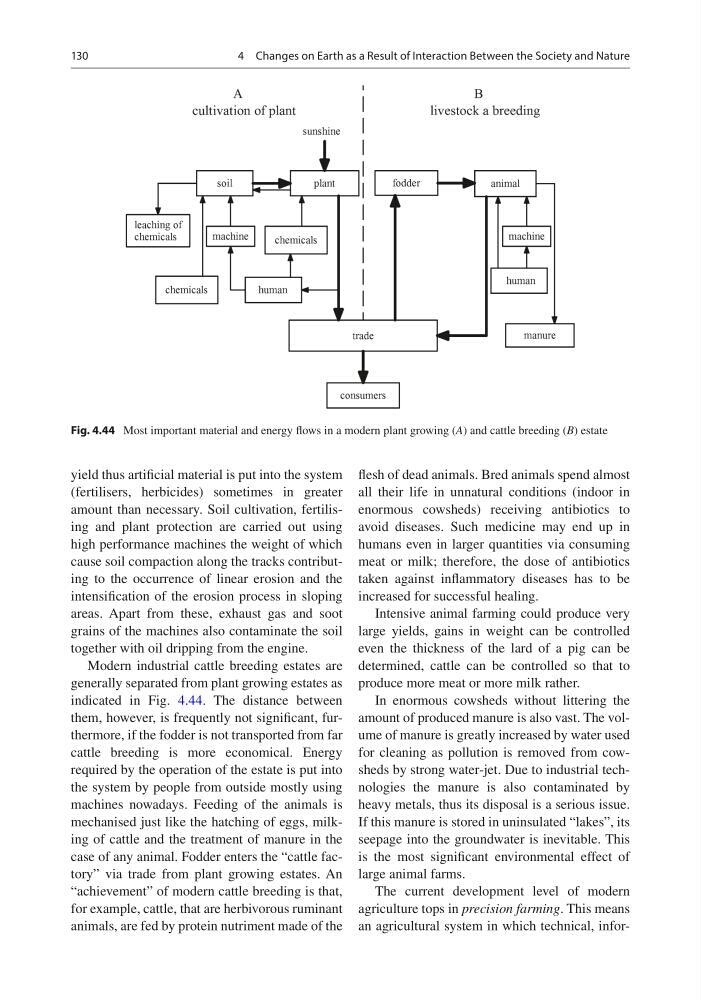
Modern industrial cattle breeding estates are
generally separated from plant growing estates as
indicated in Fig. 4.44. The distance between
them, however, is frequently not significant, furthermore, if the fodder is not transported from far
cattle breeding is more economical. Energy
required by the operation of the estate is put into
the system by people from outside mostly using
machines nowadays. Feeding of the animals is
mechanised just like the hatching of eggs, milking of cattle and the treatment of manure in the
case of any animal. Fodder enters the “cattle factory” via trade from plant growing estates. An
“achievement” of modern cattle breeding is that,
for example, cattle, that are herbivorous ruminant
animals, are fed by protein nutriment made of the
flesh of dead animals. Bred animals spend almost
all their life in unnatural conditions (indoor in
enormous cowsheds) receiving antibiotics to
avoid diseases. Such medicine may end up in
humans even in larger quantities via consuming
meat or milk; therefore, the dose of antibiotics
taken against inflammatory diseases has to be
increased for successful healing.
Intensive animal farming could produce very
large yields, gains in weight can be controlled
even the thickness of the lard of a pig can be
determined, cattle can be controlled so that to
produce more meat or more milk rather.
In enormous cowsheds without littering the
amount of produced manure is also vast. The volume of manure is greatly increased by water used
for cleaning as pollution is removed from cowsheds by strong water-jet. Due to industrial technologies the manure is also contaminated by
heavy metals, thus its disposal is a serious issue.
If this manure is stored in uninsulated “lakes”, its
seepage into the groundwater is inevitable. This
is the most significant environmental effect of
large animal farms.
The current development level of modern
agriculture tops in precision farming. This means
an agricultural system in which technical, inforFig. 4.44 Most important material and energy flows in a modern plant growing (A) and cattle breeding (B) estate
4 Changes on Earth as a Result of Interaction Between the Society and Nature
yield thus artificial material is put into the system
(fertilisers, herbicides) sometimes in greater
amount than necessary. Soil cultivation, fertilising and plant protection are carried out using
high performance machines the weight of which
cause soil compaction along the tracks contributing to the occurrence of linear erosion and the
intensification of the erosion process in sloping
areas. Apart from these, exhaust gas and soot
grains of the machines also contaminate the soil
together with oil dripping from the engine.
Modern industrial cattle breeding estates are
generally separated from plant growing estates as
indicated in Fig. 4.44. The distance between
them, however, is frequently not significant, furthermore, if the fodder is not transported from far
cattle breeding is more economical. Energy
required by the operation of the estate is put into
the system by people from outside mostly using
machines nowadays. Feeding of the animals is
mechanised just like the hatching of eggs, milking of cattle and the treatment of manure in the
case of any animal. Fodder enters the “cattle factory” via trade from plant growing estates. An
“achievement” of modern cattle breeding is that,
for example, cattle, that are herbivorous ruminant
animals, are fed by protein nutriment made of the
flesh of dead animals. Bred animals spend almost
all their life in unnatural conditions (indoor in
enormous cowsheds) receiving antibiotics to
avoid diseases. Such medicine may end up in
humans even in larger quantities via consuming
meat or milk; therefore, the dose of antibiotics
taken against inflammatory diseases has to be
increased for successful healing.
Intensive animal farming could produce very
large yields, gains in weight can be controlled
even the thickness of the lard of a pig can be
determined, cattle can be controlled so that to
produce more meat or more milk rather.
In enormous cowsheds without littering the
amount of produced manure is also vast. The volume of manure is greatly increased by water used
for cleaning as pollution is removed from cowsheds by strong water-jet. Due to industrial technologies the manure is also contaminated by
heavy metals, thus its disposal is a serious issue.
If this manure is stored in uninsulated “lakes”, its
seepage into the groundwater is inevitable. This
is the most significant environmental effect of
large animal farms.
The current development level of modern
agriculture tops in precision farming. This means
an agricultural system in which technical, inforFig. 4.44 Most important material and energy flows in a modern plant growing (A) and cattle breeding (B) estate
4 Changes on Earth as a Result of Interaction Between the Society and Nature