

124
Ammonia, ammonium salts, nitrites and nitrates
contain nitrogen that can be taken and incorporated by plants and thus essential proteins and
other compounds can be built in them. Organic
nitrogen compounds for animals and humans are
only available in plants.
Nitrogen enters the soil from the atmosphere
in other means as well. Nitrogen content in soils
may increase via precipitation dissolving nitrogen oxides formed by electric and photochemical
processes in the atmosphere and ammonia smoke
or also via dry deposition absorbed on solid particles. The amount of nitrogen involved in these
processes is estimated to be 5 megatonnes annually; however, the margin of error is ±50%
(Fig. 4.39).
Nitrogen is generally available for plants in
soils and they transform nitrogen into ammonia
and amino acids. This process is enhanced by
using fertilisers when nitrogen compounds are
brought into the soil. Since atmospheric nitrogen
is used for fertiliser production practically atmospheric nitrogen is placed into the soil in a quantity of around 100 megatonnes every year to
which another 20 megatonnes are added from
other industrial processes. Nitrogen entering
soils in the form of nitrates is easily available for
plants; however, nitrate compounds can be dissolved by water causing significant environmental
concerns when entering shallow groundwaters or
surface waters (Sect. 4.3.3).
Considering human activities, producing
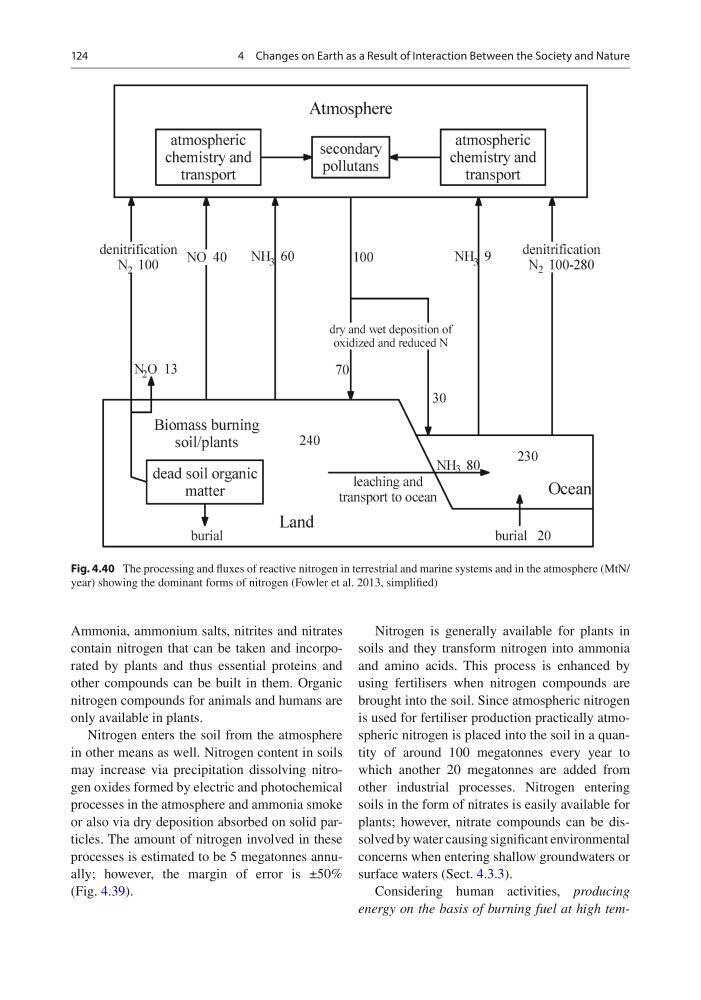
energy on the basis of burning fuel at high temFig. 4.40 The processing and fluxes of reactive nitrogen in terrestrial and marine systems and in the atmosphere (MtN/
year) showing the dominant forms of nitrogen (Fowler et al. 2013, simplified)
4 Changes on Earth as a Result of Interaction Between the Society and Nature
Ammonia, ammonium salts, nitrites and nitrates
contain nitrogen that can be taken and incorporated by plants and thus essential proteins and
other compounds can be built in them. Organic
nitrogen compounds for animals and humans are
only available in plants.
Nitrogen enters the soil from the atmosphere
in other means as well. Nitrogen content in soils
may increase via precipitation dissolving nitrogen oxides formed by electric and photochemical
processes in the atmosphere and ammonia smoke
or also via dry deposition absorbed on solid particles. The amount of nitrogen involved in these
processes is estimated to be 5 megatonnes annually; however, the margin of error is ±50%
(Fig. 4.39).
Nitrogen is generally available for plants in
soils and they transform nitrogen into ammonia
and amino acids. This process is enhanced by
using fertilisers when nitrogen compounds are
brought into the soil. Since atmospheric nitrogen
is used for fertiliser production practically atmospheric nitrogen is placed into the soil in a quantity of around 100 megatonnes every year to
which another 20 megatonnes are added from
other industrial processes. Nitrogen entering
soils in the form of nitrates is easily available for
plants; however, nitrate compounds can be dissolved by water causing significant environmental
concerns when entering shallow groundwaters or
surface waters (Sect. 4.3.3).
Considering human activities, producing
energy on the basis of burning fuel at high temFig. 4.40 The processing and fluxes of reactive nitrogen in terrestrial and marine systems and in the atmosphere (MtN/
year) showing the dominant forms of nitrogen (Fowler et al. 2013, simplified)
4 Changes on Earth as a Result of Interaction Between the Society and Nature