

108
age and even water supply is not solved and people living there suffer under the double load of
diseases. On the one hand, malnutrition, infected
water and polluted air cause diseases, and on the
other hand, “modern” diseases like tumours, diabetes and heart diseases take their toll (Stephens
and Stair 2007). In general the contrast between
rundown suburbs and posh city centres decorated
with ads is great (Figs. 4.32 and 4.33). The running of such major cities cannot be considered
sustainable as apart from unhealthy suburbs they
always carry the possibility of conflicts and they
are characterised by high crime rate.
Nevertheless, cities became a dominant place of
the life of a society and their significance will only
rise since up to two-third of the world population
will live in cities by 2050. Therefore let us see in a
bit more detail the effects of a city on the natural
environment, how and to what extent the original
environment is being transformed and whether it is
truly a suitable place of residence for humans as
biological beings. McDonald (2015) calls the natural environment of a city natural infrastructure that
- according to him - includes natural surfaces, parks
and other ecological services. The latter includes
drinking water, air purification, flood mitigation
(according to the authors of the present book this is
not an ecological service), aesthetic beauty, parks
for health and recreation, biodiversity.
Authors of the present book describe the
transformation of the natural environment via
city design and development. Every construction
starts with levelling the surface with huge
machines and ditches dug for the foundation of
the building or forming the cellar. Such activities
destroy all higher living beings and the soil at the
place of the building to be built. Artificial surfaces are formed at the place of the former natural area. This newly formed artificial surface is
generally larger than the actual building since
pavements, stairs, other covered surfaces have to
be constructed as well.
Whether any of the natural green surfaces is
left or parks are created depends on the site
within the city or the decision of the city designers. In the city centre, however, creating green
surfaces is highly unlikely because trade and
other economic-financial lobbies push for building- up all available spaces and these generally
succeed.
It is a challenging task for urban planning to
form parks, walks, tree rows, flowery or grass
covered areas (called green areas) in cities since
concrete jungles leave less room for improvement not only from aesthetic point of view but
they are also unhealthy due to the lack of plants
compared to a looser and variable city environment with parks.
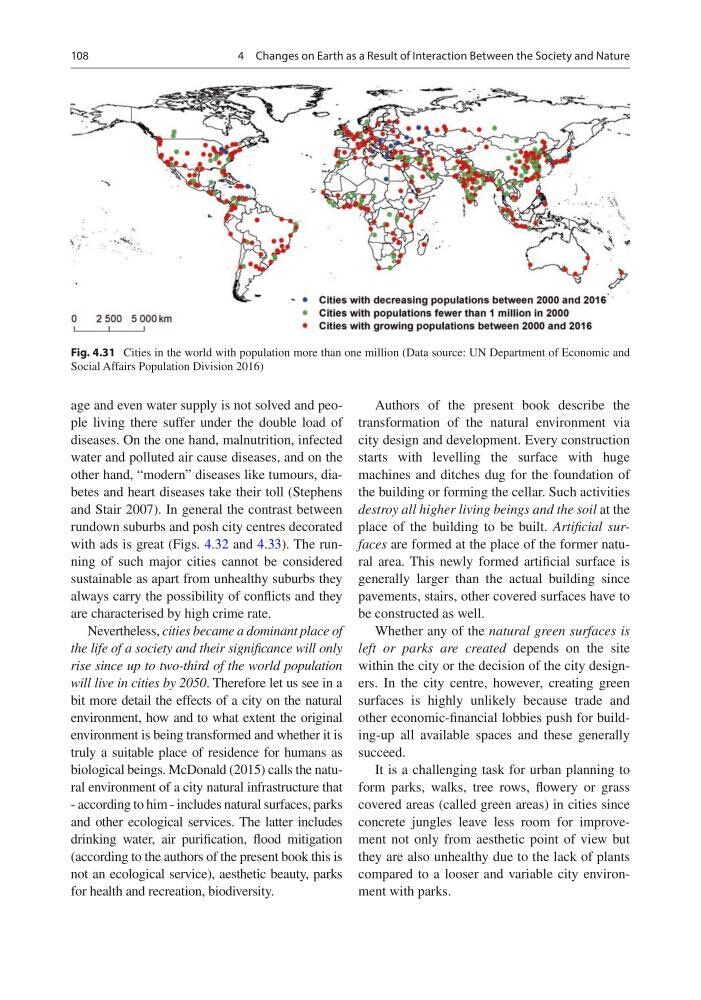
Fig. 4.31 Cities in the world with population more than one million (Data source: UN Department of Economic and
Social Affairs Population Division 2016)
4 Changes on Earth as a Result of Interaction Between the Society and Nature
age and even water supply is not solved and people living there suffer under the double load of
diseases. On the one hand, malnutrition, infected
water and polluted air cause diseases, and on the
other hand, “modern” diseases like tumours, diabetes and heart diseases take their toll (Stephens
and Stair 2007). In general the contrast between
rundown suburbs and posh city centres decorated
with ads is great (Figs. 4.32 and 4.33). The running of such major cities cannot be considered
sustainable as apart from unhealthy suburbs they
always carry the possibility of conflicts and they
are characterised by high crime rate.
Nevertheless, cities became a dominant place of
the life of a society and their significance will only
rise since up to two-third of the world population
will live in cities by 2050. Therefore let us see in a
bit more detail the effects of a city on the natural
environment, how and to what extent the original
environment is being transformed and whether it is
truly a suitable place of residence for humans as
biological beings. McDonald (2015) calls the natural environment of a city natural infrastructure that
- according to him - includes natural surfaces, parks
and other ecological services. The latter includes
drinking water, air purification, flood mitigation
(according to the authors of the present book this is
not an ecological service), aesthetic beauty, parks
for health and recreation, biodiversity.
Authors of the present book describe the
transformation of the natural environment via
city design and development. Every construction
starts with levelling the surface with huge
machines and ditches dug for the foundation of
the building or forming the cellar. Such activities
destroy all higher living beings and the soil at the
place of the building to be built. Artificial surfaces are formed at the place of the former natural area. This newly formed artificial surface is
generally larger than the actual building since
pavements, stairs, other covered surfaces have to
be constructed as well.
Whether any of the natural green surfaces is
left or parks are created depends on the site
within the city or the decision of the city designers. In the city centre, however, creating green
surfaces is highly unlikely because trade and
other economic-financial lobbies push for building- up all available spaces and these generally
succeed.
It is a challenging task for urban planning to
form parks, walks, tree rows, flowery or grass
covered areas (called green areas) in cities since
concrete jungles leave less room for improvement not only from aesthetic point of view but
they are also unhealthy due to the lack of plants
compared to a looser and variable city environment with parks.
Fig. 4.31 Cities in the world with population more than one million (Data source: UN Department of Economic and
Social Affairs Population Division 2016)
4 Changes on Earth as a Result of Interaction Between the Society and Nature