

98
4.1.2 Transformation of the Earth’s
Surface: Construction and Its
Consequences
4.1.2.1 Relationship
Between Population Growth
and Construction Activities
Expansion of the built-up environment depends
fundamentally on two factors: population growth
and economic-social development related to the
increasing demand of people. The latter is emphasised because experience so far shows that if the
growth of the population stopped in certain countries (or even decreases in some of them) built-up
areas still grow. New constructions are motivated
by social-economic development: establishment
of industrial parks, motorways, highways, other
greenfield projects, flats and houses of increasing
size, etc. contribute to the expansion of artificial
surfaces. Hooke et al. (2012) estimate the total
area of human infrastructure (all built-up areas
and all areas changed by technical activities, like
mining areas classify here) to 9 million km
2
(Table 4.5). This amounts to 6.92% of the total
area of dry land. Most of these (6%) are composed of settlements. (Standard deviation of the
data can be observed in Table 4.5.) Although this
ratio seems not much, the size of transformed
areas corresponds to the total area of Europe.
Network structure (settlements and roads connecting them) has a more significant effect on the
natural environment as could be expected based
on the data (Sect. 4.1.2.2).
In countries with rapidly growing population
the primary motivation is building homes for the
increasing number of people while demands
also grow together with infrastructural investments. However, numerous other factors influence the expansion of the built environment but
the fact is that the growth of artificial areas is
unbroken at the expense of nature. Let us see
first the primary reason, the current state of population increase of the world and the associated
regional differences.
The population of the world is estimated to be
around 7.6 billion people in 2018. Global natural
increase was greatest in the middle of the 1970s
(2.1%) driven primarily by the “population
boom” of developing countries. The reasons for it
were the following:
• with the rapid development of public health
and medication mortality rates decreased
significantly,
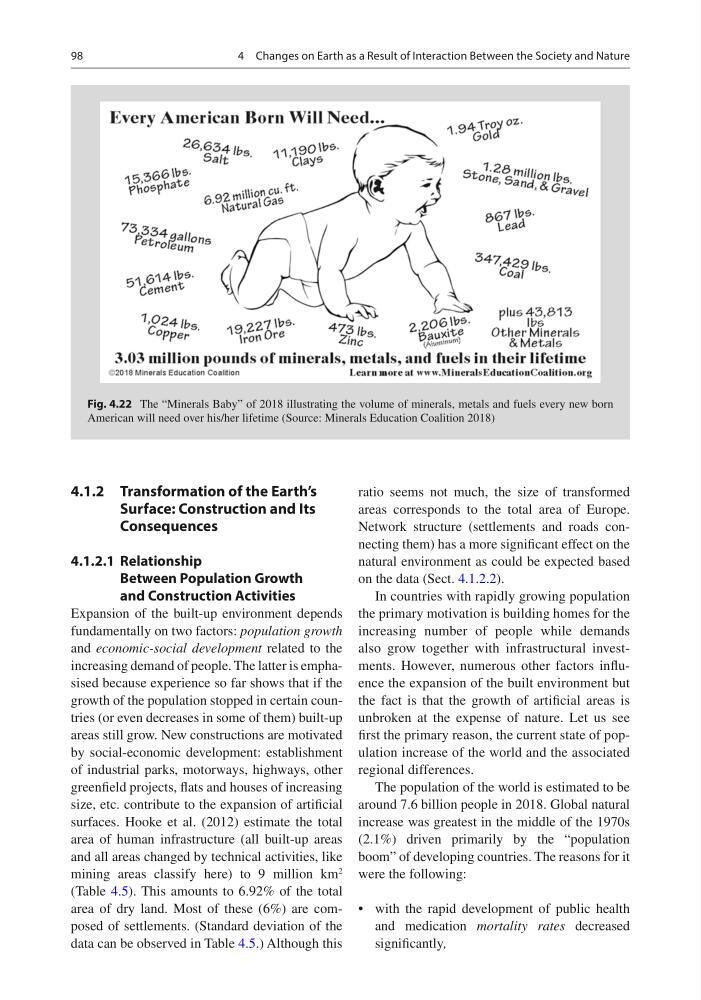
Fig. 4.22 The “Minerals Baby” of 2018 illustrating the volume of minerals, metals and fuels every new born
American will need over his/her lifetime (Source: Minerals Education Coalition 2018)
4 Changes on Earth as a Result of Interaction Between the Society and Nature
4.1.2 Transformation of the Earth’s
Surface: Construction and Its
Consequences
4.1.2.1 Relationship
Between Population Growth
and Construction Activities
Expansion of the built-up environment depends
fundamentally on two factors: population growth
and economic-social development related to the
increasing demand of people. The latter is emphasised because experience so far shows that if the
growth of the population stopped in certain countries (or even decreases in some of them) built-up
areas still grow. New constructions are motivated
by social-economic development: establishment
of industrial parks, motorways, highways, other
greenfield projects, flats and houses of increasing
size, etc. contribute to the expansion of artificial
surfaces. Hooke et al. (2012) estimate the total
area of human infrastructure (all built-up areas
and all areas changed by technical activities, like
mining areas classify here) to 9 million km
2
(Table 4.5). This amounts to 6.92% of the total
area of dry land. Most of these (6%) are composed of settlements. (Standard deviation of the
data can be observed in Table 4.5.) Although this
ratio seems not much, the size of transformed
areas corresponds to the total area of Europe.
Network structure (settlements and roads connecting them) has a more significant effect on the
natural environment as could be expected based
on the data (Sect. 4.1.2.2).
In countries with rapidly growing population
the primary motivation is building homes for the
increasing number of people while demands
also grow together with infrastructural investments. However, numerous other factors influence the expansion of the built environment but
the fact is that the growth of artificial areas is
unbroken at the expense of nature. Let us see
first the primary reason, the current state of population increase of the world and the associated
regional differences.
The population of the world is estimated to be
around 7.6 billion people in 2018. Global natural
increase was greatest in the middle of the 1970s
(2.1%) driven primarily by the “population
boom” of developing countries. The reasons for it
were the following:
• with the rapid development of public health
and medication mortality rates decreased
significantly,
Fig. 4.22 The “Minerals Baby” of 2018 illustrating the volume of minerals, metals and fuels every new born
American will need over his/her lifetime (Source: Minerals Education Coalition 2018)
4 Changes on Earth as a Result of Interaction Between the Society and Nature