

648 Modern Food Microbiology
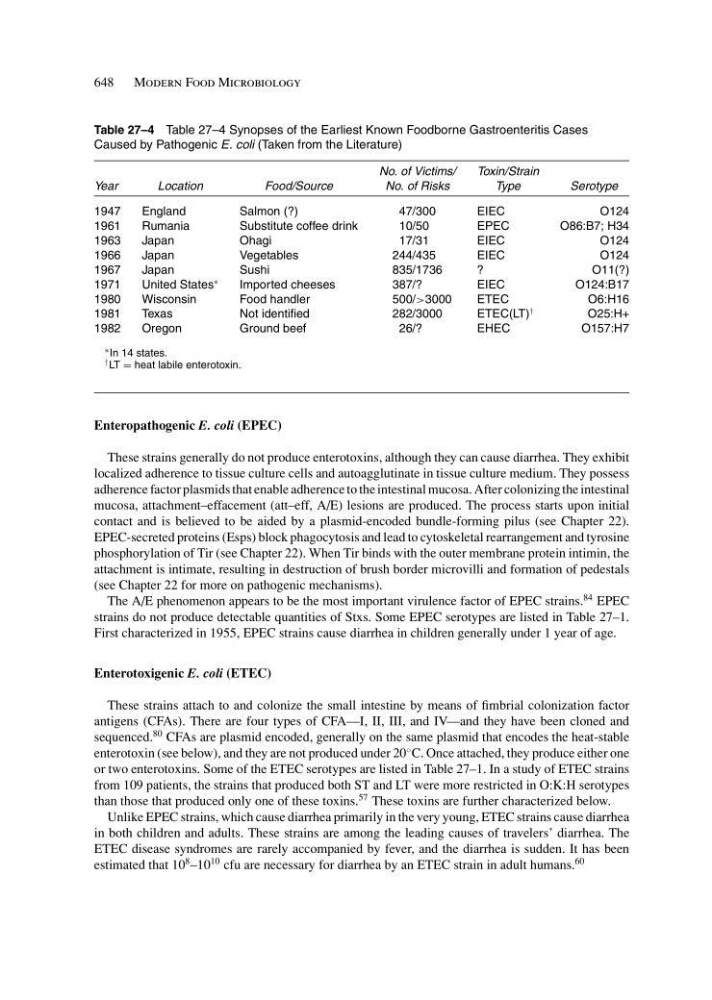
Table 27–4 Table 27–4 Synopses of the Earliest Known Foodborne Gastroenteritis Cases
Caused by Pathogenic E. coli (Taken from the Literature)
No. of Victims/
Toxin/Strain
Year
Location
Food/Source
No. of Risks
Type
Serotype
1947
England
Salmon (?)
47/300
EIEC
O124
1961
Rumania
Substitute coffee drink
10/50
EPEC
O86:B7; H34
1963
Japan
Ohagi
17/31
EIEC
O124
1966
Japan
Vegetables
244/435
EIEC
O124
1967
Japan
Sushi
835/1736
?
O11(?)
1971
United States
∗
Imported cheeses
387/?
EIEC
O124:B17
1980
Wisconsin
Food handler
500/>3000
ETEC
O6:H16
1981
Texas
Not identified
282/3000
ETEC(LT)
†
O25:H+
1982
Oregon
Ground beef
26/?
EHEC
O157:H7
∗ In 14 states.
† LT = heat labile enterotoxin.
Enteropathogenic E. coli (EPEC)
These strains generally do not produce enterotoxins, although they can cause diarrhea. They exhibit
localized adherence to tissue culture cells and autoagglutinate in tissue culture medium. They possess
adherence factor plasmids that enable adherence to the intestinal mucosa. After colonizing the intestinal
mucosa, attachment–effacement (att–eff, A/E) lesions are produced. The process starts upon initial
contact and is believed to be aided by a plasmid-encoded bundle-forming pilus (see Chapter 22).
EPEC-secreted proteins (Esps) block phagocytosis and lead to cytoskeletal rearrangement and tyrosine
phosphorylation of Tir (see Chapter 22). When Tir binds with the outer membrane protein intimin, the
attachment is intimate, resulting in destruction of brush border microvilli and formation of pedestals
(see Chapter 22 for more on pathogenic mechanisms).
The A/E phenomenon appears to be the most important virulence factor of EPEC strains.
84 EPEC
strains do not produce detectable quantities of Stxs. Some EPEC serotypes are listed in Table 27–1.
First characterized in 1955, EPEC strains cause diarrhea in children generally under 1 year of age.
Enterotoxigenic E. coli (ETEC)
These strains attach to and colonize the small intestine by means of fimbrial colonization factor
antigens (CFAs). There are four types of CFA—I, II, III, and IV—and they have been cloned and
sequenced.
80 CFAs are plasmid encoded, generally on the same plasmid that encodes the heat-stable
enterotoxin (see below), and they are not produced under 20
◦ C. Once attached, they produce either one
or two enterotoxins. Some of the ETEC serotypes are listed in Table 27–1. In a study of ETEC strains
from 109 patients, the strains that produced both ST and LT were more restricted in O:K:H serotypes
than those that produced only one of these toxins.
57 These toxins are further characterized below.
Unlike EPEC strains, which cause diarrhea primarily in the very young, ETEC strains cause diarrhea
in both children and adults. These strains are among the leading causes of travelers’ diarrhea. The
ETEC disease syndromes are rarely accompanied by fever, and the diarrhea is sudden. It has been
estimated that 10
8 –10
10 cfu are necessary for diarrhea by an ETEC strain in adult humans.
60