

44
Modern Food Microbiology
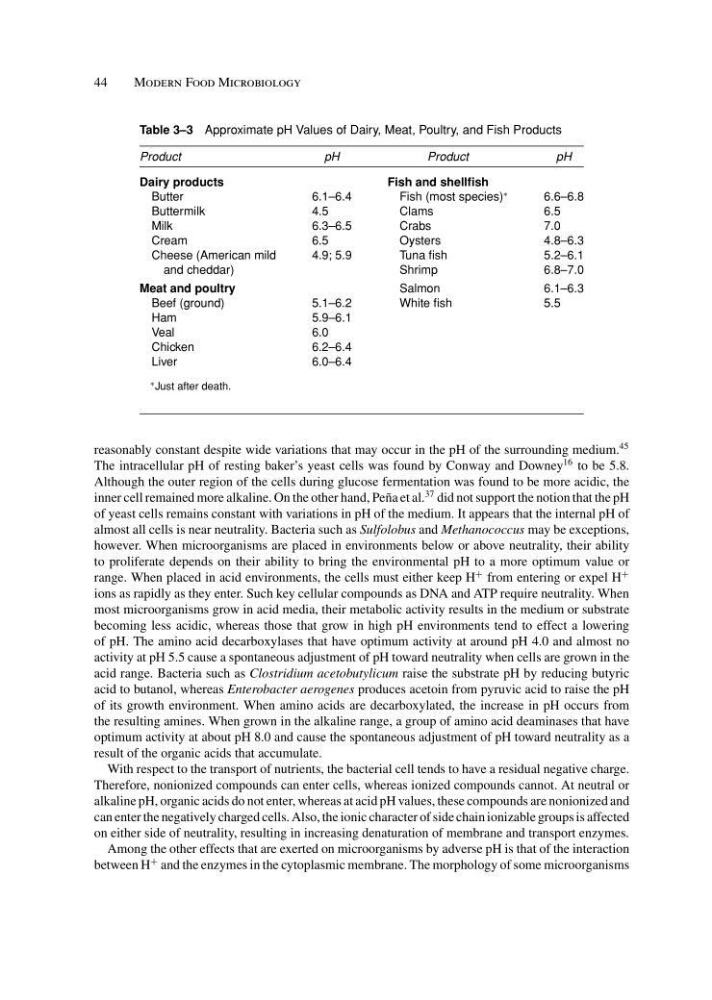
Table 3–3 Approximate pH Values of Dairy, Meat, Poultry, and Fish Products
Product
pH
Product
pH
Dairy products
Fish and shellfish
Butter
6.1–6.4
Fish (most species)
∗
6.6–6.8
Buttermilk
4.5
Clams
6.5
Milk
6.3–6.5
Crabs
7.0
Cream
6.5
Oysters
4.8–6.3
Cheese (American mild
4.9; 5.9
Tuna fish
5.2–6.1
and cheddar)
Shrimp
6.8–7.0
Meat and poultry
Salmon
6.1–6.3
Beef (ground)
5.1–6.2
White fish
5.5
Ham
5.9–6.1
Veal
6.0
Chicken
6.2–6.4
Liver
6.0–6.4
∗ Just after death.
reasonably constant despite wide variations that may occur in the pH of the surrounding medium.
45
The intracellular pH of resting baker’s yeast cells was found by Conway and Downey
16 to be 5.8.
Although the outer region of the cells during glucose fermentation was found to be more acidic, the
inner cell remained more alkaline. On the other hand, Pe˜ na et al.
37 did not support the notion that the pH
of yeast cells remains constant with variations in pH of the medium. It appears that the internal pH of
almost all cells is near neutrality. Bacteria such as Sulfolobus and Methanococcus may be exceptions,
however. When microorganisms are placed in environments below or above neutrality, their ability
to proliferate depends on their ability to bring the environmental pH to a more optimum value or
range. When placed in acid environments, the cells must either keep H
+ from entering or expel H
+
ions as rapidly as they enter. Such key cellular compounds as DNA and ATP require neutrality. When
most microorganisms grow in acid media, their metabolic activity results in the medium or substrate
becoming less acidic, whereas those that grow in high pH environments tend to effect a lowering
of pH. The amino acid decarboxylases that have optimum activity at around pH 4.0 and almost no
activity at pH 5.5 cause a spontaneous adjustment of pH toward neutrality when cells are grown in the
acid range. Bacteria such as Clostridium acetobutylicum raise the substrate pH by reducing butyric
acid to butanol, whereas Enterobacter aerogenes produces acetoin from pyruvic acid to raise the pH
of its growth environment. When amino acids are decarboxylated, the increase in pH occurs from
the resulting amines. When grown in the alkaline range, a group of amino acid deaminases that have
optimum activity at about pH 8.0 and cause the spontaneous adjustment of pH toward neutrality as a
result of the organic acids that accumulate.
With respect to the transport of nutrients, the bacterial cell tends to have a residual negative charge.
Therefore, nonionized compounds can enter cells, whereas ionized compounds cannot. At neutral or
alkaline pH, organic acids do not enter, whereas at acid pH values, these compounds are nonionized and
can enter the negatively charged cells. Also, the ionic character of side chain ionizable groups is affected
on either side of neutrality, resulting in increasing denaturation of membrane and transport enzymes.
Among the other effects that are exerted on microorganisms by adverse pH is that of the interaction
between H
+ and the enzymes in the cytoplasmic membrane. The morphology of some microorganisms
Modern Food Microbiology
Table 3–3 Approximate pH Values of Dairy, Meat, Poultry, and Fish Products
Product
pH
Product
pH
Dairy products
Fish and shellfish
Butter
6.1–6.4
Fish (most species)
∗
6.6–6.8
Buttermilk
4.5
Clams
6.5
Milk
6.3–6.5
Crabs
7.0
Cream
6.5
Oysters
4.8–6.3
Cheese (American mild
4.9; 5.9
Tuna fish
5.2–6.1
and cheddar)
Shrimp
6.8–7.0
Meat and poultry
Salmon
6.1–6.3
Beef (ground)
5.1–6.2
White fish
5.5
Ham
5.9–6.1
Veal
6.0
Chicken
6.2–6.4
Liver
6.0–6.4
∗ Just after death.
reasonably constant despite wide variations that may occur in the pH of the surrounding medium.
45
The intracellular pH of resting baker’s yeast cells was found by Conway and Downey
16 to be 5.8.
Although the outer region of the cells during glucose fermentation was found to be more acidic, the
inner cell remained more alkaline. On the other hand, Pe˜ na et al.
37 did not support the notion that the pH
of yeast cells remains constant with variations in pH of the medium. It appears that the internal pH of
almost all cells is near neutrality. Bacteria such as Sulfolobus and Methanococcus may be exceptions,
however. When microorganisms are placed in environments below or above neutrality, their ability
to proliferate depends on their ability to bring the environmental pH to a more optimum value or
range. When placed in acid environments, the cells must either keep H
+ from entering or expel H
+
ions as rapidly as they enter. Such key cellular compounds as DNA and ATP require neutrality. When
most microorganisms grow in acid media, their metabolic activity results in the medium or substrate
becoming less acidic, whereas those that grow in high pH environments tend to effect a lowering
of pH. The amino acid decarboxylases that have optimum activity at around pH 4.0 and almost no
activity at pH 5.5 cause a spontaneous adjustment of pH toward neutrality when cells are grown in the
acid range. Bacteria such as Clostridium acetobutylicum raise the substrate pH by reducing butyric
acid to butanol, whereas Enterobacter aerogenes produces acetoin from pyruvic acid to raise the pH
of its growth environment. When amino acids are decarboxylated, the increase in pH occurs from
the resulting amines. When grown in the alkaline range, a group of amino acid deaminases that have
optimum activity at about pH 8.0 and cause the spontaneous adjustment of pH toward neutrality as a
result of the organic acids that accumulate.
With respect to the transport of nutrients, the bacterial cell tends to have a residual negative charge.
Therefore, nonionized compounds can enter cells, whereas ionized compounds cannot. At neutral or
alkaline pH, organic acids do not enter, whereas at acid pH values, these compounds are nonionized and
can enter the negatively charged cells. Also, the ionic character of side chain ionizable groups is affected
on either side of neutrality, resulting in increasing denaturation of membrane and transport enzymes.
Among the other effects that are exerted on microorganisms by adverse pH is that of the interaction
between H
+ and the enzymes in the cytoplasmic membrane. The morphology of some microorganisms