

538 Modern Food Microbiology
is maintained extrachromosomally.
42 The latter investigators showed that CTXø isolated from ten
clinical or environmental strains of V. cholerae infected CT-negative strains. However, they noted
that phage induction may not occur inside the human intestines. This pathogenicity locus appears to
be an example of horizontal gene transfer that can lead to the emergence of new pathogenic strains,
and the CTXø element is related to coliphage M13.
98 Among the unusual features of V. cholerae
is its possession of two circular chromosomes.
95 The large one contains >2.96 million bases, and
it contains the housekeeping genes and some that are involved in virulence. The small chromosome
contains >1.07 million bases and many genes of unknown function. The cholera toxin B (CTB) subunit
binds to GM 1 ganglioside cell surface receptors (it is closely related to subunit B of the heat-labile
(LT) toxin of E. coli).
The role of bacteriophages in the transmission of virulence genes is illustrated by the CTX genetic
element noted above. Among foodborne pathogens, genes for the following toxins are known to be
carried by phages: Staphylococcal enterotoxin A, Stx1 and Stx2 of EHEC strains of E. coli, and
botulinal toxins. It has been noted that while virulence-associated genes may be on plasmids in one
organism, they may be on the chromosome in others, suggesting that genes may integrate following
transmission.
20 A similar pattern for phage-mediated genes seems plausible.
SUMMARY
Much new information has been obtained during the past two decades on the specific mechanisms
used by foodborne pathogens to cause human disease, and this is especially true of the Gram-negative
bacteria. Beyond their role in intestinal fluid accumulation (diarrhea), not much more has been learned
about the enterotoxins that are produced by Gram-negative bacteria. Their role in host cell invasion
and subsequent pathogenesis seems minimal.
The concept of pathogenicity islands (PIs) in salmonellae, yersiniae, and EPEC and EHEC strains
of Escherichia coli is a significant development. They are located on extrachromosomal DNA as well
as parts of phage genomes, and they are not found in nonpathogenic bacteria (for an extensive review
and discussion, see Hacker and Kaper
53 ).
Molecular genetic studies have shed more light on the importance of plasmid and bacteriophage
transfer of virulence genes between some of the Enterobacteriaceae, and within the genus Vibrio. The
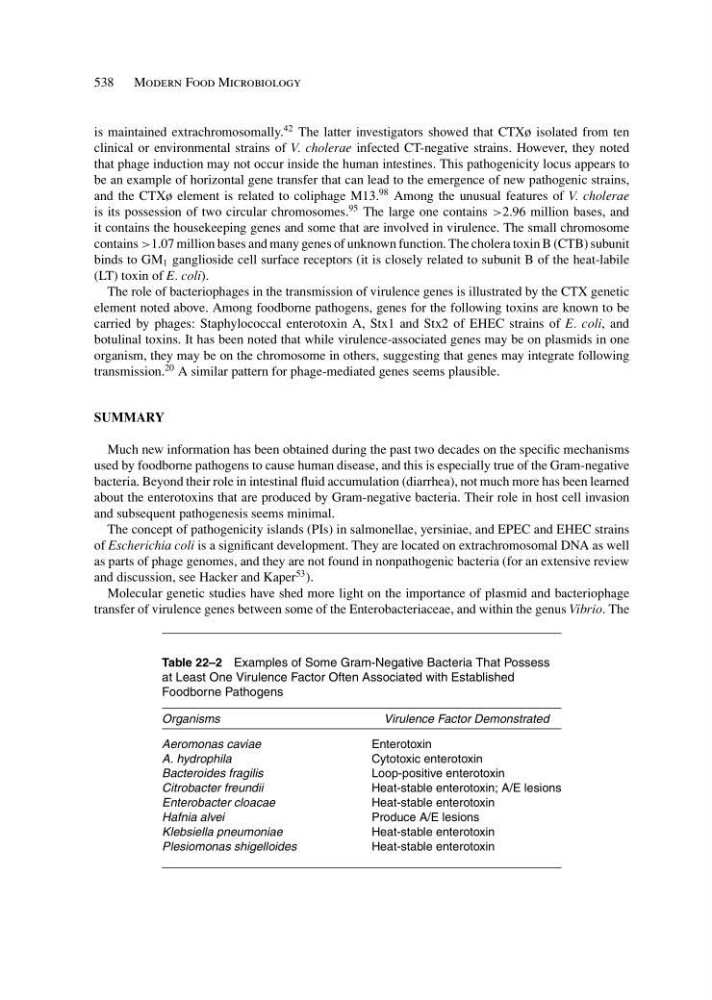
Table 22–2 Examples of Some Gram-Negative Bacteria That Possess
at Least One Virulence Factor Often Associated with Established
Foodborne Pathogens
Organisms
Virulence Factor Demonstrated
Aeromonas caviae
Enterotoxin
A. hydrophila
Cytotoxic enterotoxin
Bacteroides fragilis
Loop-positive enterotoxin
Citrobacter freundii
Heat-stable enterotoxin; A/E lesions
Enterobacter cloacae
Heat-stable enterotoxin
Hafnia alvei
Produce A/E lesions
Klebsiella pneumoniae
Heat-stable enterotoxin
Plesiomonas shigelloides
Heat-stable enterotoxin