

Indicators of Food Microbial Quality and Safety
485
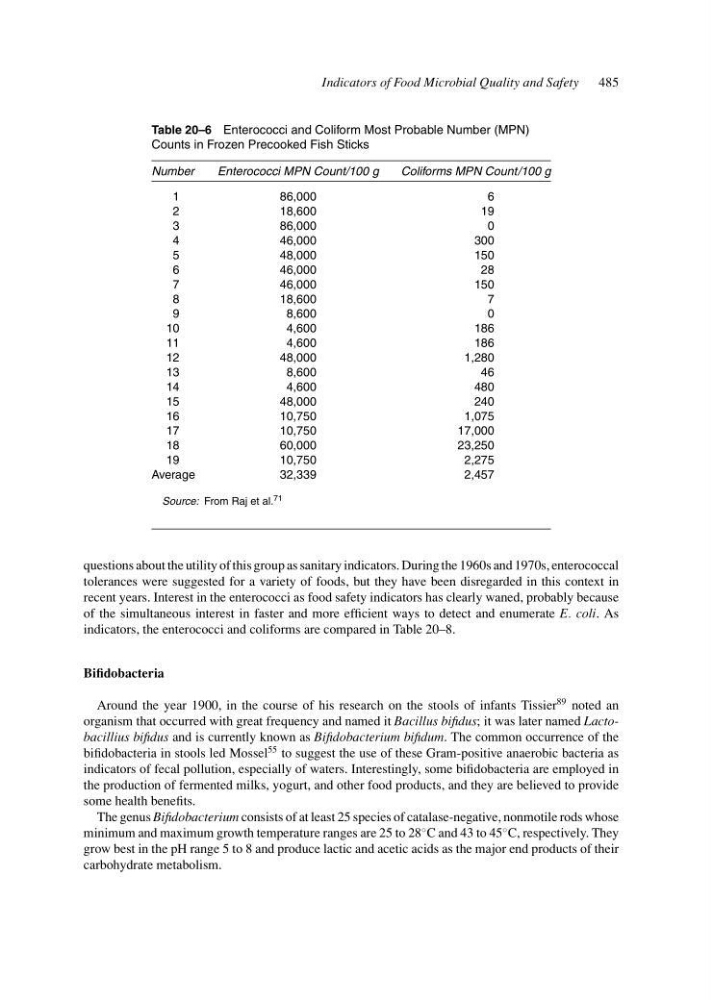
Table 20–6 Enterococci and Coliform Most Probable Number (MPN)
Counts in Frozen Precooked Fish Sticks
Number
Enterococci MPN Count/100 g
Coliforms MPN Count/100 g
1
86,000
6
2
18,600
19
3
86,000
0
4
46,000
300
5
48,000
150
6
46,000
28
7
46,000
150
8
18,600
7
9
8,600
0
10
4,600
186
11
4,600
186
12
48,000
1,280
13
8,600
46
14
4,600
480
15
48,000
240
16
10,750
1,075
17
10,750
17,000
18
60,000
23,250
19
10,750
2,275
Average
32,339
2,457
Source: From Raj et al. 71
questions about the utility of this group as sanitary indicators. During the 1960s and 1970s, enterococcal
tolerances were suggested for a variety of foods, but they have been disregarded in this context in
recent years. Interest in the enterococci as food safety indicators has clearly waned, probably because
of the simultaneous interest in faster and more efficient ways to detect and enumerate E. coli. As
indicators, the enterococci and coliforms are compared in Table 20–8.
Bifidobacteria
Around the year 1900, in the course of his research on the stools of infants Tissier
89 noted an
organism that occurred with great frequency and named it Bacillus bifidus; it was later named Lactobacillius bifidus and is currently known as Bifidobacterium bifidum. The common occurrence of the
bifidobacteria in stools led Mossel
55 to suggest the use of these Gram-positive anaerobic bacteria as
indicators of fecal pollution, especially of waters. Interestingly, some bifidobacteria are employed in
the production of fermented milks, yogurt, and other food products, and they are believed to provide
some health benefits.
The genus Bifidobacterium consists of at least 25 species of catalase-negative, nonmotile rods whose
minimum and maximum growth temperature ranges are 25 to 28
◦ C and 43 to 45
◦ C, respectively. They
grow best in the pH range 5 to 8 and produce lactic and acetic acids as the major end products of their
carbohydrate metabolism.
485
Table 20–6 Enterococci and Coliform Most Probable Number (MPN)
Counts in Frozen Precooked Fish Sticks
Number
Enterococci MPN Count/100 g
Coliforms MPN Count/100 g
1
86,000
6
2
18,600
19
3
86,000
0
4
46,000
300
5
48,000
150
6
46,000
28
7
46,000
150
8
18,600
7
9
8,600
0
10
4,600
186
11
4,600
186
12
48,000
1,280
13
8,600
46
14
4,600
480
15
48,000
240
16
10,750
1,075
17
10,750
17,000
18
60,000
23,250
19
10,750
2,275
Average
32,339
2,457
Source: From Raj et al. 71
questions about the utility of this group as sanitary indicators. During the 1960s and 1970s, enterococcal
tolerances were suggested for a variety of foods, but they have been disregarded in this context in
recent years. Interest in the enterococci as food safety indicators has clearly waned, probably because
of the simultaneous interest in faster and more efficient ways to detect and enumerate E. coli. As
indicators, the enterococci and coliforms are compared in Table 20–8.
Bifidobacteria
Around the year 1900, in the course of his research on the stools of infants Tissier
89 noted an
organism that occurred with great frequency and named it Bacillus bifidus; it was later named Lactobacillius bifidus and is currently known as Bifidobacterium bifidum. The common occurrence of the
bifidobacteria in stools led Mossel
55 to suggest the use of these Gram-positive anaerobic bacteria as
indicators of fecal pollution, especially of waters. Interestingly, some bifidobacteria are employed in
the production of fermented milks, yogurt, and other food products, and they are believed to provide
some health benefits.
The genus Bifidobacterium consists of at least 25 species of catalase-negative, nonmotile rods whose
minimum and maximum growth temperature ranges are 25 to 28
◦ C and 43 to 45
◦ C, respectively. They
grow best in the pH range 5 to 8 and produce lactic and acetic acids as the major end products of their
carbohydrate metabolism.