

Food Protection with High Temperatures
437
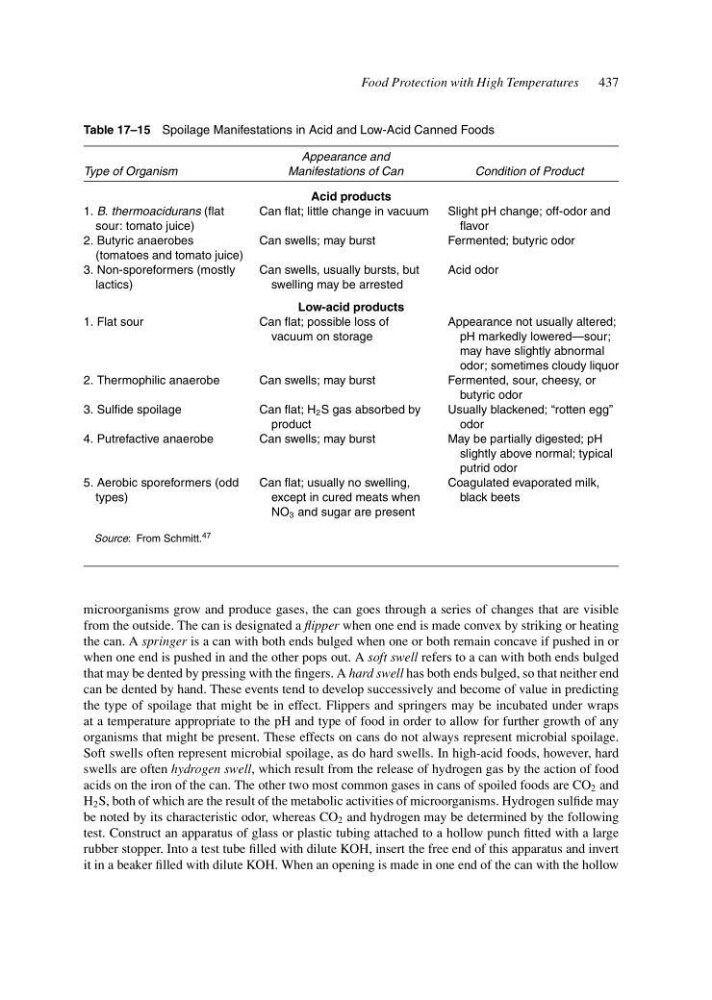
Table 17–15 Spoilage Manifestations in Acid and Low-Acid Canned Foods
Appearance and
Type of Organism
Manifestations of Can
Condition of Product
Acid products
1. B. thermoacidurans (flat
sour: tomato juice)
Can flat; little change in vacuum
Slight pH change; off-odor and
flavor
2. Butyric anaerobes
(tomatoes and tomato juice)
Can swells; may burst
Fermented; butyric odor
3. Non-sporeformers (mostly
lactics)
Can swells, usually bursts, but
swelling may be arrested
Acid odor
Low-acid products
1. Flat sour
Can flat; possible loss of
vacuum on storage
Appearance not usually altered;
pH markedly lowered—sour;
may have slightly abnormal
odor; sometimes cloudy liquor
2. Thermophilic anaerobe
Can swells; may burst
Fermented, sour, cheesy, or
butyric odor
3. Sulfide spoilage
Can flat; H 2 S gas absorbed by
product
Usually blackened; “rotten egg”
odor
4. Putrefactive anaerobe
Can swells; may burst
May be partially digested; pH
slightly above normal; typical
putrid odor
5. Aerobic sporeformers (odd
types)
Can flat; usually no swelling,
except in cured meats when
NO 3 and sugar are present
Coagulated evaporated milk,
black beets
Source: From Schmitt. 47
microorganisms grow and produce gases, the can goes through a series of changes that are visible
from the outside. The can is designated a flipper when one end is made convex by striking or heating
the can. A springer is a can with both ends bulged when one or both remain concave if pushed in or
when one end is pushed in and the other pops out. A soft swell refers to a can with both ends bulged
that may be dented by pressing with the fingers. A hard swell has both ends bulged, so that neither end
can be dented by hand. These events tend to develop successively and become of value in predicting
the type of spoilage that might be in effect. Flippers and springers may be incubated under wraps
at a temperature appropriate to the pH and type of food in order to allow for further growth of any
organisms that might be present. These effects on cans do not always represent microbial spoilage.
Soft swells often represent microbial spoilage, as do hard swells. In high-acid foods, however, hard
swells are often hydrogen swell, which result from the release of hydrogen gas by the action of food
acids on the iron of the can. The other two most common gases in cans of spoiled foods are CO 2 and
H 2 S, both of which are the result of the metabolic activities of microorganisms. Hydrogen sulfide may
be noted by its characteristic odor, whereas CO 2 and hydrogen may be determined by the following
test. Construct an apparatus of glass or plastic tubing attached to a hollow punch fitted with a large
rubber stopper. Into a test tube filled with dilute KOH, insert the free end of this apparatus and invert
it in a beaker filled with dilute KOH. When an opening is made in one end of the can with the hollow
437
Table 17–15 Spoilage Manifestations in Acid and Low-Acid Canned Foods
Appearance and
Type of Organism
Manifestations of Can
Condition of Product
Acid products
1. B. thermoacidurans (flat
sour: tomato juice)
Can flat; little change in vacuum
Slight pH change; off-odor and
flavor
2. Butyric anaerobes
(tomatoes and tomato juice)
Can swells; may burst
Fermented; butyric odor
3. Non-sporeformers (mostly
lactics)
Can swells, usually bursts, but
swelling may be arrested
Acid odor
Low-acid products
1. Flat sour
Can flat; possible loss of
vacuum on storage
Appearance not usually altered;
pH markedly lowered—sour;
may have slightly abnormal
odor; sometimes cloudy liquor
2. Thermophilic anaerobe
Can swells; may burst
Fermented, sour, cheesy, or
butyric odor
3. Sulfide spoilage
Can flat; H 2 S gas absorbed by
product
Usually blackened; “rotten egg”
odor
4. Putrefactive anaerobe
Can swells; may burst
May be partially digested; pH
slightly above normal; typical
putrid odor
5. Aerobic sporeformers (odd
types)
Can flat; usually no swelling,
except in cured meats when
NO 3 and sugar are present
Coagulated evaporated milk,
black beets
Source: From Schmitt. 47
microorganisms grow and produce gases, the can goes through a series of changes that are visible
from the outside. The can is designated a flipper when one end is made convex by striking or heating
the can. A springer is a can with both ends bulged when one or both remain concave if pushed in or
when one end is pushed in and the other pops out. A soft swell refers to a can with both ends bulged
that may be dented by pressing with the fingers. A hard swell has both ends bulged, so that neither end
can be dented by hand. These events tend to develop successively and become of value in predicting
the type of spoilage that might be in effect. Flippers and springers may be incubated under wraps
at a temperature appropriate to the pH and type of food in order to allow for further growth of any
organisms that might be present. These effects on cans do not always represent microbial spoilage.
Soft swells often represent microbial spoilage, as do hard swells. In high-acid foods, however, hard
swells are often hydrogen swell, which result from the release of hydrogen gas by the action of food
acids on the iron of the can. The other two most common gases in cans of spoiled foods are CO 2 and
H 2 S, both of which are the result of the metabolic activities of microorganisms. Hydrogen sulfide may
be noted by its characteristic odor, whereas CO 2 and hydrogen may be determined by the following
test. Construct an apparatus of glass or plastic tubing attached to a hollow punch fitted with a large
rubber stopper. Into a test tube filled with dilute KOH, insert the free end of this apparatus and invert
it in a beaker filled with dilute KOH. When an opening is made in one end of the can with the hollow