

Protection of Foods with Low-Temperatures
409
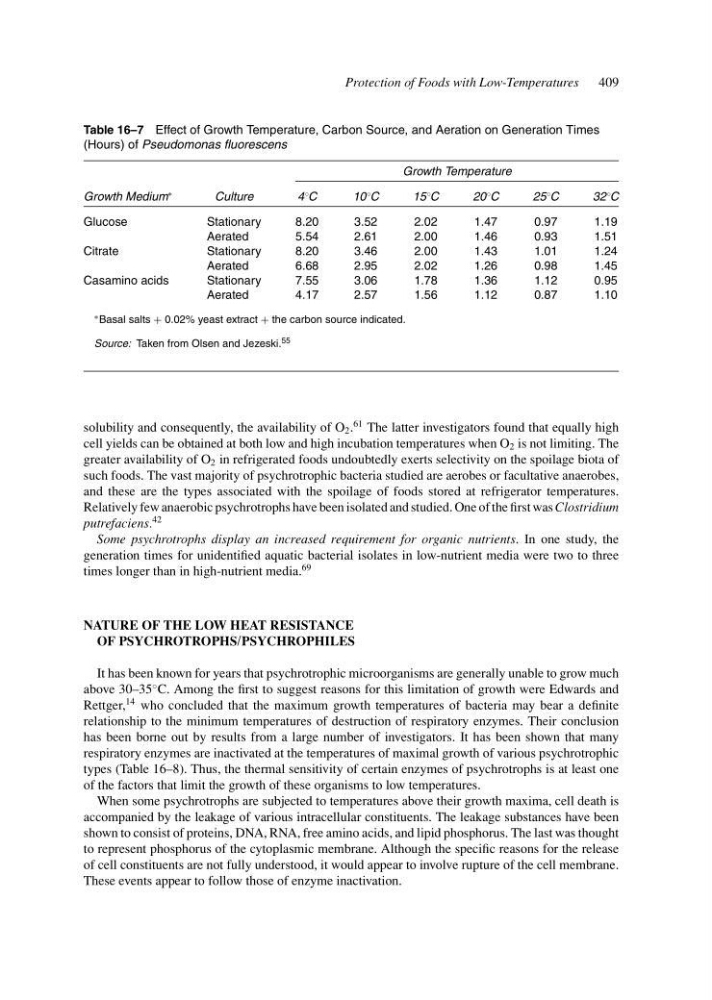
Table 16–7 Effect of Growth Temperature, Carbon Source, and Aeration on Generation Times
(Hours) of Pseudomonas fluorescens
Growth Temperature
Growth Medium
∗
Culture
4
◦
C
1 0
◦
C
1 5
◦
C
2 0
◦
C
2 5
◦
C
3 2
◦
C
Glucose
Stationary
8.20
3.52
2.02
1.47
0.97
1.19
Aerated
5.54
2.61
2.00
1.46
0.93
1.51
Citrate
Stationary
8.20
3.46
2.00
1.43
1.01
1.24
Aerated
6.68
2.95
2.02
1.26
0.98
1.45
Casamino acids
Stationary
7.55
3.06
1.78
1.36
1.12
0.95
Aerated
4.17
2.57
1.56
1.12
0.87
1.10
∗ Basal salts + 0.02% yeast extract + the carbon source indicated.
Source: Taken from Olsen and Jezeski. 55
solubility and consequently, the availability of O 2 .
61 The latter investigators found that equally high
cell yields can be obtained at both low and high incubation temperatures when O 2 is not limiting. The
greater availability of O 2 in refrigerated foods undoubtedly exerts selectivity on the spoilage biota of
such foods. The vast majority of psychrotrophic bacteria studied are aerobes or facultative anaerobes,
and these are the types associated with the spoilage of foods stored at refrigerator temperatures.
Relatively few anaerobic psychrotrophs have been isolated and studied. One of the first was Clostridium
putrefaciens.
42
Some psychrotrophs display an increased requirement for organic nutrients. In one study, the
generation times for unidentified aquatic bacterial isolates in low-nutrient media were two to three
times longer than in high-nutrient media.
69
NATURE OF THE LOW HEAT RESISTANCE
OF PSYCHROTROPHS/PSYCHROPHILES
It has been known for years that psychrotrophic microorganisms are generally unable to grow much
above 30–35
◦ C. Among the first to suggest reasons for this limitation of growth were Edwards and
Rettger,
14 who concluded that the maximum growth temperatures of bacteria may bear a definite
relationship to the minimum temperatures of destruction of respiratory enzymes. Their conclusion
has been borne out by results from a large number of investigators. It has been shown that many
respiratory enzymes are inactivated at the temperatures of maximal growth of various psychrotrophic
types (Table 16–8). Thus, the thermal sensitivity of certain enzymes of psychrotrophs is at least one
of the factors that limit the growth of these organisms to low temperatures.
When some psychrotrophs are subjected to temperatures above their growth maxima, cell death is
accompanied by the leakage of various intracellular constituents. The leakage substances have been
shown to consist of proteins, DNA, RNA, free amino acids, and lipid phosphorus. The last was thought
to represent phosphorus of the cytoplasmic membrane. Although the specific reasons for the release
of cell constituents are not fully understood, it would appear to involve rupture of the cell membrane.
These events appear to follow those of enzyme inactivation.
409
Table 16–7 Effect of Growth Temperature, Carbon Source, and Aeration on Generation Times
(Hours) of Pseudomonas fluorescens
Growth Temperature
Growth Medium
∗
Culture
4
◦
C
1 0
◦
C
1 5
◦
C
2 0
◦
C
2 5
◦
C
3 2
◦
C
Glucose
Stationary
8.20
3.52
2.02
1.47
0.97
1.19
Aerated
5.54
2.61
2.00
1.46
0.93
1.51
Citrate
Stationary
8.20
3.46
2.00
1.43
1.01
1.24
Aerated
6.68
2.95
2.02
1.26
0.98
1.45
Casamino acids
Stationary
7.55
3.06
1.78
1.36
1.12
0.95
Aerated
4.17
2.57
1.56
1.12
0.87
1.10
∗ Basal salts + 0.02% yeast extract + the carbon source indicated.
Source: Taken from Olsen and Jezeski. 55
solubility and consequently, the availability of O 2 .
61 The latter investigators found that equally high
cell yields can be obtained at both low and high incubation temperatures when O 2 is not limiting. The
greater availability of O 2 in refrigerated foods undoubtedly exerts selectivity on the spoilage biota of
such foods. The vast majority of psychrotrophic bacteria studied are aerobes or facultative anaerobes,
and these are the types associated with the spoilage of foods stored at refrigerator temperatures.
Relatively few anaerobic psychrotrophs have been isolated and studied. One of the first was Clostridium
putrefaciens.
42
Some psychrotrophs display an increased requirement for organic nutrients. In one study, the
generation times for unidentified aquatic bacterial isolates in low-nutrient media were two to three
times longer than in high-nutrient media.
69
NATURE OF THE LOW HEAT RESISTANCE
OF PSYCHROTROPHS/PSYCHROPHILES
It has been known for years that psychrotrophic microorganisms are generally unable to grow much
above 30–35
◦ C. Among the first to suggest reasons for this limitation of growth were Edwards and
Rettger,
14 who concluded that the maximum growth temperatures of bacteria may bear a definite
relationship to the minimum temperatures of destruction of respiratory enzymes. Their conclusion
has been borne out by results from a large number of investigators. It has been shown that many
respiratory enzymes are inactivated at the temperatures of maximal growth of various psychrotrophic
types (Table 16–8). Thus, the thermal sensitivity of certain enzymes of psychrotrophs is at least one
of the factors that limit the growth of these organisms to low temperatures.
When some psychrotrophs are subjected to temperatures above their growth maxima, cell death is
accompanied by the leakage of various intracellular constituents. The leakage substances have been
shown to consist of proteins, DNA, RNA, free amino acids, and lipid phosphorus. The last was thought
to represent phosphorus of the cytoplasmic membrane. Although the specific reasons for the release
of cell constituents are not fully understood, it would appear to involve rupture of the cell membrane.
These events appear to follow those of enzyme inactivation.