

Protection of Foods with Low-Temperatures
399
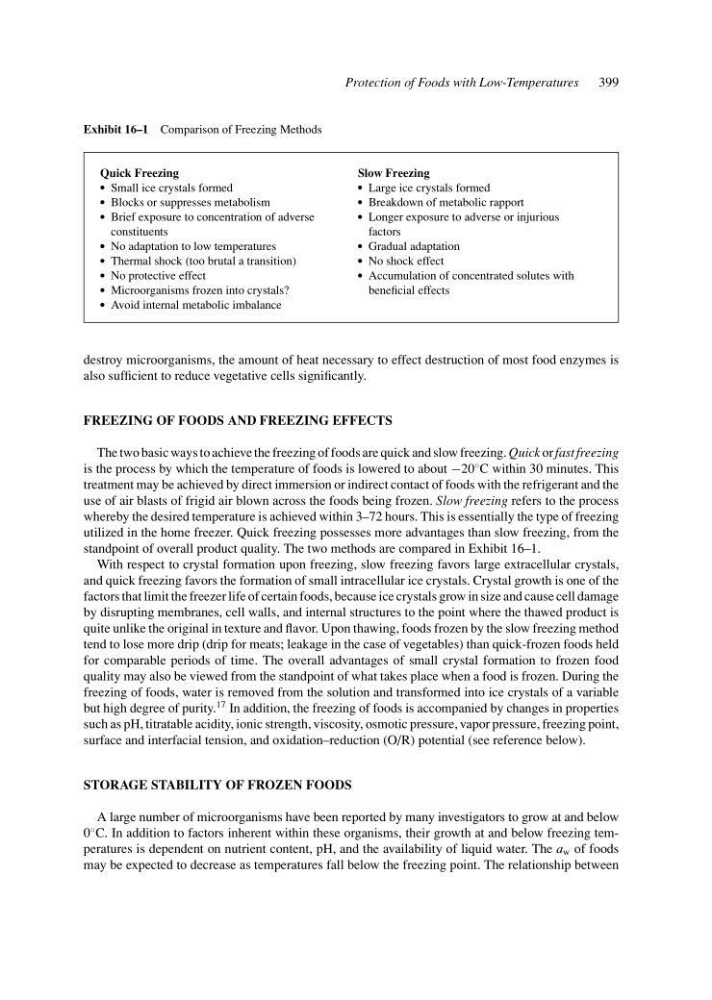
Exhibit 16–1 Comparison of Freezing Methods
Quick Freezing
• Small ice crystals formed
• Blocks or suppresses metabolism
• Brief exposure to concentration of adverse
constituents
• No adaptation to low temperatures
• Thermal shock (too brutal a transition)
• No protective effect
• Microorganisms frozen into crystals?
• Avoid internal metabolic imbalance
Slow Freezing
• Large ice crystals formed
• Breakdown of metabolic rapport
• Longer exposure to adverse or injurious
factors
• Gradual adaptation
• No shock effect
• Accumulation of concentrated solutes with
beneficial effects
destroy microorganisms, the amount of heat necessary to effect destruction of most food enzymes is
also sufficient to reduce vegetative cells significantly.
FREEZING OF FOODS AND FREEZING EFFECTS
The two basic ways to achieve the freezing of foods are quick and slow freezing. Quick or fast freezing
is the process by which the temperature of foods is lowered to about −20
◦ C within 30 minutes. This
treatment may be achieved by direct immersion or indirect contact of foods with the refrigerant and the
use of air blasts of frigid air blown across the foods being frozen. Slow freezing refers to the process
whereby the desired temperature is achieved within 3–72 hours. This is essentially the type of freezing
utilized in the home freezer. Quick freezing possesses more advantages than slow freezing, from the
standpoint of overall product quality. The two methods are compared in Exhibit 16–1.
With respect to crystal formation upon freezing, slow freezing favors large extracellular crystals,
and quick freezing favors the formation of small intracellular ice crystals. Crystal growth is one of the
factors that limit the freezer life of certain foods, because ice crystals grow in size and cause cell damage
by disrupting membranes, cell walls, and internal structures to the point where the thawed product is
quite unlike the original in texture and flavor. Upon thawing, foods frozen by the slow freezing method
tend to lose more drip (drip for meats; leakage in the case of vegetables) than quick-frozen foods held
for comparable periods of time. The overall advantages of small crystal formation to frozen food
quality may also be viewed from the standpoint of what takes place when a food is frozen. During the
freezing of foods, water is removed from the solution and transformed into ice crystals of a variable
but high degree of purity.
17 In addition, the freezing of foods is accompanied by changes in properties
such as pH, titratable acidity, ionic strength, viscosity, osmotic pressure, vapor pressure, freezing point,
surface and interfacial tension, and oxidation–reduction (O/R) potential (see reference below).
STORAGE STABILITY OF FROZEN FOODS
A large number of microorganisms have been reported by many investigators to grow at and below
0
◦ C. In addition to factors inherent within these organisms, their growth at and below freezing temperatures is dependent on nutrient content, pH, and the availability of liquid water. The a w of foods
may be expected to decrease as temperatures fall below the freezing point. The relationship between
399
Exhibit 16–1 Comparison of Freezing Methods
Quick Freezing
• Small ice crystals formed
• Blocks or suppresses metabolism
• Brief exposure to concentration of adverse
constituents
• No adaptation to low temperatures
• Thermal shock (too brutal a transition)
• No protective effect
• Microorganisms frozen into crystals?
• Avoid internal metabolic imbalance
Slow Freezing
• Large ice crystals formed
• Breakdown of metabolic rapport
• Longer exposure to adverse or injurious
factors
• Gradual adaptation
• No shock effect
• Accumulation of concentrated solutes with
beneficial effects
destroy microorganisms, the amount of heat necessary to effect destruction of most food enzymes is
also sufficient to reduce vegetative cells significantly.
FREEZING OF FOODS AND FREEZING EFFECTS
The two basic ways to achieve the freezing of foods are quick and slow freezing. Quick or fast freezing
is the process by which the temperature of foods is lowered to about −20
◦ C within 30 minutes. This
treatment may be achieved by direct immersion or indirect contact of foods with the refrigerant and the
use of air blasts of frigid air blown across the foods being frozen. Slow freezing refers to the process
whereby the desired temperature is achieved within 3–72 hours. This is essentially the type of freezing
utilized in the home freezer. Quick freezing possesses more advantages than slow freezing, from the
standpoint of overall product quality. The two methods are compared in Exhibit 16–1.
With respect to crystal formation upon freezing, slow freezing favors large extracellular crystals,
and quick freezing favors the formation of small intracellular ice crystals. Crystal growth is one of the
factors that limit the freezer life of certain foods, because ice crystals grow in size and cause cell damage
by disrupting membranes, cell walls, and internal structures to the point where the thawed product is
quite unlike the original in texture and flavor. Upon thawing, foods frozen by the slow freezing method
tend to lose more drip (drip for meats; leakage in the case of vegetables) than quick-frozen foods held
for comparable periods of time. The overall advantages of small crystal formation to frozen food
quality may also be viewed from the standpoint of what takes place when a food is frozen. During the
freezing of foods, water is removed from the solution and transformed into ice crystals of a variable
but high degree of purity.
17 In addition, the freezing of foods is accompanied by changes in properties
such as pH, titratable acidity, ionic strength, viscosity, osmotic pressure, vapor pressure, freezing point,
surface and interfacial tension, and oxidation–reduction (O/R) potential (see reference below).
STORAGE STABILITY OF FROZEN FOODS
A large number of microorganisms have been reported by many investigators to grow at and below
0
◦ C. In addition to factors inherent within these organisms, their growth at and below freezing temperatures is dependent on nutrient content, pH, and the availability of liquid water. The a w of foods
may be expected to decrease as temperatures fall below the freezing point. The relationship between