

Radiation Protection of Foods, and Nature of Microbial Radiation Resistance
389
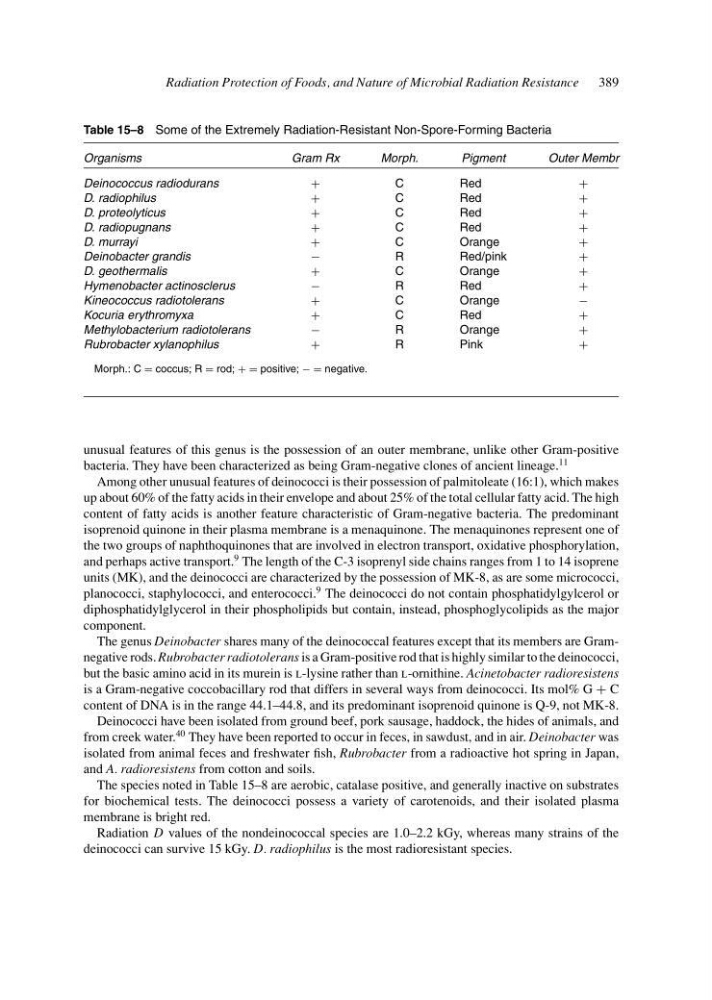
Table 15–8 Some of the Extremely Radiation-Resistant Non-Spore-Forming Bacteria
Organisms
Gram Rx
Morph.
Pigment
Outer Membr
Deinococcus radiodurans
+
C
Red
+
D. radiophilus
+
C
Red
+
D. proteolyticus
+
C
Red
+
D. radiopugnans
+
C
Red
+
D. murrayi
+
C
Orange
+
Deinobacter grandis
−
R
Red/pink
+
D. geothermalis
+
C
Orange
+
Hymenobacter actinosclerus
−
R
Red
+
Kineococcus radiotolerans
+
C
Orange
−
Kocuria erythromyxa
+
C
Red
+
Methylobacterium radiotolerans
−
R
Orange
+
Rubrobacter xylanophilus
+
R
Pink
+
Morph.: C = coccus; R = rod; + = positive; − = negative.
unusual features of this genus is the possession of an outer membrane, unlike other Gram-positive
bacteria. They have been characterized as being Gram-negative clones of ancient lineage.
11
Among other unusual features of deinococci is their possession of palmitoleate (16:1), which makes
up about 60% of the fatty acids in their envelope and about 25% of the total cellular fatty acid. The high
content of fatty acids is another feature characteristic of Gram-negative bacteria. The predominant
isoprenoid quinone in their plasma membrane is a menaquinone. The menaquinones represent one of
the two groups of naphthoquinones that are involved in electron transport, oxidative phosphorylation,
and perhaps active transport.
9 The length of the C-3 isoprenyl side chains ranges from 1 to 14 isoprene
units (MK), and the deinococci are characterized by the possession of MK-8, as are some micrococci,
planococci, staphylococci, and enterococci.
9 The deinococci do not contain phosphatidylgylcerol or
diphosphatidylglycerol in their phospholipids but contain, instead, phosphoglycolipids as the major
component.
The genus Deinobacter shares many of the deinococcal features except that its members are Gramnegative rods. Rubrobacter radiotolerans is a Gram-positive rod that is highly similar to the deinococci,
but the basic amino acid in its murein is l-lysine rather than l-ornithine. Acinetobacter radioresistens
is a Gram-negative coccobacillary rod that differs in several ways from deinococci. Its mol% G + C
content of DNA is in the range 44.1–44.8, and its predominant isoprenoid quinone is Q-9, not MK-8.
Deinococci have been isolated from ground beef, pork sausage, haddock, the hides of animals, and
from creek water.
40 They have been reported to occur in feces, in sawdust, and in air. Deinobacter was
isolated from animal feces and freshwater fish, Rubrobacter from a radioactive hot spring in Japan,
and A. radioresistens from cotton and soils.
The species noted in Table 15–8 are aerobic, catalase positive, and generally inactive on substrates
for biochemical tests. The deinococci possess a variety of carotenoids, and their isolated plasma
membrane is bright red.
Radiation D values of the nondeinococcal species are 1.0–2.2 kGy, whereas many strains of the
deinococci can survive 15 kGy. D. radiophilus is the most radioresistant species.
389
Table 15–8 Some of the Extremely Radiation-Resistant Non-Spore-Forming Bacteria
Organisms
Gram Rx
Morph.
Pigment
Outer Membr
Deinococcus radiodurans
+
C
Red
+
D. radiophilus
+
C
Red
+
D. proteolyticus
+
C
Red
+
D. radiopugnans
+
C
Red
+
D. murrayi
+
C
Orange
+
Deinobacter grandis
−
R
Red/pink
+
D. geothermalis
+
C
Orange
+
Hymenobacter actinosclerus
−
R
Red
+
Kineococcus radiotolerans
+
C
Orange
−
Kocuria erythromyxa
+
C
Red
+
Methylobacterium radiotolerans
−
R
Orange
+
Rubrobacter xylanophilus
+
R
Pink
+
Morph.: C = coccus; R = rod; + = positive; − = negative.
unusual features of this genus is the possession of an outer membrane, unlike other Gram-positive
bacteria. They have been characterized as being Gram-negative clones of ancient lineage.
11
Among other unusual features of deinococci is their possession of palmitoleate (16:1), which makes
up about 60% of the fatty acids in their envelope and about 25% of the total cellular fatty acid. The high
content of fatty acids is another feature characteristic of Gram-negative bacteria. The predominant
isoprenoid quinone in their plasma membrane is a menaquinone. The menaquinones represent one of
the two groups of naphthoquinones that are involved in electron transport, oxidative phosphorylation,
and perhaps active transport.
9 The length of the C-3 isoprenyl side chains ranges from 1 to 14 isoprene
units (MK), and the deinococci are characterized by the possession of MK-8, as are some micrococci,
planococci, staphylococci, and enterococci.
9 The deinococci do not contain phosphatidylgylcerol or
diphosphatidylglycerol in their phospholipids but contain, instead, phosphoglycolipids as the major
component.
The genus Deinobacter shares many of the deinococcal features except that its members are Gramnegative rods. Rubrobacter radiotolerans is a Gram-positive rod that is highly similar to the deinococci,
but the basic amino acid in its murein is l-lysine rather than l-ornithine. Acinetobacter radioresistens
is a Gram-negative coccobacillary rod that differs in several ways from deinococci. Its mol% G + C
content of DNA is in the range 44.1–44.8, and its predominant isoprenoid quinone is Q-9, not MK-8.
Deinococci have been isolated from ground beef, pork sausage, haddock, the hides of animals, and
from creek water.
40 They have been reported to occur in feces, in sawdust, and in air. Deinobacter was
isolated from animal feces and freshwater fish, Rubrobacter from a radioactive hot spring in Japan,
and A. radioresistens from cotton and soils.
The species noted in Table 15–8 are aerobic, catalase positive, and generally inactive on substrates
for biochemical tests. The deinococci possess a variety of carotenoids, and their isolated plasma
membrane is bright red.
Radiation D values of the nondeinococcal species are 1.0–2.2 kGy, whereas many strains of the
deinococci can survive 15 kGy. D. radiophilus is the most radioresistant species.