

302 Modern Food Microbiology
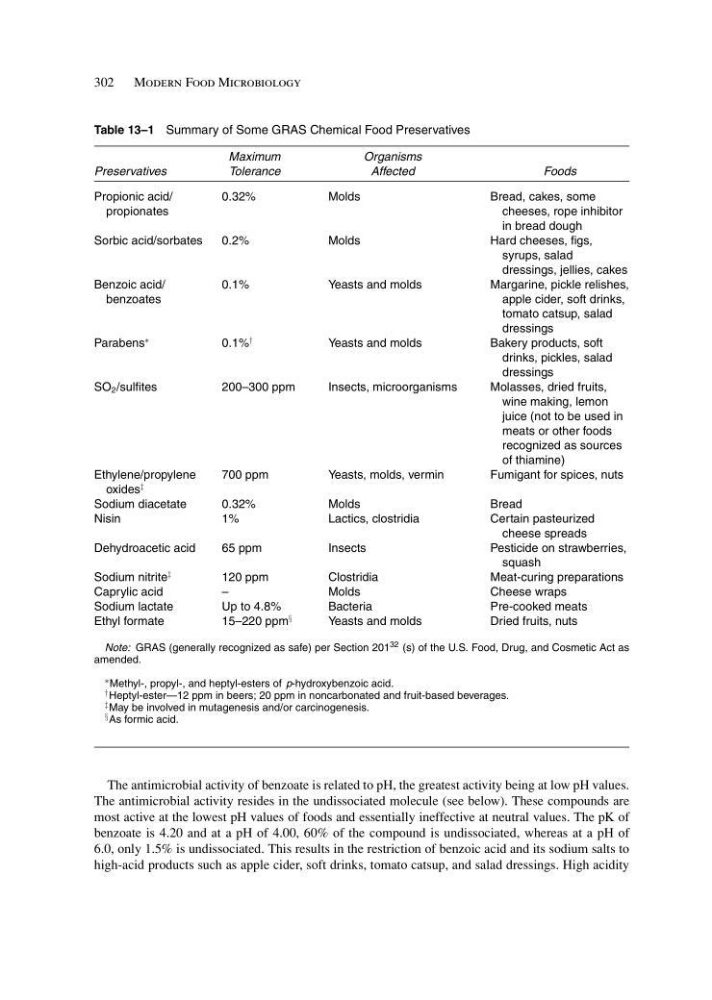
Table 13–1 Summary of Some GRAS Chemical Food Preservatives
Maximum
Organisms
Preservatives
Tolerance
Affected
Foods
Propionic acid/
propionates
0.32%
Molds
Bread, cakes, some
cheeses, rope inhibitor
in bread dough
Sorbic acid/sorbates
0.2%
Molds
Hard cheeses, figs,
syrups, salad
dressings, jellies, cakes
Benzoic acid/
benzoates
0.1%
Yeasts and molds
Margarine, pickle relishes,
apple cider, soft drinks,
tomato catsup, salad
dressings
Parabens
∗
0.1%
†
Yeasts and molds
Bakery products, soft
drinks, pickles, salad
dressings
SO 2 /sulfites
200–300 ppm
Insects, microorganisms
Molasses, dried fruits,
wine making, lemon
juice (not to be used in
meats or other foods
recognized as sources
of thiamine)
Ethylene/propylene
oxides
‡
700 ppm
Yeasts, molds, vermin
Fumigant for spices, nuts
Sodium diacetate
0.32%
Molds
Bread
Nisin
1%
Lactics, clostridia
Certain pasteurized
cheese spreads
Dehydroacetic acid
65 ppm
Insects
Pesticide on strawberries,
squash
Sodium nitrite
‡
120 ppm
Clostridia
Meat-curing preparations
Caprylic acid
–
Molds
Cheese wraps
Sodium lactate
Up to 4.8%
Bacteria
Pre-cooked meats
Ethyl formate
15–220 ppm
§
Yeasts and molds
Dried fruits, nuts
Note: GRAS (generally recognized as safe) per Section 201 32 (s) of the U.S. Food, Drug, and Cosmetic Act as
amended.
∗ Methyl-, propyl-, and heptyl-esters of p-hydroxybenzoic acid.
† Heptyl-ester—12 ppm in beers; 20 ppm in noncarbonated and fruit-based beverages.
‡ May be involved in mutagenesis and/or carcinogenesis.
§ As formic acid.
The antimicrobial activity of benzoate is related to pH, the greatest activity being at low pH values.
The antimicrobial activity resides in the undissociated molecule (see below). These compounds are
most active at the lowest pH values of foods and essentially ineffective at neutral values. The pK of
benzoate is 4.20 and at a pH of 4.00, 60% of the compound is undissociated, whereas at a pH of
6.0, only 1.5% is undissociated. This results in the restriction of benzoic acid and its sodium salts to
high-acid products such as apple cider, soft drinks, tomato catsup, and salad dressings. High acidity
Table 13–1 Summary of Some GRAS Chemical Food Preservatives
Maximum
Organisms
Preservatives
Tolerance
Affected
Foods
Propionic acid/
propionates
0.32%
Molds
Bread, cakes, some
cheeses, rope inhibitor
in bread dough
Sorbic acid/sorbates
0.2%
Molds
Hard cheeses, figs,
syrups, salad
dressings, jellies, cakes
Benzoic acid/
benzoates
0.1%
Yeasts and molds
Margarine, pickle relishes,
apple cider, soft drinks,
tomato catsup, salad
dressings
Parabens
∗
0.1%
†
Yeasts and molds
Bakery products, soft
drinks, pickles, salad
dressings
SO 2 /sulfites
200–300 ppm
Insects, microorganisms
Molasses, dried fruits,
wine making, lemon
juice (not to be used in
meats or other foods
recognized as sources
of thiamine)
Ethylene/propylene
oxides
‡
700 ppm
Yeasts, molds, vermin
Fumigant for spices, nuts
Sodium diacetate
0.32%
Molds
Bread
Nisin
1%
Lactics, clostridia
Certain pasteurized
cheese spreads
Dehydroacetic acid
65 ppm
Insects
Pesticide on strawberries,
squash
Sodium nitrite
‡
120 ppm
Clostridia
Meat-curing preparations
Caprylic acid
–
Molds
Cheese wraps
Sodium lactate
Up to 4.8%
Bacteria
Pre-cooked meats
Ethyl formate
15–220 ppm
§
Yeasts and molds
Dried fruits, nuts
Note: GRAS (generally recognized as safe) per Section 201 32 (s) of the U.S. Food, Drug, and Cosmetic Act as
amended.
∗ Methyl-, propyl-, and heptyl-esters of p-hydroxybenzoic acid.
† Heptyl-ester—12 ppm in beers; 20 ppm in noncarbonated and fruit-based beverages.
‡ May be involved in mutagenesis and/or carcinogenesis.
§ As formic acid.
The antimicrobial activity of benzoate is related to pH, the greatest activity being at low pH values.
The antimicrobial activity resides in the undissociated molecule (see below). These compounds are
most active at the lowest pH values of foods and essentially ineffective at neutral values. The pK of
benzoate is 4.20 and at a pH of 4.00, 60% of the compound is undissociated, whereas at a pH of
6.0, only 1.5% is undissociated. This results in the restriction of benzoic acid and its sodium salts to
high-acid products such as apple cider, soft drinks, tomato catsup, and salad dressings. High acidity