

286 Modern Food Microbiology
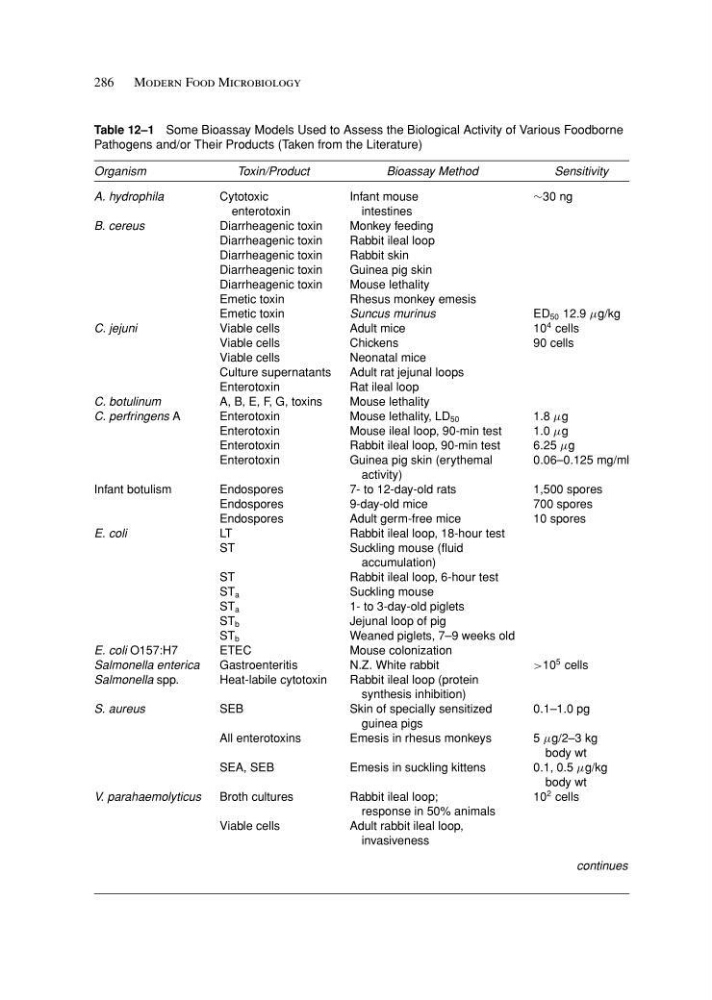
Table 12–1 Some Bioassay Models Used to Assess the Biological Activity of Various Foodborne
Pathogens and/or Their Products (Taken from the Literature)
Organism
Toxin/Product
Bioassay Method
Sensitivity
A. hydrophila
Cytotoxic
Infant mouse
∼30 ng
enterotoxin
intestines
B. cereus
Diarrheagenic toxin
Monkey feeding
Diarrheagenic toxin
Rabbit ileal loop
Diarrheagenic toxin
Rabbit skin
Diarrheagenic toxin
Guinea pig skin
Diarrheagenic toxin
Mouse lethality
Emetic toxin
Rhesus monkey emesis
Emetic toxin
Suncus murinus
ED 50 12.9 µg/kg
C. jejuni
Viable cells
Adult mice
10
4 cells
Viable cells
Chickens
90 cells
Viable cells
Neonatal mice
Culture supernatants
Adult rat jejunal loops
Enterotoxin
Rat ileal loop
C. botulinum
A, B, E, F, G, toxins
Mouse lethality
C. perfringens A
Enterotoxin
Mouse lethality, LD 50
1.8 µg
Enterotoxin
Mouse ileal loop, 90-min test
1.0 µg
Enterotoxin
Rabbit ileal loop, 90-min test
6.25 µg
Enterotoxin
Guinea pig skin (erythemal
0.06–0.125 mg/ml
activity)
Infant botulism
Endospores
7- to 12-day-old rats
1,500 spores
Endospores
9-day-old mice
700 spores
Endospores
Adult germ-free mice
10 spores
E. coli
LT
Rabbit ileal loop, 18-hour test
ST
Suckling mouse (fluid
accumulation)
ST
Rabbit ileal loop, 6-hour test
ST a
Suckling mouse
ST a
1- to 3-day-old piglets
ST b
Jejunal loop of pig
ST b
Weaned piglets, 7–9 weeks old
E. coli O157:H7
ETEC
Mouse colonization
Salmonella enterica
Gastroenteritis
N.Z. White rabbit
>10
5 cells
Salmonella spp.
Heat-labile cytotoxin
Rabbit ileal loop (protein
synthesis inhibition)
S. aureus
SEB
Skin of specially sensitized
0.1–1.0 pg
guinea pigs
All enterotoxins
Emesis in rhesus monkeys
5 µg/2–3 kg
body wt
SEA, SEB
Emesis in suckling kittens
0.1, 0.5 µg/kg
body wt
V. parahaemolyticus
Broth cultures
Rabbit ileal loop;
10
2 cells
response in 50% animals
Viable cells
Adult rabbit ileal loop,
invasiveness
continues
Table 12–1 Some Bioassay Models Used to Assess the Biological Activity of Various Foodborne
Pathogens and/or Their Products (Taken from the Literature)
Organism
Toxin/Product
Bioassay Method
Sensitivity
A. hydrophila
Cytotoxic
Infant mouse
∼30 ng
enterotoxin
intestines
B. cereus
Diarrheagenic toxin
Monkey feeding
Diarrheagenic toxin
Rabbit ileal loop
Diarrheagenic toxin
Rabbit skin
Diarrheagenic toxin
Guinea pig skin
Diarrheagenic toxin
Mouse lethality
Emetic toxin
Rhesus monkey emesis
Emetic toxin
Suncus murinus
ED 50 12.9 µg/kg
C. jejuni
Viable cells
Adult mice
10
4 cells
Viable cells
Chickens
90 cells
Viable cells
Neonatal mice
Culture supernatants
Adult rat jejunal loops
Enterotoxin
Rat ileal loop
C. botulinum
A, B, E, F, G, toxins
Mouse lethality
C. perfringens A
Enterotoxin
Mouse lethality, LD 50
1.8 µg
Enterotoxin
Mouse ileal loop, 90-min test
1.0 µg
Enterotoxin
Rabbit ileal loop, 90-min test
6.25 µg
Enterotoxin
Guinea pig skin (erythemal
0.06–0.125 mg/ml
activity)
Infant botulism
Endospores
7- to 12-day-old rats
1,500 spores
Endospores
9-day-old mice
700 spores
Endospores
Adult germ-free mice
10 spores
E. coli
LT
Rabbit ileal loop, 18-hour test
ST
Suckling mouse (fluid
accumulation)
ST
Rabbit ileal loop, 6-hour test
ST a
Suckling mouse
ST a
1- to 3-day-old piglets
ST b
Jejunal loop of pig
ST b
Weaned piglets, 7–9 weeks old
E. coli O157:H7
ETEC
Mouse colonization
Salmonella enterica
Gastroenteritis
N.Z. White rabbit
>10
5 cells
Salmonella spp.
Heat-labile cytotoxin
Rabbit ileal loop (protein
synthesis inhibition)
S. aureus
SEB
Skin of specially sensitized
0.1–1.0 pg
guinea pigs
All enterotoxins
Emesis in rhesus monkeys
5 µg/2–3 kg
body wt
SEA, SEB
Emesis in suckling kittens
0.1, 0.5 µg/kg
body wt
V. parahaemolyticus
Broth cultures
Rabbit ileal loop;
10
2 cells
response in 50% animals
Viable cells
Adult rabbit ileal loop,
invasiveness
continues