

116 Modern Food Microbiology
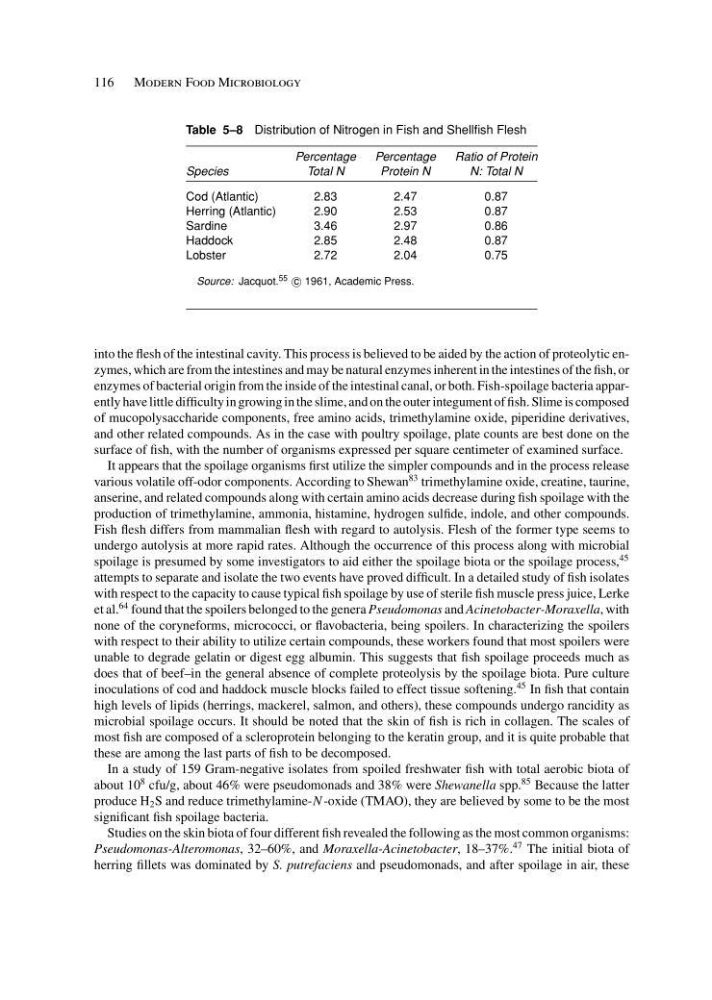
Table 5–8 Distribution of Nitrogen in Fish and Shellfish Flesh
Percentage
Percentage
Ratio of Protein
Species
Total N
Protein N
N: Total N
Cod (Atlantic)
2.83
2.47
0.87
Herring (Atlantic)
2.90
2.53
0.87
Sardine
3.46
2.97
0.86
Haddock
2.85
2.48
0.87
Lobster
2.72
2.04
0.75
Source: Jacquot. 55 c
1961, Academic Press.
into the flesh of the intestinal cavity. This process is believed to be aided by the action of proteolytic enzymes, which are from the intestines and may be natural enzymes inherent in the intestines of the fish, or
enzymes of bacterial origin from the inside of the intestinal canal, or both. Fish-spoilage bacteria apparently have little difficulty in growing in the slime, and on the outer integument of fish. Slime is composed
of mucopolysaccharide components, free amino acids, trimethylamine oxide, piperidine derivatives,
and other related compounds. As in the case with poultry spoilage, plate counts are best done on the
surface of fish, with the number of organisms expressed per square centimeter of examined surface.
It appears that the spoilage organisms first utilize the simpler compounds and in the process release
various volatile off-odor components. According to Shewan
83 trimethylamine oxide, creatine, taurine,
anserine, and related compounds along with certain amino acids decrease during fish spoilage with the
production of trimethylamine, ammonia, histamine, hydrogen sulfide, indole, and other compounds.
Fish flesh differs from mammalian flesh with regard to autolysis. Flesh of the former type seems to
undergo autolysis at more rapid rates. Although the occurrence of this process along with microbial
spoilage is presumed by some investigators to aid either the spoilage biota or the spoilage process,
45
attempts to separate and isolate the two events have proved difficult. In a detailed study of fish isolates
with respect to the capacity to cause typical fish spoilage by use of sterile fish muscle press juice, Lerke
et al.
64 found that the spoilers belonged to the genera Pseudomonas and Acinetobacter-Moraxella, with
none of the coryneforms, micrococci, or flavobacteria, being spoilers. In characterizing the spoilers
with respect to their ability to utilize certain compounds, these workers found that most spoilers were
unable to degrade gelatin or digest egg albumin. This suggests that fish spoilage proceeds much as
does that of beef–in the general absence of complete proteolysis by the spoilage biota. Pure culture
inoculations of cod and haddock muscle blocks failed to effect tissue softening.
45 In fish that contain
high levels of lipids (herrings, mackerel, salmon, and others), these compounds undergo rancidity as
microbial spoilage occurs. It should be noted that the skin of fish is rich in collagen. The scales of
most fish are composed of a scleroprotein belonging to the keratin group, and it is quite probable that
these are among the last parts of fish to be decomposed.
In a study of 159 Gram-negative isolates from spoiled freshwater fish with total aerobic biota of
about 10
8 cfu/g, about 46% were pseudomonads and 38% were Shewanella spp.
85 Because the latter
produce H 2 S and reduce trimethylamine-N -oxide (TMAO), they are believed by some to be the most
significant fish spoilage bacteria.
Studies on the skin biota of four different fish revealed the following as the most common organisms:
Pseudomonas-Alteromonas, 32–60%, and Moraxella-Acinetobacter, 18–37%.
47 The initial biota of
herring fillets was dominated by S. putrefaciens and pseudomonads, and after spoilage in air, these
Table 5–8 Distribution of Nitrogen in Fish and Shellfish Flesh
Percentage
Percentage
Ratio of Protein
Species
Total N
Protein N
N: Total N
Cod (Atlantic)
2.83
2.47
0.87
Herring (Atlantic)
2.90
2.53
0.87
Sardine
3.46
2.97
0.86
Haddock
2.85
2.48
0.87
Lobster
2.72
2.04
0.75
Source: Jacquot. 55 c
1961, Academic Press.
into the flesh of the intestinal cavity. This process is believed to be aided by the action of proteolytic enzymes, which are from the intestines and may be natural enzymes inherent in the intestines of the fish, or
enzymes of bacterial origin from the inside of the intestinal canal, or both. Fish-spoilage bacteria apparently have little difficulty in growing in the slime, and on the outer integument of fish. Slime is composed
of mucopolysaccharide components, free amino acids, trimethylamine oxide, piperidine derivatives,
and other related compounds. As in the case with poultry spoilage, plate counts are best done on the
surface of fish, with the number of organisms expressed per square centimeter of examined surface.
It appears that the spoilage organisms first utilize the simpler compounds and in the process release
various volatile off-odor components. According to Shewan
83 trimethylamine oxide, creatine, taurine,
anserine, and related compounds along with certain amino acids decrease during fish spoilage with the
production of trimethylamine, ammonia, histamine, hydrogen sulfide, indole, and other compounds.
Fish flesh differs from mammalian flesh with regard to autolysis. Flesh of the former type seems to
undergo autolysis at more rapid rates. Although the occurrence of this process along with microbial
spoilage is presumed by some investigators to aid either the spoilage biota or the spoilage process,
45
attempts to separate and isolate the two events have proved difficult. In a detailed study of fish isolates
with respect to the capacity to cause typical fish spoilage by use of sterile fish muscle press juice, Lerke
et al.
64 found that the spoilers belonged to the genera Pseudomonas and Acinetobacter-Moraxella, with
none of the coryneforms, micrococci, or flavobacteria, being spoilers. In characterizing the spoilers
with respect to their ability to utilize certain compounds, these workers found that most spoilers were
unable to degrade gelatin or digest egg albumin. This suggests that fish spoilage proceeds much as
does that of beef–in the general absence of complete proteolysis by the spoilage biota. Pure culture
inoculations of cod and haddock muscle blocks failed to effect tissue softening.
45 In fish that contain
high levels of lipids (herrings, mackerel, salmon, and others), these compounds undergo rancidity as
microbial spoilage occurs. It should be noted that the skin of fish is rich in collagen. The scales of
most fish are composed of a scleroprotein belonging to the keratin group, and it is quite probable that
these are among the last parts of fish to be decomposed.
In a study of 159 Gram-negative isolates from spoiled freshwater fish with total aerobic biota of
about 10
8 cfu/g, about 46% were pseudomonads and 38% were Shewanella spp.
85 Because the latter
produce H 2 S and reduce trimethylamine-N -oxide (TMAO), they are believed by some to be the most
significant fish spoilage bacteria.
Studies on the skin biota of four different fish revealed the following as the most common organisms:
Pseudomonas-Alteromonas, 32–60%, and Moraxella-Acinetobacter, 18–37%.
47 The initial biota of
herring fillets was dominated by S. putrefaciens and pseudomonads, and after spoilage in air, these