

74
A. Geethakarthi
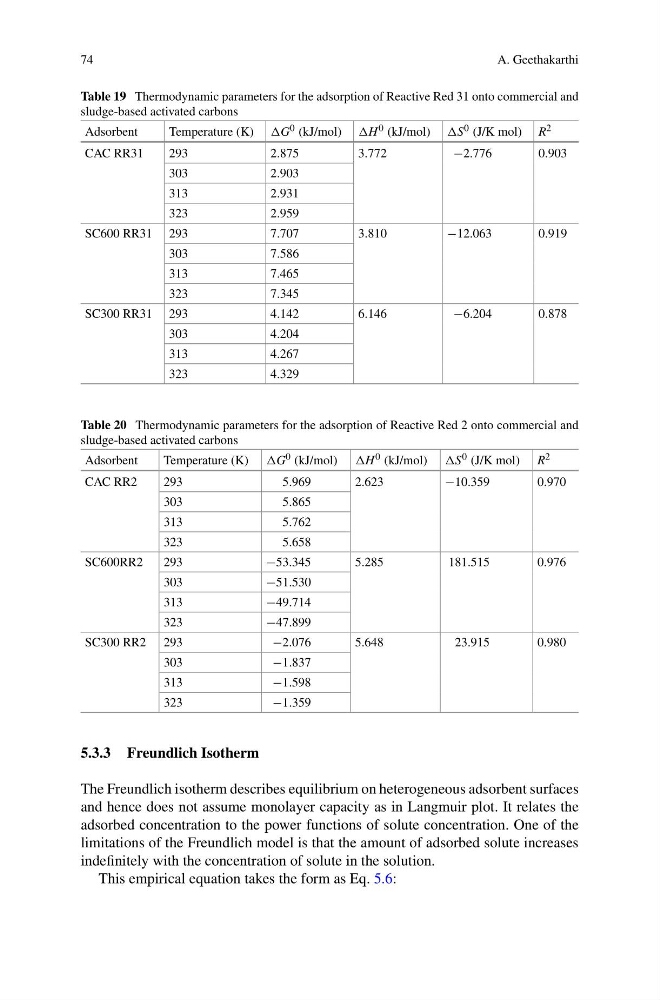
Table 19 Thermodynamic parameters for the adsorption of Reactive Red 31 onto commercial and
sludge-based activated carbons
Adsorbent
Temperature (K) G 0 (kJ/mol) H 0 (kJ/mol) S 0 (J/K mol) R 2
CAC RR31
293
2.875
3.772
−2.776
0.903
303
2.903
313
2.931
323
2.959
SC600 RR31 293
7.707
3.810
−12.063
0.919
303
7.586
313
7.465
323
7.345
SC300 RR31 293
4.142
6.146
−6.204
0.878
303
4.204
313
4.267
323
4.329
Table 20 Thermodynamic parameters for the adsorption of Reactive Red 2 onto commercial and
sludge-based activated carbons
Adsorbent
Temperature (K) G 0 (kJ/mol) H 0 (kJ/mol) S 0 (J/K mol) R 2
CAC RR2
293
5.969
2.623
−10.359
0.970
303
5.865
313
5.762
323
5.658
SC600RR2
293
−53.345
5.285
181.515
0.976
303
−51.530
313
−49.714
323
−47.899
SC300 RR2 293
−2.076
5.648
23.915
0.980
303
−1.837
313
−1.598
323
−1.359
5.3.3 Freundlich Isotherm
The Freundlich isotherm describes equilibrium on heterogeneous adsorbent surfaces
and hence does not assume monolayer capacity as in Langmuir plot. It relates the
adsorbed concentration to the power functions of solute concentration. One of the
limitations of the Freundlich model is that the amount of adsorbed solute increases
indefinitely with the concentration of solute in the solution.
This empirical equation takes the form as Eq. 5.6:
A. Geethakarthi
Table 19 Thermodynamic parameters for the adsorption of Reactive Red 31 onto commercial and
sludge-based activated carbons
Adsorbent
Temperature (K) G 0 (kJ/mol) H 0 (kJ/mol) S 0 (J/K mol) R 2
CAC RR31
293
2.875
3.772
−2.776
0.903
303
2.903
313
2.931
323
2.959
SC600 RR31 293
7.707
3.810
−12.063
0.919
303
7.586
313
7.465
323
7.345
SC300 RR31 293
4.142
6.146
−6.204
0.878
303
4.204
313
4.267
323
4.329
Table 20 Thermodynamic parameters for the adsorption of Reactive Red 2 onto commercial and
sludge-based activated carbons
Adsorbent
Temperature (K) G 0 (kJ/mol) H 0 (kJ/mol) S 0 (J/K mol) R 2
CAC RR2
293
5.969
2.623
−10.359
0.970
303
5.865
313
5.762
323
5.658
SC600RR2
293
−53.345
5.285
181.515
0.976
303
−51.530
313
−49.714
323
−47.899
SC300 RR2 293
−2.076
5.648
23.915
0.980
303
−1.837
313
−1.598
323
−1.359
5.3.3 Freundlich Isotherm
The Freundlich isotherm describes equilibrium on heterogeneous adsorbent surfaces
and hence does not assume monolayer capacity as in Langmuir plot. It relates the
adsorbed concentration to the power functions of solute concentration. One of the
limitations of the Freundlich model is that the amount of adsorbed solute increases
indefinitely with the concentration of solute in the solution.
This empirical equation takes the form as Eq. 5.6: