

50
A. Geethakarthi
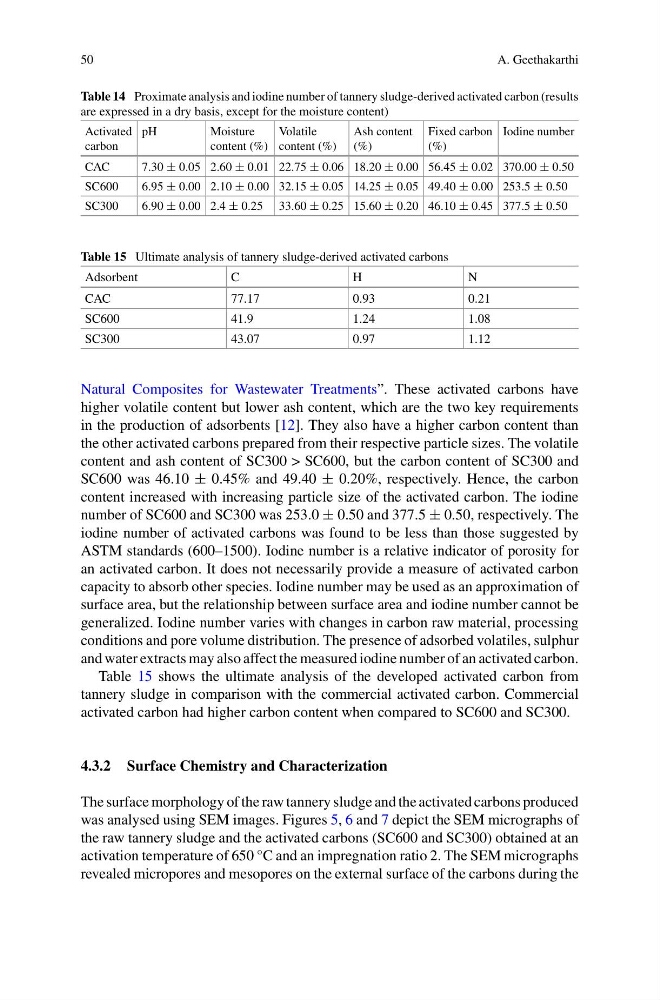
Table 14 Proximate analysis and iodine number of tannery sludge-derived activated carbon (results
are expressed in a dry basis, except for the moisture content)
Activated
carbon
pH
Moisture
content (%)
Volatile
content (%)
Ash content
(%)
Fixed carbon
(%)
Iodine number
CAC
7.30 ± 0.05 2.60 ± 0.01 22.75 ± 0.06 18.20 ± 0.00 56.45 ± 0.02 370.00 ± 0.50
SC600
6.95 ± 0.00 2.10 ± 0.00 32.15 ± 0.05 14.25 ± 0.05 49.40 ± 0.00 253.5 ± 0.50
SC300
6.90 ± 0.00 2.4 ± 0.25 33.60 ± 0.25 15.60 ± 0.20 46.10 ± 0.45 377.5 ± 0.50
Table 15 Ultimate analysis of tannery sludge-derived activated carbons
Adsorbent
C
H
N
CAC
77.17
0.93
0.21
SC600
41.9
1.24
1.08
SC300
43.07
0.97
1.12
Natural Composites for Wastewater Treatments”. These activated carbons have
higher volatile content but lower ash content, which are the two key requirements
in the production of adsorbents [12]. They also have a higher carbon content than
the other activated carbons prepared from their respective particle sizes. The volatile
content and ash content of SC300 > SC600, but the carbon content of SC300 and
SC600 was 46.10 ± 0.45% and 49.40 ± 0.20%, respectively. Hence, the carbon
content increased with increasing particle size of the activated carbon. The iodine
number of SC600 and SC300 was 253.0 ± 0.50 and 377.5 ± 0.50, respectively. The
iodine number of activated carbons was found to be less than those suggested by
ASTM standards (600–1500). Iodine number is a relative indicator of porosity for
an activated carbon. It does not necessarily provide a measure of activated carbon
capacity to absorb other species. Iodine number may be used as an approximation of
surface area, but the relationship between surface area and iodine number cannot be
generalized. Iodine number varies with changes in carbon raw material, processing
conditions and pore volume distribution. The presence of adsorbed volatiles, sulphur
and water extracts may also affect the measured iodine number of an activated carbon.
Table 15 shows the ultimate analysis of the developed activated carbon from
tannery sludge in comparison with the commercial activated carbon. Commercial
activated carbon had higher carbon content when compared to SC600 and SC300.
4.3.2 Surface Chemistry and Characterization
The surface morphology of the raw tannery sludge and the activated carbons produced
was analysed using SEM images. Figures 5, 6 and 7 depict the SEM micrographs of
the raw tannery sludge and the activated carbons (SC600 and SC300) obtained at an
activation temperature of 650 °C and an impregnation ratio 2. The SEM micrographs
revealed micropores and mesopores on the external surface of the carbons during the
A. Geethakarthi
Table 14 Proximate analysis and iodine number of tannery sludge-derived activated carbon (results
are expressed in a dry basis, except for the moisture content)
Activated
carbon
pH
Moisture
content (%)
Volatile
content (%)
Ash content
(%)
Fixed carbon
(%)
Iodine number
CAC
7.30 ± 0.05 2.60 ± 0.01 22.75 ± 0.06 18.20 ± 0.00 56.45 ± 0.02 370.00 ± 0.50
SC600
6.95 ± 0.00 2.10 ± 0.00 32.15 ± 0.05 14.25 ± 0.05 49.40 ± 0.00 253.5 ± 0.50
SC300
6.90 ± 0.00 2.4 ± 0.25 33.60 ± 0.25 15.60 ± 0.20 46.10 ± 0.45 377.5 ± 0.50
Table 15 Ultimate analysis of tannery sludge-derived activated carbons
Adsorbent
C
H
N
CAC
77.17
0.93
0.21
SC600
41.9
1.24
1.08
SC300
43.07
0.97
1.12
Natural Composites for Wastewater Treatments”. These activated carbons have
higher volatile content but lower ash content, which are the two key requirements
in the production of adsorbents [12]. They also have a higher carbon content than
the other activated carbons prepared from their respective particle sizes. The volatile
content and ash content of SC300 > SC600, but the carbon content of SC300 and
SC600 was 46.10 ± 0.45% and 49.40 ± 0.20%, respectively. Hence, the carbon
content increased with increasing particle size of the activated carbon. The iodine
number of SC600 and SC300 was 253.0 ± 0.50 and 377.5 ± 0.50, respectively. The
iodine number of activated carbons was found to be less than those suggested by
ASTM standards (600–1500). Iodine number is a relative indicator of porosity for
an activated carbon. It does not necessarily provide a measure of activated carbon
capacity to absorb other species. Iodine number may be used as an approximation of
surface area, but the relationship between surface area and iodine number cannot be
generalized. Iodine number varies with changes in carbon raw material, processing
conditions and pore volume distribution. The presence of adsorbed volatiles, sulphur
and water extracts may also affect the measured iodine number of an activated carbon.
Table 15 shows the ultimate analysis of the developed activated carbon from
tannery sludge in comparison with the commercial activated carbon. Commercial
activated carbon had higher carbon content when compared to SC600 and SC300.
4.3.2 Surface Chemistry and Characterization
The surface morphology of the raw tannery sludge and the activated carbons produced
was analysed using SEM images. Figures 5, 6 and 7 depict the SEM micrographs of
the raw tannery sludge and the activated carbons (SC600 and SC300) obtained at an
activation temperature of 650 °C and an impregnation ratio 2. The SEM micrographs
revealed micropores and mesopores on the external surface of the carbons during the