

Application of Sustainable and Low-Cost Sludge-Based Adsorbents …
49
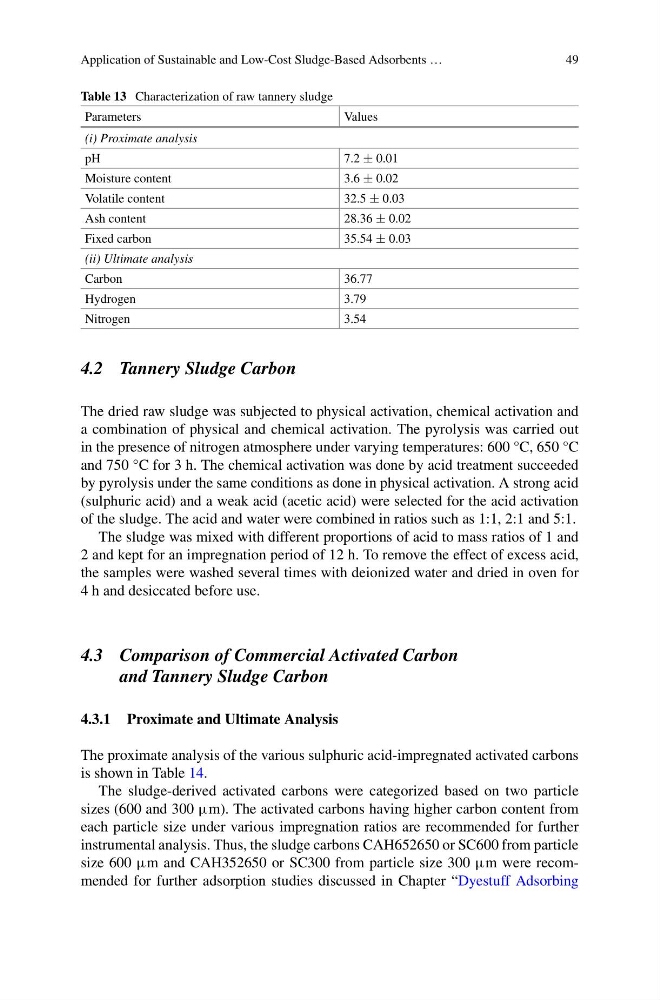
Table 13 Characterization of raw tannery sludge
Parameters
Values
(i) Proximate analysis
pH
7.2 ± 0.01
Moisture content
3.6 ± 0.02
Volatile content
32.5 ± 0.03
Ash content
28.36 ± 0.02
Fixed carbon
35.54 ± 0.03
(ii) Ultimate analysis
Carbon
36.77
Hydrogen
3.79
Nitrogen
3.54
4.2 Tannery Sludge Carbon
The dried raw sludge was subjected to physical activation, chemical activation and
a combination of physical and chemical activation. The pyrolysis was carried out
in the presence of nitrogen atmosphere under varying temperatures: 600 °C, 650 °C
and 750 °C for 3 h. The chemical activation was done by acid treatment succeeded
by pyrolysis under the same conditions as done in physical activation. A strong acid
(sulphuric acid) and a weak acid (acetic acid) were selected for the acid activation
of the sludge. The acid and water were combined in ratios such as 1:1, 2:1 and 5:1.
The sludge was mixed with different proportions of acid to mass ratios of 1 and
2 and kept for an impregnation period of 12 h. To remove the effect of excess acid,
the samples were washed several times with deionized water and dried in oven for
4 h and desiccated before use.
4.3 Comparison of Commercial Activated Carbon
and Tannery Sludge Carbon
4.3.1 Proximate and Ultimate Analysis
The proximate analysis of the various sulphuric acid-impregnated activated carbons
is shown in Table 14.
The sludge-derived activated carbons were categorized based on two particle
sizes (600 and 300 µm). The activated carbons having higher carbon content from
each particle size under various impregnation ratios are recommended for further
instrumental analysis. Thus, the sludge carbons CAH652650 or SC600 from particle
size 600 µm and CAH352650 or SC300 from particle size 300 µm were recommended for further adsorption studies discussed in Chapter “Dyestuff Adsorbing
49
Table 13 Characterization of raw tannery sludge
Parameters
Values
(i) Proximate analysis
pH
7.2 ± 0.01
Moisture content
3.6 ± 0.02
Volatile content
32.5 ± 0.03
Ash content
28.36 ± 0.02
Fixed carbon
35.54 ± 0.03
(ii) Ultimate analysis
Carbon
36.77
Hydrogen
3.79
Nitrogen
3.54
4.2 Tannery Sludge Carbon
The dried raw sludge was subjected to physical activation, chemical activation and
a combination of physical and chemical activation. The pyrolysis was carried out
in the presence of nitrogen atmosphere under varying temperatures: 600 °C, 650 °C
and 750 °C for 3 h. The chemical activation was done by acid treatment succeeded
by pyrolysis under the same conditions as done in physical activation. A strong acid
(sulphuric acid) and a weak acid (acetic acid) were selected for the acid activation
of the sludge. The acid and water were combined in ratios such as 1:1, 2:1 and 5:1.
The sludge was mixed with different proportions of acid to mass ratios of 1 and
2 and kept for an impregnation period of 12 h. To remove the effect of excess acid,
the samples were washed several times with deionized water and dried in oven for
4 h and desiccated before use.
4.3 Comparison of Commercial Activated Carbon
and Tannery Sludge Carbon
4.3.1 Proximate and Ultimate Analysis
The proximate analysis of the various sulphuric acid-impregnated activated carbons
is shown in Table 14.
The sludge-derived activated carbons were categorized based on two particle
sizes (600 and 300 µm). The activated carbons having higher carbon content from
each particle size under various impregnation ratios are recommended for further
instrumental analysis. Thus, the sludge carbons CAH652650 or SC600 from particle
size 600 µm and CAH352650 or SC300 from particle size 300 µm were recommended for further adsorption studies discussed in Chapter “Dyestuff Adsorbing