

Application of Sustainable and Low-Cost Sludge-Based Adsorbents …
35
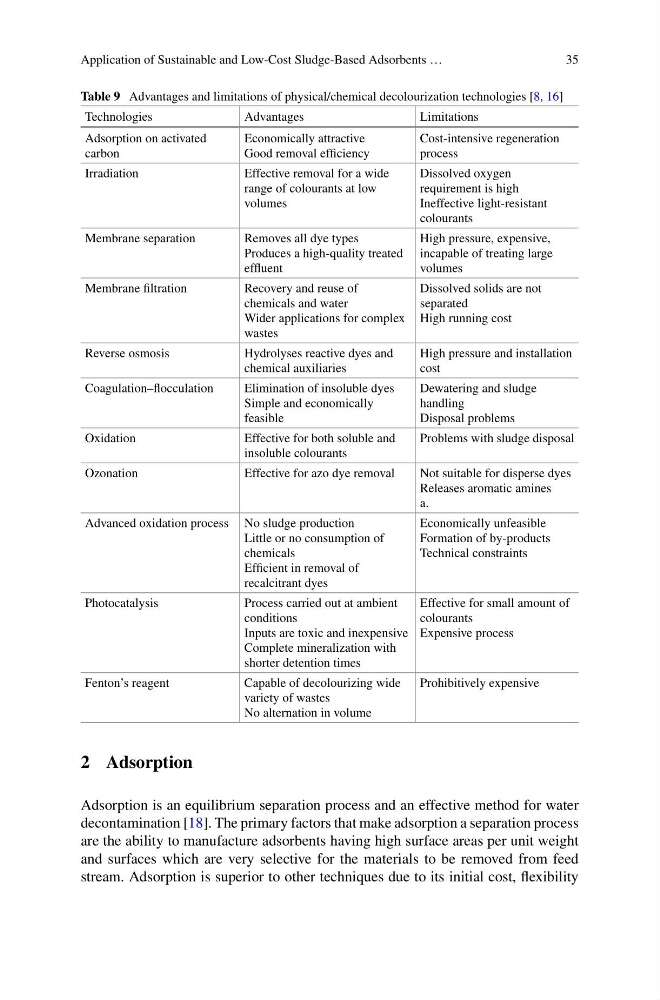
Table 9 Advantages and limitations of physical/chemical decolourization technologies [8, 16]
Technologies
Advantages
Limitations
Adsorption on activated
carbon
Economically attractive
Good removal efficiency
Cost-intensive regeneration
process
Irradiation
Effective removal for a wide
range of colourants at low
volumes
Dissolved oxygen
requirement is high
Ineffective light-resistant
colourants
Membrane separation
Removes all dye types
Produces a high-quality treated
effluent
High pressure, expensive,
incapable of treating large
volumes
Membrane filtration
Recovery and reuse of
chemicals and water
Wider applications for complex
wastes
Dissolved solids are not
separated
High running cost
Reverse osmosis
Hydrolyses reactive dyes and
chemical auxiliaries
High pressure and installation
cost
Coagulation–flocculation
Elimination of insoluble dyes
Simple and economically
feasible
Dewatering and sludge
handling
Disposal problems
Oxidation
Effective for both soluble and
insoluble colourants
Problems with sludge disposal
Ozonation
Effective for azo dye removal
Not suitable for disperse dyes
Releases aromatic amines
a.
Advanced oxidation process No sludge production
Little or no consumption of
chemicals
Efficient in removal of
recalcitrant dyes
Economically unfeasible
Formation of by-products
Technical constraints
Photocatalysis
Process carried out at ambient
conditions
Inputs are toxic and inexpensive
Complete mineralization with
shorter detention times
Effective for small amount of
colourants
Expensive process
Fenton’s reagent
Capable of decolourizing wide
variety of wastes
No alternation in volume
Prohibitively expensive
2 Adsorption
Adsorption is an equilibrium separation process and an effective method for water
decontamination [18]. The primary factors that make adsorption a separation process
are the ability to manufacture adsorbents having high surface areas per unit weight
and surfaces which are very selective for the materials to be removed from feed
stream. Adsorption is superior to other techniques due to its initial cost, flexibility
35
Table 9 Advantages and limitations of physical/chemical decolourization technologies [8, 16]
Technologies
Advantages
Limitations
Adsorption on activated
carbon
Economically attractive
Good removal efficiency
Cost-intensive regeneration
process
Irradiation
Effective removal for a wide
range of colourants at low
volumes
Dissolved oxygen
requirement is high
Ineffective light-resistant
colourants
Membrane separation
Removes all dye types
Produces a high-quality treated
effluent
High pressure, expensive,
incapable of treating large
volumes
Membrane filtration
Recovery and reuse of
chemicals and water
Wider applications for complex
wastes
Dissolved solids are not
separated
High running cost
Reverse osmosis
Hydrolyses reactive dyes and
chemical auxiliaries
High pressure and installation
cost
Coagulation–flocculation
Elimination of insoluble dyes
Simple and economically
feasible
Dewatering and sludge
handling
Disposal problems
Oxidation
Effective for both soluble and
insoluble colourants
Problems with sludge disposal
Ozonation
Effective for azo dye removal
Not suitable for disperse dyes
Releases aromatic amines
a.
Advanced oxidation process No sludge production
Little or no consumption of
chemicals
Efficient in removal of
recalcitrant dyes
Economically unfeasible
Formation of by-products
Technical constraints
Photocatalysis
Process carried out at ambient
conditions
Inputs are toxic and inexpensive
Complete mineralization with
shorter detention times
Effective for small amount of
colourants
Expensive process
Fenton’s reagent
Capable of decolourizing wide
variety of wastes
No alternation in volume
Prohibitively expensive
2 Adsorption
Adsorption is an equilibrium separation process and an effective method for water
decontamination [18]. The primary factors that make adsorption a separation process
are the ability to manufacture adsorbents having high surface areas per unit weight
and surfaces which are very selective for the materials to be removed from feed
stream. Adsorption is superior to other techniques due to its initial cost, flexibility