

Application of Sustainable and Low-Cost Sludge-Based Adsorbents …
31
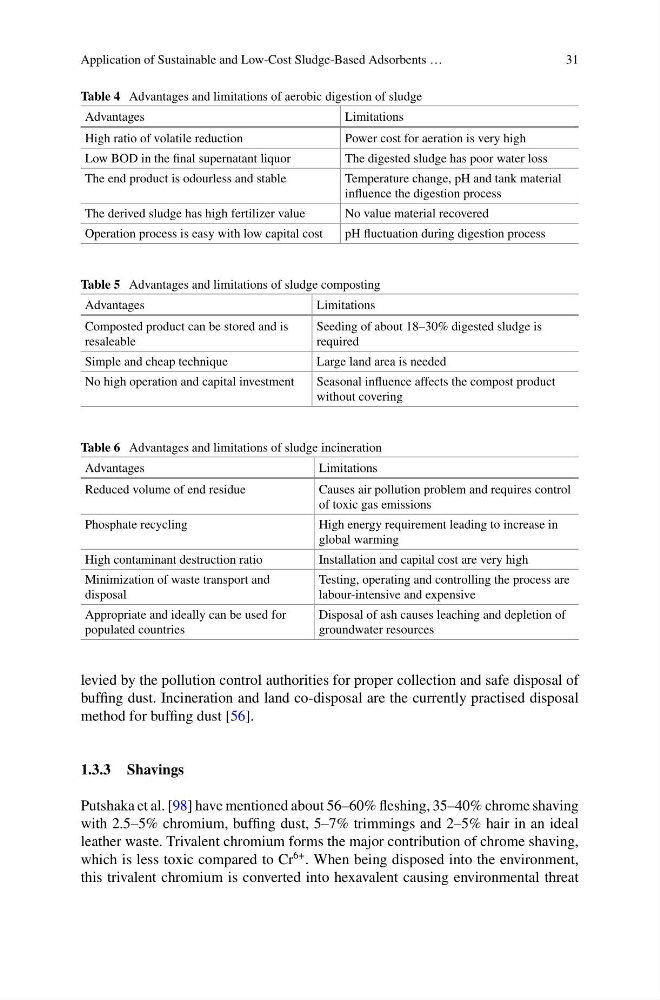
Table 4 Advantages and limitations of aerobic digestion of sludge
Advantages
Limitations
High ratio of volatile reduction
Power cost for aeration is very high
Low BOD in the final supernatant liquor
The digested sludge has poor water loss
The end product is odourless and stable
Temperature change, pH and tank material
influence the digestion process
The derived sludge has high fertilizer value
No value material recovered
Operation process is easy with low capital cost
pH fluctuation during digestion process
Table 5 Advantages and limitations of sludge composting
Advantages
Limitations
Composted product can be stored and is
resaleable
Seeding of about 18–30% digested sludge is
required
Simple and cheap technique
Large land area is needed
No high operation and capital investment
Seasonal influence affects the compost product
without covering
Table 6 Advantages and limitations of sludge incineration
Advantages
Limitations
Reduced volume of end residue
Causes air pollution problem and requires control
of toxic gas emissions
Phosphate recycling
High energy requirement leading to increase in
global warming
High contaminant destruction ratio
Installation and capital cost are very high
Minimization of waste transport and
disposal
Testing, operating and controlling the process are
labour-intensive and expensive
Appropriate and ideally can be used for
populated countries
Disposal of ash causes leaching and depletion of
groundwater resources
levied by the pollution control authorities for proper collection and safe disposal of
buffing dust. Incineration and land co-disposal are the currently practised disposal
method for buffing dust [56].
1.3.3 Shavings
Putshaka et al. [98] have mentioned about 56–60% fleshing, 35–40% chrome shaving
with 2.5–5% chromium, buffing dust, 5–7% trimmings and 2–5% hair in an ideal
leather waste. Trivalent chromium forms the major contribution of chrome shaving,
which is less toxic compared to Cr
6+ . When being disposed into the environment,
this trivalent chromium is converted into hexavalent causing environmental threat
31
Table 4 Advantages and limitations of aerobic digestion of sludge
Advantages
Limitations
High ratio of volatile reduction
Power cost for aeration is very high
Low BOD in the final supernatant liquor
The digested sludge has poor water loss
The end product is odourless and stable
Temperature change, pH and tank material
influence the digestion process
The derived sludge has high fertilizer value
No value material recovered
Operation process is easy with low capital cost
pH fluctuation during digestion process
Table 5 Advantages and limitations of sludge composting
Advantages
Limitations
Composted product can be stored and is
resaleable
Seeding of about 18–30% digested sludge is
required
Simple and cheap technique
Large land area is needed
No high operation and capital investment
Seasonal influence affects the compost product
without covering
Table 6 Advantages and limitations of sludge incineration
Advantages
Limitations
Reduced volume of end residue
Causes air pollution problem and requires control
of toxic gas emissions
Phosphate recycling
High energy requirement leading to increase in
global warming
High contaminant destruction ratio
Installation and capital cost are very high
Minimization of waste transport and
disposal
Testing, operating and controlling the process are
labour-intensive and expensive
Appropriate and ideally can be used for
populated countries
Disposal of ash causes leaching and depletion of
groundwater resources
levied by the pollution control authorities for proper collection and safe disposal of
buffing dust. Incineration and land co-disposal are the currently practised disposal
method for buffing dust [56].
1.3.3 Shavings
Putshaka et al. [98] have mentioned about 56–60% fleshing, 35–40% chrome shaving
with 2.5–5% chromium, buffing dust, 5–7% trimmings and 2–5% hair in an ideal
leather waste. Trivalent chromium forms the major contribution of chrome shaving,
which is less toxic compared to Cr
6+ . When being disposed into the environment,
this trivalent chromium is converted into hexavalent causing environmental threat