

Reuse of Salt-Containing Dyeing Effluents by Means …
17
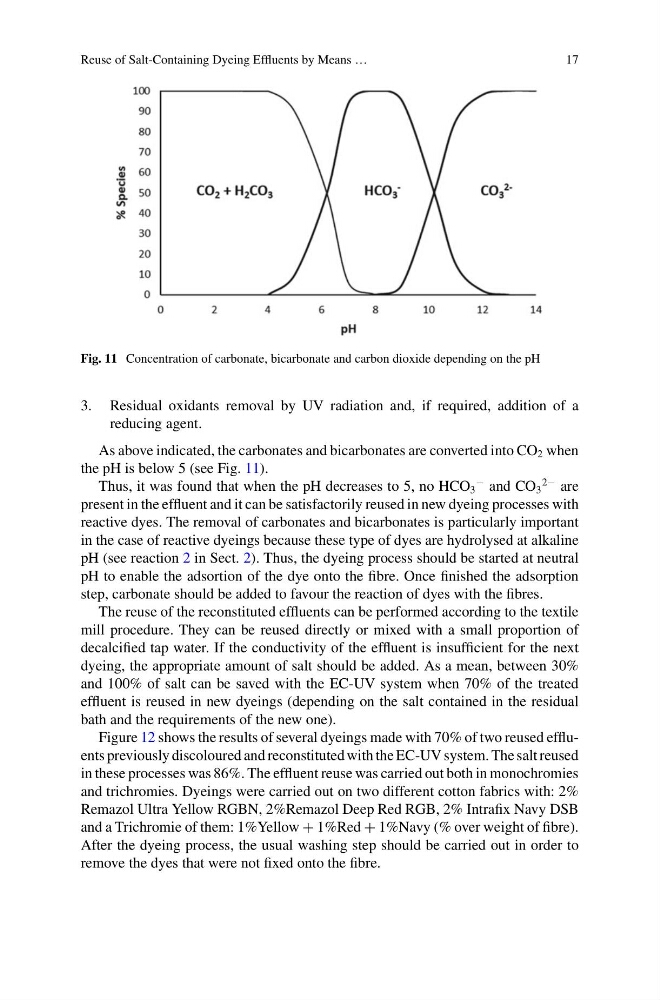
Fig. 11 Concentration of carbonate, bicarbonate and carbon dioxide depending on the pH
3. Residual oxidants removal by UV radiation and, if required, addition of a
reducing agent.
As above indicated, the carbonates and bicarbonates are converted into CO 2 when
the pH is below 5 (see Fig. 11).
Thus, it was found that when the pH decreases to 5, no HCO 3
− and CO 3
2− are
present in the effluent and it can be satisfactorily reused in new dyeing processes with
reactive dyes. The removal of carbonates and bicarbonates is particularly important
in the case of reactive dyeings because these type of dyes are hydrolysed at alkaline
pH (see reaction 2 in Sect. 2). Thus, the dyeing process should be started at neutral
pH to enable the adsortion of the dye onto the fibre. Once finished the adsorption
step, carbonate should be added to favour the reaction of dyes with the fibres.
The reuse of the reconstituted effluents can be performed according to the textile
mill procedure. They can be reused directly or mixed with a small proportion of
decalcified tap water. If the conductivity of the effluent is insufficient for the next
dyeing, the appropriate amount of salt should be added. As a mean, between 30%
and 100% of salt can be saved with the EC-UV system when 70% of the treated
effluent is reused in new dyeings (depending on the salt contained in the residual
bath and the requirements of the new one).
Figure 12 shows the results of several dyeings made with 70% of two reused effluents previously discoloured and reconstituted with the EC-UV system. The salt reused
in these processes was 86%. The effluent reuse was carried out both in monochromies
and trichromies. Dyeings were carried out on two different cotton fabrics with: 2%
Remazol Ultra Yellow RGBN, 2%Remazol Deep Red RGB, 2% Intrafix Navy DSB
and a Trichromie of them: 1%Yellow + 1%Red + 1%Navy (% over weight of fibre).
After the dyeing process, the usual washing step should be carried out in order to
remove the dyes that were not fixed onto the fibre.
17
Fig. 11 Concentration of carbonate, bicarbonate and carbon dioxide depending on the pH
3. Residual oxidants removal by UV radiation and, if required, addition of a
reducing agent.
As above indicated, the carbonates and bicarbonates are converted into CO 2 when
the pH is below 5 (see Fig. 11).
Thus, it was found that when the pH decreases to 5, no HCO 3
− and CO 3
2− are
present in the effluent and it can be satisfactorily reused in new dyeing processes with
reactive dyes. The removal of carbonates and bicarbonates is particularly important
in the case of reactive dyeings because these type of dyes are hydrolysed at alkaline
pH (see reaction 2 in Sect. 2). Thus, the dyeing process should be started at neutral
pH to enable the adsortion of the dye onto the fibre. Once finished the adsorption
step, carbonate should be added to favour the reaction of dyes with the fibres.
The reuse of the reconstituted effluents can be performed according to the textile
mill procedure. They can be reused directly or mixed with a small proportion of
decalcified tap water. If the conductivity of the effluent is insufficient for the next
dyeing, the appropriate amount of salt should be added. As a mean, between 30%
and 100% of salt can be saved with the EC-UV system when 70% of the treated
effluent is reused in new dyeings (depending on the salt contained in the residual
bath and the requirements of the new one).
Figure 12 shows the results of several dyeings made with 70% of two reused effluents previously discoloured and reconstituted with the EC-UV system. The salt reused
in these processes was 86%. The effluent reuse was carried out both in monochromies
and trichromies. Dyeings were carried out on two different cotton fabrics with: 2%
Remazol Ultra Yellow RGBN, 2%Remazol Deep Red RGB, 2% Intrafix Navy DSB
and a Trichromie of them: 1%Yellow + 1%Red + 1%Navy (% over weight of fibre).
After the dyeing process, the usual washing step should be carried out in order to
remove the dyes that were not fixed onto the fibre.