

8
C. Gutiérrez-Bouzán et al.
4 Advantages of Coupled Electrochemical–Ultraviolet
Treatment
Currently, textile effluents are treated by combining biological with coagulation–
flocculation processes. Despite this combination is capable of meeting with legislative regulations in terms of organic matter and colour elimination, salts cannot be
removed. The treatments used for removing salts (mainly membranes) are based on
obtaining a concentrate that must be subsequently removed as a waste. In addition,
these treatments have high operational and maintenance cost.
The EC-UV system is an alternative to the current methods applied to treat the
textile dyeing effluents. The main advantage of the system is that it enables to degrade
organic pollutants without the addition of chemicals and without generating additional wastes. In this treatment, the salts already present in the effluents are used to
generate oxidants species that break down the dye molecules into smaller ones. Then,
the uncoloured effluents that still contain high amount of salt could be reconstituted
and finally reused in new dyeing processes. Currently, there is no technology into
the market able to treat the effluents without using chemical reagents and without
producing wastes.
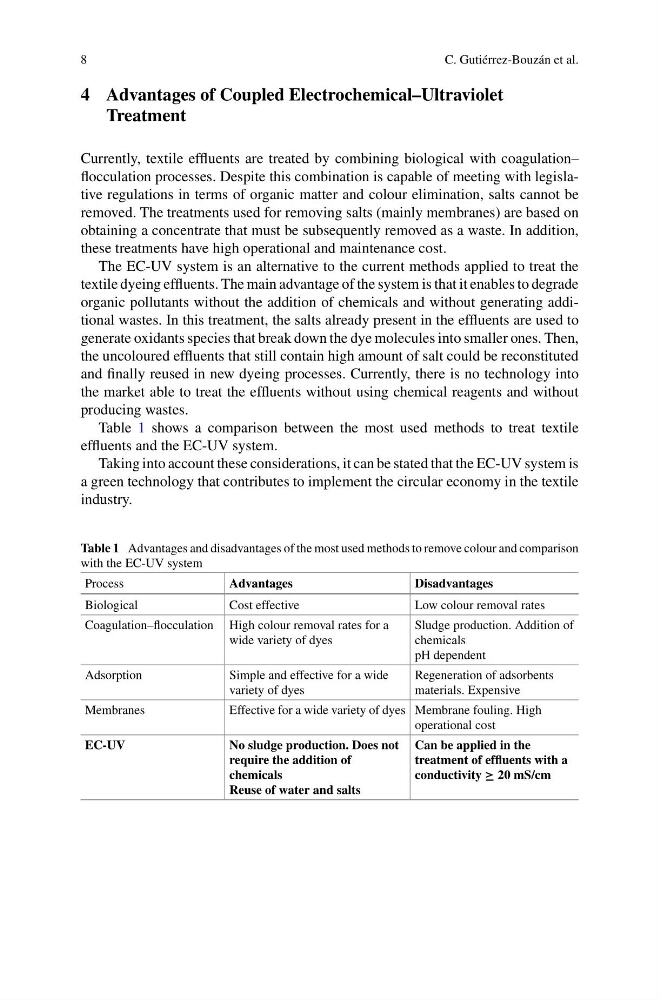
Table 1 shows a comparison between the most used methods to treat textile
effluents and the EC-UV system.
Taking into account these considerations, it can be stated that the EC-UV system is
a green technology that contributes to implement the circular economy in the textile
industry.
Table 1 Advantages and disadvantages of the most used methods to remove colour and comparison
with the EC-UV system
Process
Advantages
Disadvantages
Biological
Cost effective
Low colour removal rates
Coagulation–flocculation High colour removal rates for a
wide variety of dyes
Sludge production. Addition of
chemicals
pH dependent
Adsorption
Simple and effective for a wide
variety of dyes
Regeneration of adsorbents
materials. Expensive
Membranes
Effective for a wide variety of dyes Membrane fouling. High
operational cost
EC-UV
No sludge production. Does not
require the addition of
chemicals
Reuse of water and salts
Can be applied in the
treatment of effluents with a
conductivity ≥ 20 mS/cm
C. Gutiérrez-Bouzán et al.
4 Advantages of Coupled Electrochemical–Ultraviolet
Treatment
Currently, textile effluents are treated by combining biological with coagulation–
flocculation processes. Despite this combination is capable of meeting with legislative regulations in terms of organic matter and colour elimination, salts cannot be
removed. The treatments used for removing salts (mainly membranes) are based on
obtaining a concentrate that must be subsequently removed as a waste. In addition,
these treatments have high operational and maintenance cost.
The EC-UV system is an alternative to the current methods applied to treat the
textile dyeing effluents. The main advantage of the system is that it enables to degrade
organic pollutants without the addition of chemicals and without generating additional wastes. In this treatment, the salts already present in the effluents are used to
generate oxidants species that break down the dye molecules into smaller ones. Then,
the uncoloured effluents that still contain high amount of salt could be reconstituted
and finally reused in new dyeing processes. Currently, there is no technology into
the market able to treat the effluents without using chemical reagents and without
producing wastes.
Table 1 shows a comparison between the most used methods to treat textile
effluents and the EC-UV system.
Taking into account these considerations, it can be stated that the EC-UV system is
a green technology that contributes to implement the circular economy in the textile
industry.
Table 1 Advantages and disadvantages of the most used methods to remove colour and comparison
with the EC-UV system
Process
Advantages
Disadvantages
Biological
Cost effective
Low colour removal rates
Coagulation–flocculation High colour removal rates for a
wide variety of dyes
Sludge production. Addition of
chemicals
pH dependent
Adsorption
Simple and effective for a wide
variety of dyes
Regeneration of adsorbents
materials. Expensive
Membranes
Effective for a wide variety of dyes Membrane fouling. High
operational cost
EC-UV
No sludge production. Does not
require the addition of
chemicals
Reuse of water and salts
Can be applied in the
treatment of effluents with a
conductivity ≥ 20 mS/cm