

Treatment of Textile Waste Water Using Low-Cost …
139
Primary
screening,
sedimentation,
homogenization,
neutralization,
mechanical/chemi
cal flocculation
Secondary
aerobic and
anaerobic
treatment, aerated
lagoons, activated
sludge, trickling
filtration, oxidation
ditch and pond
Tertiary
membrane filtration technologies,
adsorption (using silica/clay/granular
activated carbon/natural and synthetic
bio-absorbents), oxidation technique
(Fenton reagent, photocatalysis,
advanced oxidation processes,
ozonation), electrolytic precipitation
and foam fractionation,
electrochemical process, ion exchange
method, photo catalyic degradation
and thermal evaporation
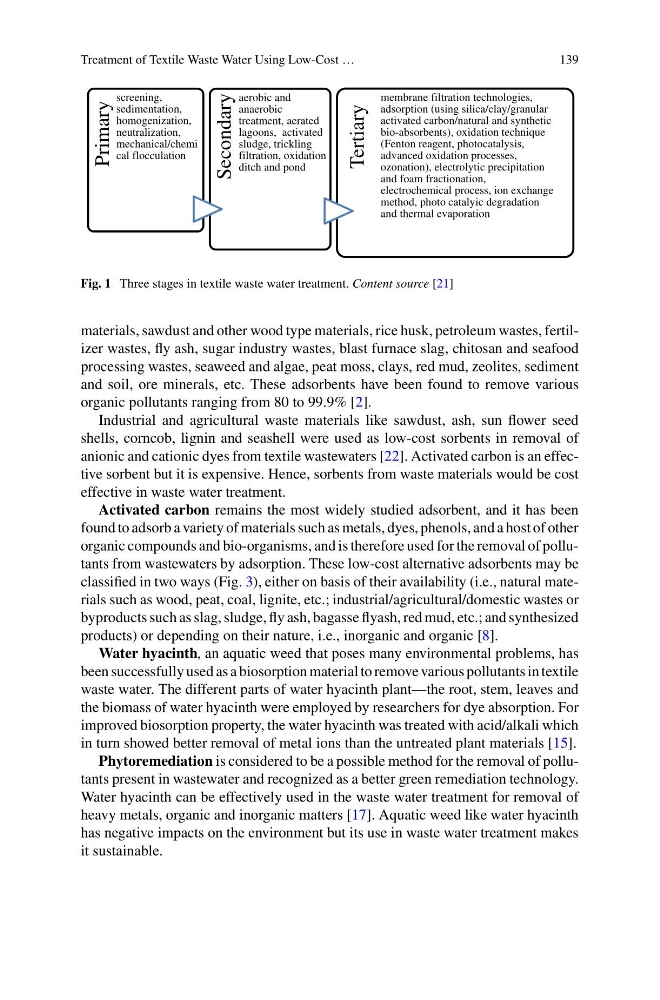
Fig. 1 Three stages in textile waste water treatment. Content source [21]
materials, sawdust and other wood type materials, rice husk, petroleum wastes, fertilizer wastes, fly ash, sugar industry wastes, blast furnace slag, chitosan and seafood
processing wastes, seaweed and algae, peat moss, clays, red mud, zeolites, sediment
and soil, ore minerals, etc. These adsorbents have been found to remove various
organic pollutants ranging from 80 to 99.9% [2].
Industrial and agricultural waste materials like sawdust, ash, sun flower seed
shells, corncob, lignin and seashell were used as low-cost sorbents in removal of
anionic and cationic dyes from textile wastewaters [22]. Activated carbon is an effective sorbent but it is expensive. Hence, sorbents from waste materials would be cost
effective in waste water treatment.
Activated carbon remains the most widely studied adsorbent, and it has been
found to adsorb a variety of materials such as metals, dyes, phenols, and a host of other
organic compounds and bio-organisms, and is therefore used for the removal of pollutants from wastewaters by adsorption. These low-cost alternative adsorbents may be
classified in two ways (Fig. 3), either on basis of their availability (i.e., natural materials such as wood, peat, coal, lignite, etc.; industrial/agricultural/domestic wastes or
byproducts such as slag, sludge, fly ash, bagasse flyash, red mud, etc.; and synthesized
products) or depending on their nature, i.e., inorganic and organic [8].
Water hyacinth, an aquatic weed that poses many environmental problems, has
been successfully used as a biosorption material to remove various pollutants in textile
waste water. The different parts of water hyacinth plant—the root, stem, leaves and
the biomass of water hyacinth were employed by researchers for dye absorption. For
improved biosorption property, the water hyacinth was treated with acid/alkali which
in turn showed better removal of metal ions than the untreated plant materials [15].
Phytoremediation is considered to be a possible method for the removal of pollutants present in wastewater and recognized as a better green remediation technology.
Water hyacinth can be effectively used in the waste water treatment for removal of
heavy metals, organic and inorganic matters [17]. Aquatic weed like water hyacinth
has negative impacts on the environment but its use in waste water treatment makes
it sustainable.
139
Primary
screening,
sedimentation,
homogenization,
neutralization,
mechanical/chemi
cal flocculation
Secondary
aerobic and
anaerobic
treatment, aerated
lagoons, activated
sludge, trickling
filtration, oxidation
ditch and pond
Tertiary
membrane filtration technologies,
adsorption (using silica/clay/granular
activated carbon/natural and synthetic
bio-absorbents), oxidation technique
(Fenton reagent, photocatalysis,
advanced oxidation processes,
ozonation), electrolytic precipitation
and foam fractionation,
electrochemical process, ion exchange
method, photo catalyic degradation
and thermal evaporation
Fig. 1 Three stages in textile waste water treatment. Content source [21]
materials, sawdust and other wood type materials, rice husk, petroleum wastes, fertilizer wastes, fly ash, sugar industry wastes, blast furnace slag, chitosan and seafood
processing wastes, seaweed and algae, peat moss, clays, red mud, zeolites, sediment
and soil, ore minerals, etc. These adsorbents have been found to remove various
organic pollutants ranging from 80 to 99.9% [2].
Industrial and agricultural waste materials like sawdust, ash, sun flower seed
shells, corncob, lignin and seashell were used as low-cost sorbents in removal of
anionic and cationic dyes from textile wastewaters [22]. Activated carbon is an effective sorbent but it is expensive. Hence, sorbents from waste materials would be cost
effective in waste water treatment.
Activated carbon remains the most widely studied adsorbent, and it has been
found to adsorb a variety of materials such as metals, dyes, phenols, and a host of other
organic compounds and bio-organisms, and is therefore used for the removal of pollutants from wastewaters by adsorption. These low-cost alternative adsorbents may be
classified in two ways (Fig. 3), either on basis of their availability (i.e., natural materials such as wood, peat, coal, lignite, etc.; industrial/agricultural/domestic wastes or
byproducts such as slag, sludge, fly ash, bagasse flyash, red mud, etc.; and synthesized
products) or depending on their nature, i.e., inorganic and organic [8].
Water hyacinth, an aquatic weed that poses many environmental problems, has
been successfully used as a biosorption material to remove various pollutants in textile
waste water. The different parts of water hyacinth plant—the root, stem, leaves and
the biomass of water hyacinth were employed by researchers for dye absorption. For
improved biosorption property, the water hyacinth was treated with acid/alkali which
in turn showed better removal of metal ions than the untreated plant materials [15].
Phytoremediation is considered to be a possible method for the removal of pollutants present in wastewater and recognized as a better green remediation technology.
Water hyacinth can be effectively used in the waste water treatment for removal of
heavy metals, organic and inorganic matters [17]. Aquatic weed like water hyacinth
has negative impacts on the environment but its use in waste water treatment makes
it sustainable.