

Dyestuff Adsorbing Natural Composites for Wastewater Treatments
107
Refining Methods
Physical
Method
Filtraon
Flocculaon
Adsorpon
Oxidave
Methods
Advanced
Oxidave
Method
Chemical
Oxidave
Method
Biological
Methods
Enzymes
Microorganisms
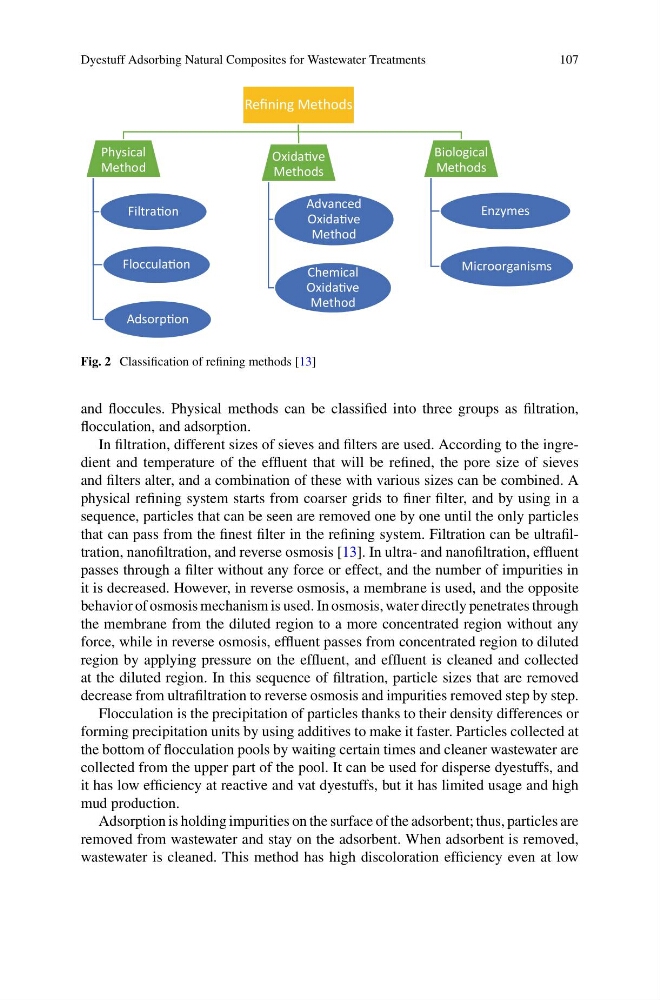
Fig. 2 Classification of refining methods [13]
and floccules. Physical methods can be classified into three groups as filtration,
flocculation, and adsorption.
In filtration, different sizes of sieves and filters are used. According to the ingredient and temperature of the effluent that will be refined, the pore size of sieves
and filters alter, and a combination of these with various sizes can be combined. A
physical refining system starts from coarser grids to finer filter, and by using in a
sequence, particles that can be seen are removed one by one until the only particles
that can pass from the finest filter in the refining system. Filtration can be ultrafiltration, nanofiltration, and reverse osmosis [13]. In ultra- and nanofiltration, effluent
passes through a filter without any force or effect, and the number of impurities in
it is decreased. However, in reverse osmosis, a membrane is used, and the opposite
behavior of osmosis mechanism is used. In osmosis, water directly penetrates through
the membrane from the diluted region to a more concentrated region without any
force, while in reverse osmosis, effluent passes from concentrated region to diluted
region by applying pressure on the effluent, and effluent is cleaned and collected
at the diluted region. In this sequence of filtration, particle sizes that are removed
decrease from ultrafiltration to reverse osmosis and impurities removed step by step.
Flocculation is the precipitation of particles thanks to their density differences or
forming precipitation units by using additives to make it faster. Particles collected at
the bottom of flocculation pools by waiting certain times and cleaner wastewater are
collected from the upper part of the pool. It can be used for disperse dyestuffs, and
it has low efficiency at reactive and vat dyestuffs, but it has limited usage and high
mud production.
Adsorption is holding impurities on the surface of the adsorbent; thus, particles are
removed from wastewater and stay on the adsorbent. When adsorbent is removed,
wastewater is cleaned. This method has high discoloration efficiency even at low
107
Refining Methods
Physical
Method
Filtraon
Flocculaon
Adsorpon
Oxidave
Methods
Advanced
Oxidave
Method
Chemical
Oxidave
Method
Biological
Methods
Enzymes
Microorganisms
Fig. 2 Classification of refining methods [13]
and floccules. Physical methods can be classified into three groups as filtration,
flocculation, and adsorption.
In filtration, different sizes of sieves and filters are used. According to the ingredient and temperature of the effluent that will be refined, the pore size of sieves
and filters alter, and a combination of these with various sizes can be combined. A
physical refining system starts from coarser grids to finer filter, and by using in a
sequence, particles that can be seen are removed one by one until the only particles
that can pass from the finest filter in the refining system. Filtration can be ultrafiltration, nanofiltration, and reverse osmosis [13]. In ultra- and nanofiltration, effluent
passes through a filter without any force or effect, and the number of impurities in
it is decreased. However, in reverse osmosis, a membrane is used, and the opposite
behavior of osmosis mechanism is used. In osmosis, water directly penetrates through
the membrane from the diluted region to a more concentrated region without any
force, while in reverse osmosis, effluent passes from concentrated region to diluted
region by applying pressure on the effluent, and effluent is cleaned and collected
at the diluted region. In this sequence of filtration, particle sizes that are removed
decrease from ultrafiltration to reverse osmosis and impurities removed step by step.
Flocculation is the precipitation of particles thanks to their density differences or
forming precipitation units by using additives to make it faster. Particles collected at
the bottom of flocculation pools by waiting certain times and cleaner wastewater are
collected from the upper part of the pool. It can be used for disperse dyestuffs, and
it has low efficiency at reactive and vat dyestuffs, but it has limited usage and high
mud production.
Adsorption is holding impurities on the surface of the adsorbent; thus, particles are
removed from wastewater and stay on the adsorbent. When adsorbent is removed,
wastewater is cleaned. This method has high discoloration efficiency even at low