

6.3.1 Statistical Processing (Branching-Type ANOVA)
The branching-type analysis of variance (ANOVA) used in the statistical processing
of this microcosm assessment is a technique similar to a two-way parameter model*.
In other words, the amount of change in the measurements over time is generally
expressed as a fixed number (as the amount of change according to a certain rule).
However, for analyzing the effects of a chemical substance when each test individual
is randomly selected from a population, individual differences are considered to be
probabilistic (i.e., differences in the resultant value are considered to be errors, even
if all experimental conditions are matched). When there is a difference in the error
produced by a certain element (individual difference) when the data for the experimental system is observed to have the same individuals under the same conditions,
the difference is uncertain and is viewed as being subject to chance (i.e., error)
(Japanese Red Cross Toyota Nursing University Extension 2005; Ono 2003;
Kakidume 2008; Kataya and Matsufuji 2003; Ichihara 1990). Based on this notion,
it was decided that a statistical analysis of P and R would be conducted using the
branching-type ANOVA of the difference between the flask-sized experiments of
each microcosm. For an assessment test, it was assumed that the difference would
vary stochastically (i.e., as a random variable), unlike in the two-way fixed effect
model of the microcosm test. This means that a control group and chemical substance addition group were randomly chosen from the population in which the
microcosm was cultured, and the difference between each flask was considered to
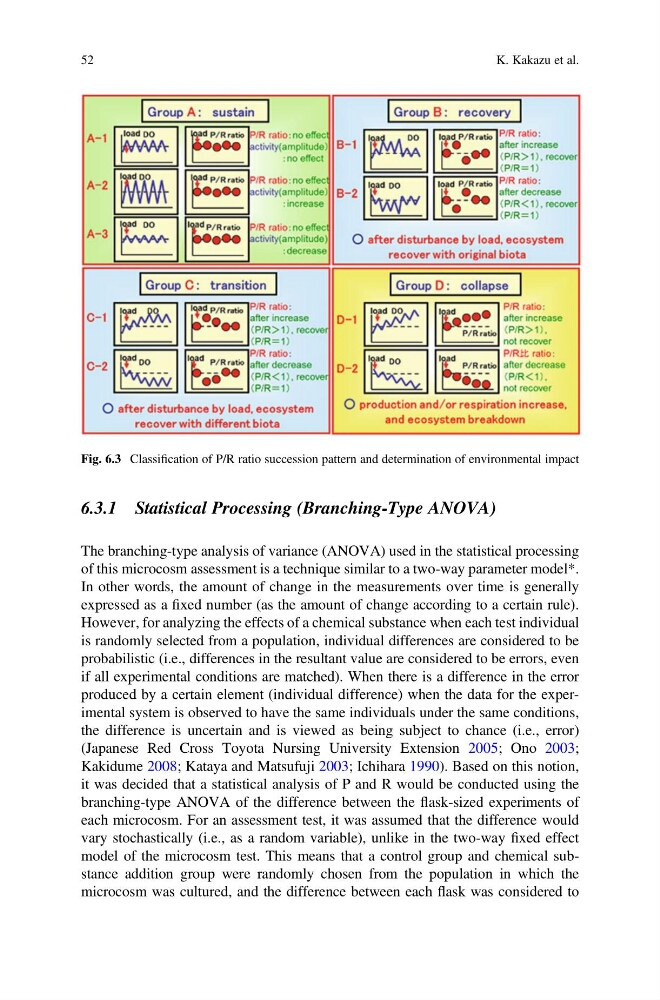
Fig. 6.3 Classification of P/R ratio succession pattern and determination of environmental impact
52
K. Kakazu et al.
The branching-type analysis of variance (ANOVA) used in the statistical processing
of this microcosm assessment is a technique similar to a two-way parameter model*.
In other words, the amount of change in the measurements over time is generally
expressed as a fixed number (as the amount of change according to a certain rule).
However, for analyzing the effects of a chemical substance when each test individual
is randomly selected from a population, individual differences are considered to be
probabilistic (i.e., differences in the resultant value are considered to be errors, even
if all experimental conditions are matched). When there is a difference in the error
produced by a certain element (individual difference) when the data for the experimental system is observed to have the same individuals under the same conditions,
the difference is uncertain and is viewed as being subject to chance (i.e., error)
(Japanese Red Cross Toyota Nursing University Extension 2005; Ono 2003;
Kakidume 2008; Kataya and Matsufuji 2003; Ichihara 1990). Based on this notion,
it was decided that a statistical analysis of P and R would be conducted using the
branching-type ANOVA of the difference between the flask-sized experiments of
each microcosm. For an assessment test, it was assumed that the difference would
vary stochastically (i.e., as a random variable), unlike in the two-way fixed effect
model of the microcosm test. This means that a control group and chemical substance addition group were randomly chosen from the population in which the
microcosm was cultured, and the difference between each flask was considered to
Fig. 6.3 Classification of P/R ratio succession pattern and determination of environmental impact
52
K. Kakazu et al.