

main endpoint, and a structural parameter (population size/abundance) is a secondary endpoint. Because the microcosm N-system is used in this study as a model of
ecosystem function, it maintains dynamic equilibrium while transitioning (succession) among constituent species, as it always produces a natural ecosystem again.
This is thought to be because it is proper to adopt the DO and P/R ratio, which is a
functional parameter, for evaluation in the microcosm test. Additionally, because it
is important to analyze and evaluate the assessment period from both the P/R ratio
(functional parameter) and the population size/abundance (structural parameter),
(1) it takes 2 weeks (14 days) for the microcosm to reach a steady state from the
beginning of cultivation, and (2) once the constituent organisms of the microcosm
reach a steady state, the system is maintained, and the population is held at a constant
population from thereon. In other words, the recovery of the system cannot be
expected if a stable system is not established by 2 weeks after the start of cultivation.
It is proper that a period of 2 weeks after the addition of test materials (i.e., the 30th
day if the materials were added on the 16th day after the start of cultivation) is used
as the end of cultivation and that changes are evaluated during this period.
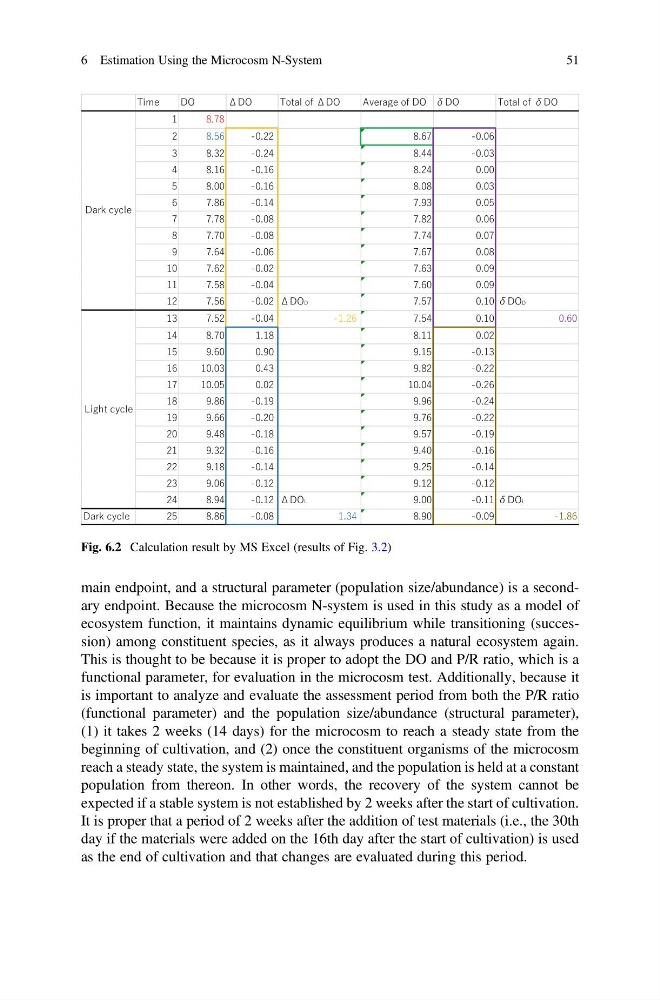
Fig. 6.2 Calculation result by MS Excel (results of Fig. 3.2)
6 Estimation Using the Microcosm N-System
51
ecosystem function, it maintains dynamic equilibrium while transitioning (succession) among constituent species, as it always produces a natural ecosystem again.
This is thought to be because it is proper to adopt the DO and P/R ratio, which is a
functional parameter, for evaluation in the microcosm test. Additionally, because it
is important to analyze and evaluate the assessment period from both the P/R ratio
(functional parameter) and the population size/abundance (structural parameter),
(1) it takes 2 weeks (14 days) for the microcosm to reach a steady state from the
beginning of cultivation, and (2) once the constituent organisms of the microcosm
reach a steady state, the system is maintained, and the population is held at a constant
population from thereon. In other words, the recovery of the system cannot be
expected if a stable system is not established by 2 weeks after the start of cultivation.
It is proper that a period of 2 weeks after the addition of test materials (i.e., the 30th
day if the materials were added on the 16th day after the start of cultivation) is used
as the end of cultivation and that changes are evaluated during this period.
Fig. 6.2 Calculation result by MS Excel (results of Fig. 3.2)
6 Estimation Using the Microcosm N-System
51