

Based on the results of these evaluation procedures, widespread chemical substances were grouped based on the characteristics of each chemical substance. The
accumulation and inspection of practical ecosystem impact data can support and
render possible the OECD international standardization of the microcosm test. When
considering the past flow of OECD standardization, the following are needed:
(1) confirmed reproducibility by blind testing of the same materials by three institutions, (2) inspection of the versatility using the ring test performed by five
domestic institutions, (3) construction of a practical infrastructure by compiling
the m-NOEC database, (4) making the general examination methods accessible by
completion of the test manual, and (5) inspection of the practicality of the microcosm
N-system by developing a NOEC prediction method.
For steps 1–4, the reinforcement, careful investigation, and efficiency of microcosm experiment should be improved, and the microcosm test manual should be
accuracy based on the characteristics and addition time of the chemical substances
to microcosm, that is, at a steady state or at culture starts. With these procedures,
the generalization and practical realization of the microcosm test is possible. For step
5, the database of m-NOEC of the microcosm test and the NOECeco of the
mesocosm test will be expanded, the applicable range of the microcosm will be
established, and the unevenness of each chemical substance from the correlation
formula, the difference in the sensitivity of each ecosystem, and the rationale
behind the assessment factor have been already established. Furthermore, the limits
of the microcosm test suggested in this study may be clarified based on the
evaluable characteristics of chemical substances. It has already been clarified
whether this technique can be used to extrapolate to natural ecosystems. In other
words, the utilization of this microcosm test and strengthening of the manual
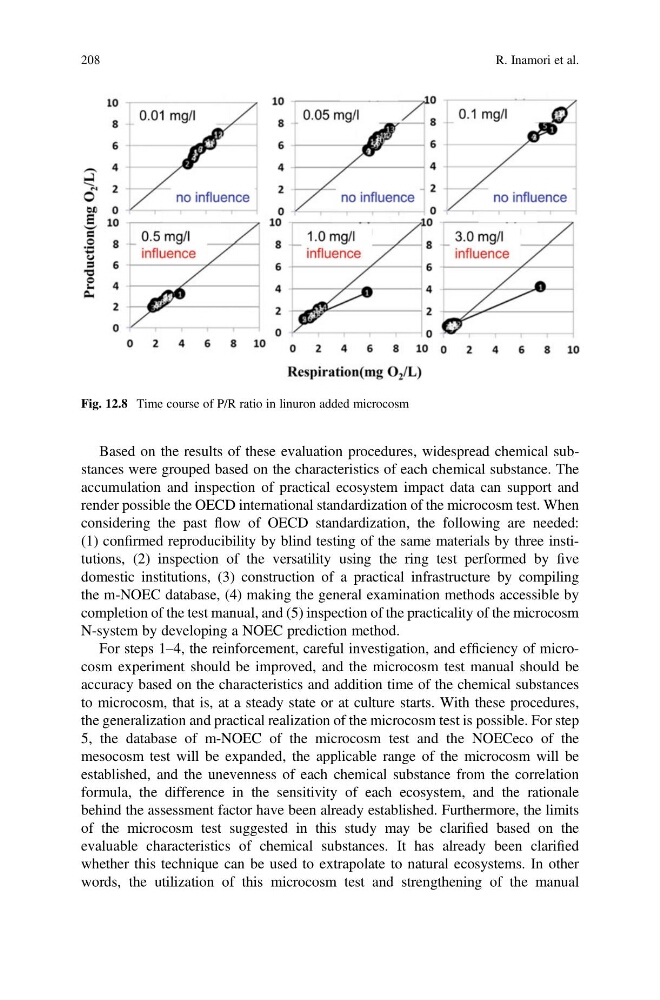
Fig. 12.8 Time course of P/R ratio in linuron added microcosm
208
R. Inamori et al.
accumulation and inspection of practical ecosystem impact data can support and
render possible the OECD international standardization of the microcosm test. When
considering the past flow of OECD standardization, the following are needed:
(1) confirmed reproducibility by blind testing of the same materials by three institutions, (2) inspection of the versatility using the ring test performed by five
domestic institutions, (3) construction of a practical infrastructure by compiling
the m-NOEC database, (4) making the general examination methods accessible by
completion of the test manual, and (5) inspection of the practicality of the microcosm
N-system by developing a NOEC prediction method.
For steps 1–4, the reinforcement, careful investigation, and efficiency of microcosm experiment should be improved, and the microcosm test manual should be
accuracy based on the characteristics and addition time of the chemical substances
to microcosm, that is, at a steady state or at culture starts. With these procedures,
the generalization and practical realization of the microcosm test is possible. For step
5, the database of m-NOEC of the microcosm test and the NOECeco of the
mesocosm test will be expanded, the applicable range of the microcosm will be
established, and the unevenness of each chemical substance from the correlation
formula, the difference in the sensitivity of each ecosystem, and the rationale
behind the assessment factor have been already established. Furthermore, the limits
of the microcosm test suggested in this study may be clarified based on the
evaluable characteristics of chemical substances. It has already been clarified
whether this technique can be used to extrapolate to natural ecosystems. In other
words, the utilization of this microcosm test and strengthening of the manual
Fig. 12.8 Time course of P/R ratio in linuron added microcosm
208
R. Inamori et al.