

160 days after irradiation. The prokaryotic community structure was also examined
by denaturing gradient gel electrophoresis (DGGE) of 16S rDNA. Principal response
curve analysis revealed that the populations of the microcosm as a whole were not
significantly affected at 100 Gy while they were adversely affected at 500–5000 Gy
in a dose-dependent manner. However, some effects on each population, including
each bacterial population detected by DGGE, did not depend on radiation doses, and
some populations in the irradiated microcosm were larger than those of the control
system. These unexpected results are regarded as indirect effects through interspecies interactions, and possible mechanisms are proposed originating from population
changes in other organisms coexisting in the microcosm. For example, some indirect
effects on consumers and decomposers likely arose from interspecies competition
within each trophic level. It is also likely that predator-prey relationships between
producers and consumers caused some indirect effects on producers.
The effects of acute γ-irradiation were investigated in the aquatic microcosm. At
100 Gy, populations were not affected in any taxa. At 500–5000 Gy, one or three
taxa died out, and populations of two or three taxa decreased over time, while that of
Tolypothrix sp. increased. This Tolypothrix sp. increase was likely an indirect effect
due to interspecies interactions. Principal response curve analysis revealed that the
main trend in the effects was a dose-dependent population decrease. For a better
understanding of radiation risks in aquatic microbial communities, effect doses of
γ-rays, compared with copper, herbicides, and detergents, were evaluated using a
radiochemoecological conceptual model and the effect index for the microcosm. The
populations of all microorganisms in the microcosm were stable under the irradiation
conditions during an experimental period in a gamma beam irradiation experiment.
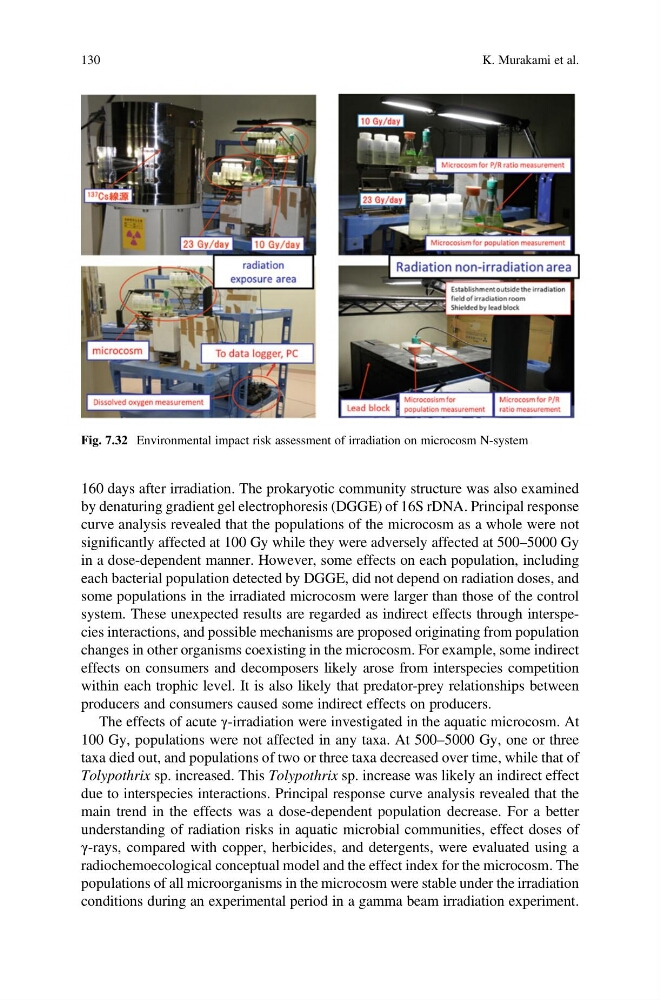
Fig. 7.32 Environmental impact risk assessment of irradiation on microcosm N-system
130
K. Murakami et al.
by denaturing gradient gel electrophoresis (DGGE) of 16S rDNA. Principal response
curve analysis revealed that the populations of the microcosm as a whole were not
significantly affected at 100 Gy while they were adversely affected at 500–5000 Gy
in a dose-dependent manner. However, some effects on each population, including
each bacterial population detected by DGGE, did not depend on radiation doses, and
some populations in the irradiated microcosm were larger than those of the control
system. These unexpected results are regarded as indirect effects through interspecies interactions, and possible mechanisms are proposed originating from population
changes in other organisms coexisting in the microcosm. For example, some indirect
effects on consumers and decomposers likely arose from interspecies competition
within each trophic level. It is also likely that predator-prey relationships between
producers and consumers caused some indirect effects on producers.
The effects of acute γ-irradiation were investigated in the aquatic microcosm. At
100 Gy, populations were not affected in any taxa. At 500–5000 Gy, one or three
taxa died out, and populations of two or three taxa decreased over time, while that of
Tolypothrix sp. increased. This Tolypothrix sp. increase was likely an indirect effect
due to interspecies interactions. Principal response curve analysis revealed that the
main trend in the effects was a dose-dependent population decrease. For a better
understanding of radiation risks in aquatic microbial communities, effect doses of
γ-rays, compared with copper, herbicides, and detergents, were evaluated using a
radiochemoecological conceptual model and the effect index for the microcosm. The
populations of all microorganisms in the microcosm were stable under the irradiation
conditions during an experimental period in a gamma beam irradiation experiment.
Fig. 7.32 Environmental impact risk assessment of irradiation on microcosm N-system
130
K. Murakami et al.