

3.7.1.3 Floating Drum Digester
The floating drum plant was first developed in India. It is generally known as “Gobar
Gas Plant”. It was developed by Jashu Bhai J. Patel in 1956 (Singh et al. 1987). It
contains a brick-lined pit which is partly underground and the mild steel floating
drum (also acting as a gas holder) which is above the ground, coated with paints to
avoid erosion (Fig. 3.9). The popular floating drum design is Khadi and Village
Industries Commission (KVIA), India (Dana 2009). Nowadays, the steel drum is
replaced by fibreglass-reinforced plastic or galvanized sheet metal (Nzila et al.
2012). The drum is the most expensive part in the plant covered by concrete work
(burnt clay brick and cement) with the partition wall that provides an optimum
growth condition to anaerobic microbes. The central guide frame is used to hold the
gasholder and also guides it to move in a vertical position during gas production
(Khan 2009).
Operating Procedure
1. The digester is feed with organic waste through inlet pipe.
2. The produced gas collected through a valve which is presented in the top of the
gasholder.
3. The production of gas increases the drum starts to rise and the stored gas is
collected; the drum sinks.
4. The rotation of the drum helps to break the scum.
5. After completion of digestion, the slurry is further collected.
6. In case of any maintenance, the digester may be emptied by another outlet at the
bottom of the digester (Kossmann et al. 1999).
Advantages of Floating Drum Digester
1. The operation procedure is quite easy.
2. The drum weight assists the plant to discharge the gas at constant pressure.
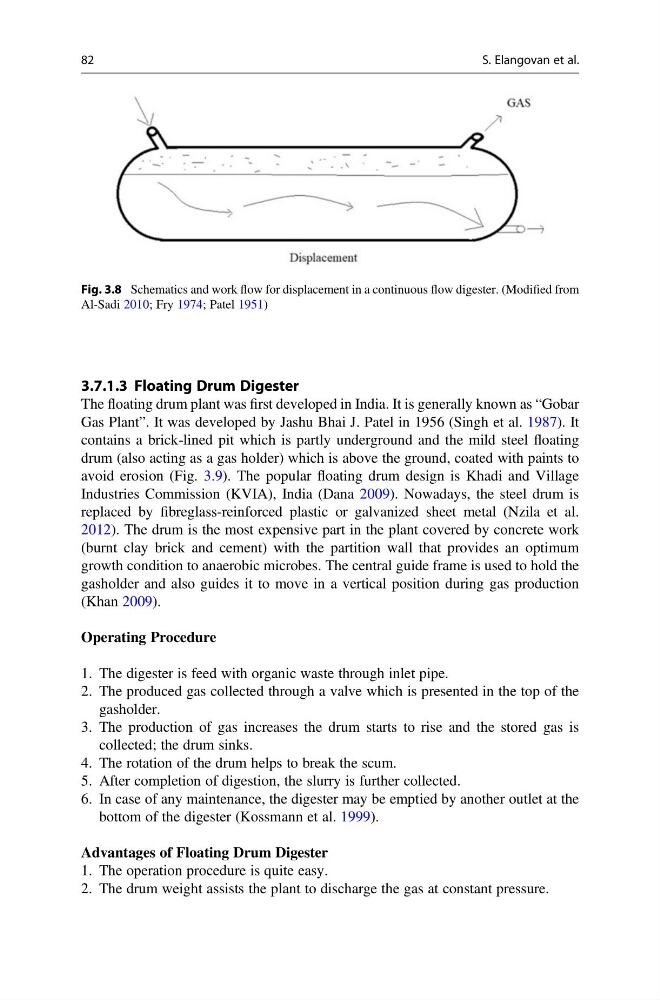
Fig. 3.8 Schematics and work flow for displacement in a continuous flow digester. (Modified from
Al-Sadi 2010; Fry 1974; Patel 1951)
82
S. Elangovan et al.
The floating drum plant was first developed in India. It is generally known as “Gobar
Gas Plant”. It was developed by Jashu Bhai J. Patel in 1956 (Singh et al. 1987). It
contains a brick-lined pit which is partly underground and the mild steel floating
drum (also acting as a gas holder) which is above the ground, coated with paints to
avoid erosion (Fig. 3.9). The popular floating drum design is Khadi and Village
Industries Commission (KVIA), India (Dana 2009). Nowadays, the steel drum is
replaced by fibreglass-reinforced plastic or galvanized sheet metal (Nzila et al.
2012). The drum is the most expensive part in the plant covered by concrete work
(burnt clay brick and cement) with the partition wall that provides an optimum
growth condition to anaerobic microbes. The central guide frame is used to hold the
gasholder and also guides it to move in a vertical position during gas production
(Khan 2009).
Operating Procedure
1. The digester is feed with organic waste through inlet pipe.
2. The produced gas collected through a valve which is presented in the top of the
gasholder.
3. The production of gas increases the drum starts to rise and the stored gas is
collected; the drum sinks.
4. The rotation of the drum helps to break the scum.
5. After completion of digestion, the slurry is further collected.
6. In case of any maintenance, the digester may be emptied by another outlet at the
bottom of the digester (Kossmann et al. 1999).
Advantages of Floating Drum Digester
1. The operation procedure is quite easy.
2. The drum weight assists the plant to discharge the gas at constant pressure.
Fig. 3.8 Schematics and work flow for displacement in a continuous flow digester. (Modified from
Al-Sadi 2010; Fry 1974; Patel 1951)
82
S. Elangovan et al.